
Your Kids Signed Contracts With No Expiration Date and No Way Out
It's not a conspiracy. A recent deep learning model can identify your laptop keystrokes with 95% accuracy using only a nearby smartphone's microphone. That's just one of the terrifying proofs discussed in this conversation with Ken Cox, President of Hostirian and a privacy expert. Ken shares his deep insights into how our digital privacy is being systematically eroded and what we can do to protect ourselves.
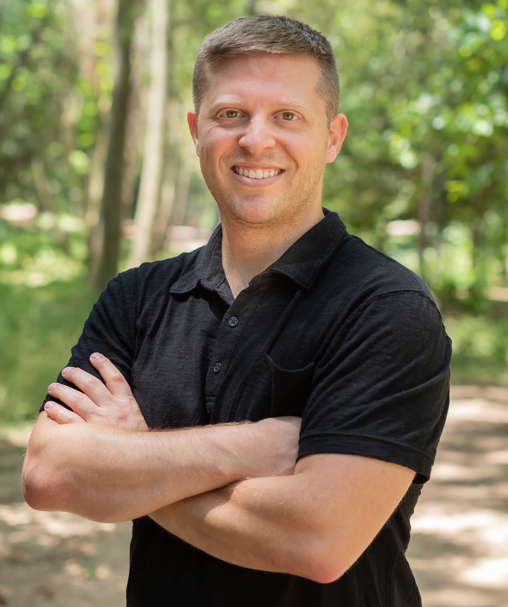

Guest
Ken Cox
President & Privacy Expert, Hostirian
Ken Cox is the president of Hostirian and host of the Clicks and Bricks podcast, providing critical IT services to companies while building a stealth startup focused on privacy policies. With deep expertise in digital privacy, he helps customers understand what data they're surrendering to platforms and warns about AI's ability to steal passwords by listening to keystrokes.
Key Takeaways
- 1Your phone's microphone can now identify your laptop keystrokes with 95% accuracy using deep learning � this is not a conspiracy theory but a published academic result, and it means that the attack surface for credential theft has expanded to every room you work in.
- 2The data your children are creating today will define their identities for decades; unlike adults who can erase old social media profiles, children who grow up on the internet are building a permanent record before they have the maturity to understand what they are surrendering.
- 3Surveillance is no longer limited to cameras and microphones � your lightbulbs, smart speakers, and fitness trackers are all collecting behavioral data, and the aggregate profile that emerges is far more invasive than any single recording.
- 4The psychological warfare embedded in social media is not accidental � it is deliberately engineered, and the 'divide and conquer' strategy that makes these platforms profitable also makes them structurally incompatible with a healthy, functioning democracy.
- 5A DNA test is not just a genealogy tool � it is the permanent surrender of your most private data to a private company with no obligation to protect it, and every relative who tests simultaneously exposes the genetic privacy of everyone related to them.
Key Terms Defined
New to some of the jargon in this episode? Here are plain-English definitions for the terms that came up.
- MSP
- Managed Service Provider — a company that remotely manages a client's IT infrastructure and end-user systems, typically on a subscription basis. Common examples include outsourced IT support and cybersecurity services for businesses.
- IP (Intellectual Property)
- Legal rights protecting creations of the mind — including patents, trademarks, copyrights, and trade secrets that give competitive advantages.
- Financials
- A collective term for a company's financial statements and data, including revenue, expenses, budgets, and profit/loss reports. These documents are used by leaders to make key business decisions.
- LLM (Large Language Model)
- An AI system trained on massive amounts of text to understand and generate human language. ChatGPT, Claude, and Gemini are all built on LLMs.
Chapters
Full Transcript
Sean Weisbrot: Ken Cox is the president of Host Iron and the host of Clicks and Bricks podcast. As an entrepreneur, Ken has built a successful career creating safe and happy workspaces for his employees, providing critical IT services to companies. He has experience in navigating privacy in the digital age, HR strategies for the modern workplace, product marketing tactics and entrepreneurship among others. I wanted to talk with him today because he is also running a stealth startup that is focused on privacy and privacy policies and helping customers understand what it is they're getting themselves into when they use different platforms and services. We ended up spending a lot of time talking about. Our own personal experiences with privacy issues. I talked about, uh, my DNA sample that I I took and what I learned from it and how I don't own that anymore. The company owns it. We talked about his children and how he's scared that his children are giving data and everyone around him is giving data to these companies without realizing how. Every time we take a photo, we're. Not able to control the fact that the metadata gets uploaded with it and that there isn't really a tool that exists to help get rid of it. There's so many things that we talked about and we ended on the fact that his, he's the father of an autistic child, which made me really interested in inviting him back for a second interview later in 2023. Ken, you are working on privacy and data. What scares you the most about the current state of this situation?
Ken Cox: What scares me the most about our current situation is I work with a, a lot of kids and I have a 16-year-old daughter and a 12-year-old son. They are sharing data with, with systems and companies and governments that they have no idea the long-term ramifications. They're agreeing to these contracts, basically contracts, privacy policies, terms of service, whatever they're signing up for these services, and they have absolutely no idea what the long-term ramifications might even be like. Nobody does. We're living in a world today that the ability to store massive amounts of data isn't that challenging anymore, right? The cost of storage is way down. Large companies can buy huge amounts. And the, the technology's getting extremely good. So I don't think it's farfetched that the data that we're putting in our Google drives today, our AWS accounts and our Microsoft accounts, even our educational systems, um, my daughter has user accounts and tablets that the school provides to her. And if you really read the terms and conditions when she's using that device in my home, they can listen to what's going on in my home, right? And that. Starts to get scary whenever you think about right now Russia and Ukraine are at war. Um, that kind of data and that kind of sharing data unconsciously just at will sharing information like that is dangerous long term. And I. It's not necessarily today, but if you've got a 15 year, 16-year-old girl that's posting her stuff on a Google Drive and Google has the rights to share it, I'm not saying it could be Google, could be Facebook, could be Instagram, could be TikTok. It doesn't matter. They're not gonna delete this data if, if they think it's important and we don't know what the companies are gonna do 20 years from now. And if they're publicly traded, they have a legal obligation to their shareholders to do the most profitable thing with your data that might not be, keep it safe for you. Right. So that's, that's what I, that's what I am currently worried about. Uh, on top of that, the ability to manipulate mass amounts of people or individuals is just so profoundly simple today on the internet, and I think it's going to get more and more. Easy to do. Uh, and if the world is everybody was nice, um, then it wouldn't be a problem. But, you know, some people believe that their supplement will change the world, so they're going to push it and manipulate people to buy it, even if it's not good for you.
Sean Weisbrot: So allow me to enhance your paranoia.
Ken Cox: I don't know if you can get it any more enhanced, but let's try,
Sean Weisbrot: uh, I'm, I'm sure this will August 3rd, 2023. A paper comes out called a Practical Deep Learning based acoustic side Channel Attack on keyboards. Does that make sense to you? Should I go? Should I go deeper?
Ken Cox: Go a little deeper. I think I know where you're going.
Sean Weisbrot: The abstract reads With recent developments in deep learning, the ubiquity of microphones and the rise in online services via personal devices, acoustic side channel attacks present a greater threat to keyboards than ever. This paper presents a practical implementation of a state-of-the-art deep learning model in order to classify laptop keystrokes using a smartphone integrated microphone. When trained on keystrokes recorded by a nearby phone, the classifier achieved an accuracy of 95%. And the highest accuracy is seen without the use of a language model. When trained on keystrokes recorded, using the video conferencing software Zoom, an accuracy of 93% was achieved The new, a new best for the medium. Our results proved the practicality of these side channel attacks via off the shelf equipment and algorithms. We discuss a series of mitigation methods to protect users against those series of attacks. Alright, so let me explain in layman's terms for people who don't understand.
Ken Cox: Yeah. Crazy. '
Sean Weisbrot: cause it's very difficult. Basically you can use a smartphone. And have it nearby a keyboard, and you can key log a keyboard and figure out what people are typing based on the sound it makes that the microphone from the smartphone uses to pick it up. Correct. You don't even need a virus on a computer. You can just have a smartphone that's infected. Listen to someone's computer nearby.
Ken Cox: Absolutely.
Sean Weisbrot: More paranoid now,
Ken Cox: and that's scary. I mean, years ago, 20 years ago, I've had to recover data from key logging. It's miserable, right? It's really challenging. But we were logging keystrokes on the computers, on the hard drives and had to re read. This is ambient sound that they can just get right. I've got a, I've, I'm standing right now and I know I'm the odd case, but I've got 20 microphones laying around me right now that are on running in some kind of, in some kind of way.
Sean Weisbrot: Mm, well, let me, let me up the ante a little bit more. Okay. Lidar connected to, connected to wifi or light bulbs enabled with wifi. Can essentially use light to create an image of the room in real time that can be recorded and sent somewhere else. You can essentially, without being inside of a room, see what's going on in that room from a distance using wifi or light,
Ken Cox: right? If you have a reasonable expectation of privacy, you should have a right to privacy. But I know that that, and, and we know that we live in authoritative state. 50 per 52% of all men in our country go to jail at some point in their lifetime. I've been a victim of illegal search and seizure and have gone to jail for it, right? So the, these kinds of tools in our governments and our schools and our large corporation's, hands are dangerous. And I don't know how to stop it other than communicate and educate the people on how to use the tools, shut them down. Share data, categorize your personal data so that you're sharing it in the or that you're storing it in the proper places, right? If you're working on intellectual property, don't put it in a Google Drive, in the Amazon Drive. Anything else you need to keep that local, right? Um, and there's lots of tools out there that you can use to keep it local. You can transfer it with USB to your team, but it, it's, it's very scary stuff. And when you start thinking about our youth, this is just commonality to them. Right. This is just, this is how you do homework. You have to, if we have a a right to education and we have a right to privacy, the schools are invading our children's privacy right now, today, and they're, then, this is how they're, this is the education they're growing up with, so it's gonna just be common for them to be sharing all of their information with their authority. And I don't necessarily care for that.
Sean Weisbrot: So I was just looking at my phone to see the comment that, uh, my friend had shared when he shared the abstract with me. And he was saying, basically, you need to just like exist in a Faraday cage if you wanna protect yourself.
Ken Cox: Well, I don't think you have to exist in a Faraday cage, right? You just have to know where you're walking. Some stones are slipperier than others, some are stable, right? Um, so if you start thinking about my data and how I share it and who I share it with, if I'm categorizing it. Like my pictures and stuff like that, you know, I can't believe that there's not metadata, strippers that strip all the metadata off of pictures before you put 'em on Facebook. Right. That, that would be a, it's because anybody that's watching, if they wanted to make that business, that's, that's a huge, a huge gap right now that we're posting pictures with a hundred percent of the metadata where it was taken, when it was taken the GPS location, all that stuff, we're putting it out there.
Sean Weisbrot: That's because Facebook wants that information. They have no incentive to strip it.
Ken Cox: They don't, but, uh, but capitalism says, and entrepreneurship says that you can make that app tomorrow and put it out to the market. But unfortunately, I don't think people care about the privacy anymore.
Sean Weisbrot: The thing is, it would add an extra step. It, it would have to be something, it, it would have to be something that happens behind the scenes on the fly as you're uploading it. You can't. Say, oh, I'm gonna take a picture now let me strip the data. Now let me share it with people because people don't care or they're not aware of it.
Ken Cox: Well, I think they do care if they understand it. Uh, but they want, they care about easy more.
Sean Weisbrot: Yeah. Which is why Facebook exists. Yes. And Instagram
Ken Cox: and Amazon is doing so well. Right. It's easy.
Sean Weisbrot: Right. So there's no incentive. You, you could say there's a financial incentive. To create a product that people could strip their metadata from. But would people pay for that? Probably, no.
Ken Cox: Oh, there's a small market that would probably
Sean Weisbrot: not enough to incentivize, right. If they're
Ken Cox: probably educated then, then maybe more,
Sean Weisbrot: but probably not enough to incentivize a VC model.
Ken Cox: Not enough. No. It would have to be somebody passionate. About it, but I think it's an easy, it's probably a a three to $5 million a year company if you can get the word out there Right, and you get the right marketing and advertising for it, I think could be that could be that successful. I think that there's a lot of people on the planet.
Sean Weisbrot: I think the best play would be to start it and then get acquired by a company that could actually use it in their platform that cared. Like Signal. Signal might care, telegram might care. They might actually buy it. Right, but they're not gonna buy it for billions of dollars. I, I
Ken Cox: think that there's companies out there that do care about these things, right? That they care about humanity's existence and the long run to it. And they understand that this amount of data to an authoritative ruler that has bad intentions is wildly dangerous. This amount of data to somebody that wants to create Utopia is also, it's the tools that we need to get to Utopia. I just think it's gonna be a bumpy ride. And there's gonna be a lot of evil players in the process.
Sean Weisbrot: I think the issue is capitalism is in the way of it.
Ken Cox: I don't know that we live in a capitalist country in the United States today. It's, it's a government enabled capitalist market that, um, you know, when you can put people in jail for the things that they do. That's not really capitalism, that's something different.
Sean Weisbrot: Well, it's there. Economics and politics are. Separated in a way. Like if you look at China, China does a fantastic job of going, you have no personal freedoms, but you have some economic freedoms until we change them.
Ken Cox: Yes. And I don't wanna live in that world. I want my personal freedoms.
Sean Weisbrot: Hey, just gimme 10 seconds of your time. I really appreciate you listening to the episode so far, and I hope you're loving it. And if you are, I would love to ask you to subscribe to the channel because what we do is a lot of work. And every week we bring you a new guest and a new story. And what we do requires so much love so that we can bring you something amazing. And every week we're trying really hard to get better guests. That have better stories and improve our ability to tell their stories. So your subscription lets the algorithm know that what we're doing is fantastic and no commitment. It's free to do. And if you don't like what we're doing later on, you can always unsubscribe. And either way, we would love a, like if you don't feel like subscribing at this time. Thank you very much and we'll take you back to the show now. I don't think they exist anymore in this world. I think COVID took away the last of them. I think governments took the opportunity to take advantage of that when COVID started. Well, there's a lot of countries that took advantage of that. I, I mean, I can't speak specifically for the us Oh, the shutting down the businesses. Well, not just that, but you know, forcing people into their homes and not allowing them out, like China did a fantastic job of it. Honestly, Malaysia did a great job. Singapore did a great job. I mean, a lot of countries in Asia did a fantastic job of keeping people from leaving their homes, and China's absolutely screwed because of it. Economically, they hurt themselves really bad, and Europe did a great job of it. The US did a great job of it. I don't know of a country that didn't have their governments become more powerful as a result of citizens giving up. Their freedoms in order to be protected,
Ken Cox: right? So I lived a unique COVID world, right? So I had to shut down one of my businesses for three months, and my other business was deemed a utility, right? So I got to come into work every single day with my team and we took precautions, but we came to work every day. And what I saw was a very unique subculture that kind of says, I'm gonna do what I want to do, right? So. Uh, the, and at the time I had, uh, two different data centers and my boxing school, so I had a, a pretty good run around St. Louis that I had to go to on a regular basis. My rounds were, you know, about a 30 mile kind of circle around, um, St. Louis from downtown to two different suburbs. And when you were leaving downtown at 10, 11 o'clock at night, even though everything's closed, there were warehouse parties going on. Like right in the smack d you know, two weeks in, three weeks into COVID lockdown and Right. We were going to the gym, you know, we were at the gym every day doing live broadcasts and we were at the data centers every day and there were people living life. Like it hadn't changed at all. Way less like it was, I loved traffic during, during COVID, but, um, that's over. I think people are getting back to normal. And you're right, the, the governments definitely have more power over the people than ever before. And I think if they did another lockdown, uh, people would herd to their houses and not, not think about it twice.
Sean Weisbrot: I, I don't believe we'll have, uh, that kind of a situation again.
Ken Cox: I hope. I don't think so either. I think there's enough people today having these conversations, uh, to know that. It is dangerous to lock people away into their homes and the, the through COVID, the, the mental anguish that our youth went through. Oh yeah. And the years of schooling now, and I'm not a huge fan of our school system in America either, but the socialization that you get and the camaraderie that you get in the team building and all those things, uh, has changed quite a bit.
Sean Weisbrot: It's not just, uh, and it happened really quickly. I think the lockdowns. Scrambled. Everyone's brains, like, I think collectively the human species has just lost a few, like IQ points and EQ points.
Ken Cox: EQ points for sure. Right. Um, on the iq, I, you know, I just, I have a hard time with human intelligence. I'm currently going through some, um, artificial intelligence classes and, uh, I have a hard time defining what intelligence even is at the moment. Right. So, um. I think it, we get down to, uh, morals and ethics at that point when it gets really down to the nitty gritty of what intelligence is, because there's no great way to definitively say the right answer or the wrong answer.
Sean Weisbrot: Yeah. Well, so let me give you an example, and this is way off topic, but, uh, it's, it's still relevant I think because. Even though I'm an entrepreneur, I'm still a human and I'm still, I'm a a man and I'm single and I am trying to date, I'm trying to find someone that I can maybe establish a my life with. And yet I find dating after COVID is every single way different than from before COVID, and I think COVID is what changed it. I think people being in lockdowns changed it. I think there's, there's an understanding that COVID can cross the blood-brain barrier, which is why people were having inflammation in their brain and these kinds of things. I think COVID could have potentially changed people's personalities, like in mass, and I think we're seeing that in many different ways, but. I think in dating especially,
Ken Cox: do you think that the, the virus actually has some kind of biological change in us, or do you think the psychological warfare that the country's played on its citizens had the effect?
Sean Weisbrot: I think it's those two things, and I think it's actual isolation. Long-term isolation is extremely detrimental. I mean, there's plenty of research that showed putting a prisoner in, in like solitary confinement. Would basically destroy them. Yes. And it's very difficult for them to recover from that even years later. It's almost like, you know, PTSD being in, in a war. Right. And imagine having like several billion people be in this situation for several, several, sometimes several months at a time. Right.
Ken Cox: Several imagine six months, right. I think New York had a lockdown for longer than St. Louis did. We were three months in a lockdown. In St. Louis, and I couldn't imagine being a single person locked up in my house for that long.
Sean Weisbrot: Well, I was in a relationship and we were, we were together for that time. That might have
Ken Cox: been worse without kids.
Sean Weisbrot: It was good in some ways, and it was not good in some ways, and we ended up getting divorced during COVID. I'm sorry to hear about that. It's life, you know, it, it happens, but I, I think a lot of people got divorced. During COVID because they realized like, oh, I'm spending all this time with my partner and like, actually we don't really get along as well as we thought we did because we're, we actually see each more of each other. We're like, oh. So, you know that, that may have played into,
Ken Cox: and, and the other thing that I know, and this is just part of my life, I'm a recovering addict and I go to a lot of group meetings and things. A lot of the addictions went through the roof during, uh. During the COVID Lockdowns.
Sean Weisbrot: Hmm. What's interesting for me is I smoked weed daily. Okay. And a few months before COVID started, I quit. And I, I have not picked it up again. It's been four years almost. Oh wow. And you would think, oh, the stress of COVID, his business, the podcast. Right. His relationship, his weight. 'cause I was very heavy then. Nope. Didn't go back to it. Really didn't want it. I, I quit. I quit eating meat and smoking weed at the same time. It's about four years ago and I, I went on like a six month. Uh, no carb, like no sugar, no carb
Ken Cox: diet. Oh, wow. Diet, that's hard. No sugar is hard.
Sean Weisbrot: Imagine, imagine no sugar, no refined carbs, and no meat at the same time. You're basically just hungry all the time.
Ken Cox: Yeah. Uh, I did vegan for 30 days. I can go vegetarian pretty easy. Okay. I can go no meat six, eight months without, without any issue at all. But going vegan was wildly challenging for me. I only lasted about th about 30 days.
Sean Weisbrot: I was solid vegan for probably a year and a half, two years. Right. That's good. But it's hard. But moving to Europe made it harder. Oh really? Because there's cheese and eggs everywhere. Okay. It's, it's almost impossible unless you basically eat at home. Right.
Ken Cox: Understandable. So
Sean Weisbrot: I decided that I would just eat. I would just eat dairy.
Ken Cox: Yeah. I actually gained a decent amount of weight going vegetarian.
Sean Weisbrot: So there's Clean Vegetarian and there's Dirty Vegetarian.
Ken Cox: Yeah, I was pretty clean, uh, but I was eating a lot and I was training for a fight. So, um, I had gained some weight. I gained about 15 pounds over that three month period. I,
Sean Weisbrot: I lost 40 pounds in that six months.
Ken Cox: That's awesome.
Sean Weisbrot: But it was hard because I was also walking three or four hours a day and I was forcing myself to be starving by the time I went to bed. Just so I knew I was actually properly burning the fat.
Ken Cox: Yeah. I was in the gym getting beat up like four or five hours a day.
Sean Weisbrot: Um, so, so how did you gain weight unless you ate like 10,000 calories a day of like vegetarian?
Ken Cox: It was a lot of cal. It was, uh, we were at 5,000 calories a day
Sean Weisbrot: and it was just veg, it was just vegetables. Were you eating like chickpeas and.
Ken Cox: Vegetables. It was not totally clean. There was a lot of, uh, a lot of protein shakes in there. High, super high protein.
Sean Weisbrot: But like, they, they weren't whey protein, were they?
Ken Cox: No, they were, uh, vegan protein, like, like pee. Um, we did a lot of fuel during that time. My body fat went down. My body fat went down to like 15%.
Sean Weisbrot: So you just gained a ton of muscle from the, so, okay. I, I lost 40 pounds of fat and muscle, so I, I, I stopped working out. Because I was getting, like, I was gonna the gym six days a week, so I was big and I was fat. And so I said, let me just see what's going on underneath the fat. Let me just stop working out. Let me clear everything out. Let me just see what's going on. And I got down to about 1 49 and that was a few pounds over what I was when I left college. I would like to, I'm still, I'm, I'm about 1 64 now, but I also have more muscle again and some fat, but I. But I've never gone over 1 65 again, kind of since I got down. But ideally I would be at around 12 to 15% body fat, which would take me hopefully to the one 40 that's like I was in high school. Basically it, it would be incredible. But I haven't been able to do it because I love sugar. So right now what I'm doing is I am. Reading Atomic Habits by James Clear because he says there's three different types of changes. There's a change that's like a goal, so you're trying to achieve something. I want to lose weight. But if you have this goal, it doesn't mean you're gonna reach it because there's habits beneath that that are preventing you from sticking to it. And he said, if you want to really make that change, you have to get to the deepest layer, which is changing your identity. So changing your identity would be something like saying, uh, I'm fat to, I'm thin, right? So I might say, oh, I'm fat, right? So I keep reinforcing this idea that I'm fat, therefore I'm never going to be thin. Therefore, oh, you know, a cookie here is okay. It's not that big of a deal, but then it, it sabotages the, the, um, the result. And so someone might say, I am, uh, I'm addicted to cocaine, right at, and they might say, I don't want to be addicted to cocaine. They're halfway there. But if they keep saying. But I'm a cocaine addict instead of, I am not a cocaine addict. I am not someone who does cocaine. Right. So there, there's a mental shift that has to happen in order for that larger goal to, to occur of never touching cocaine again. And I, I've talked with the addiction specialist before who also was a recovering alcoholic and. Um, that was a really fa fascinating interview. And, um, I've, I've studied the, um, the neurological aspects of the brain, the, the physical aspects of the brain and addiction and all of that. And, um, and I smoked weed for 12 years. So like I understand a little bit, it, weed is, weed is a habit. I, it's hard to say it's an addiction, um, unless it's really affecting your life. So that some people would, would say marijuana's not addiction star.
Ken Cox: I look at cannabis 100% as a medicine, that's way better than any opioid that the market ever had.
Sean Weisbrot: But some people abuse it. So there, you know, is it a habit? Is it abuse? You know?
Ken Cox: Right.
Sean Weisbrot: Um, can you not survive without it? Yeah, basically.
Ken Cox: I, I, I would say that your, uh, Ritalin is, or your, you know, all of those pills are way worse for you than than cannabis ever could be. But if you take all of the stuff that you're talking about, all that behavioral programming. And then now you give authorities all of your information.
Sean Weisbrot: Perfect. Tie in. I love it. Let's go. Keep going.
Ken Cox: Right? So now like you, we know that we can program humans. We know that we can program ourselves. We know if the subconscious is telling you to do something, that you're more likely to do it than not to do it. And we know that repetition and language plays a large part in the programming of that subconscious. It. It's not a far fetched to. And, you know, I, I, it, I say it frequently now and I feel so stupid. We live in a world today that the people that believe our earth is flat is increasing. That, that, that percentage is going up right now and it's behavioral programming.
Sean Weisbrot: But isn't that number also increasing and related to people who think the earth is only 6,000 years old?
Ken Cox: Right. So it, you know, if you think about battle. The fast, the first thing you're gonna do is start separating the masses, right? So TikTok has found a great way, I mean, I'm not saying that they meant to do this. Maybe, maybe not, I don't know. But TikTok, Facebook, all these guys have found a great way to label every human with a letter, a flag, a group, uh, a thought, right? So
Sean Weisbrot: psychology has been doing it since it was founded 160, 70 years ago, right? Generalizations, labels, your. Schizophrenic, you are autistic. You are, you know, uh,
Ken Cox: I mean, we're labeling down to, you know, somebody, everybody, you know, just you're associating yourself with a group or a letter or, um, the religion or a politic basically. And that's just dividing the people more and more and more every single day. Right? So
Sean Weisbrot: I'll give you another example, which
Ken Cox: makes them easier to herd them into their houses and make them sit there. Put 'em in solitary confinement that were even worse. I'll give you
Sean Weisbrot: another example of this kind of a label. I did a DNA test six, seven years ago. I was aware at the time I looked at the things I know they own that section of my DNA or that, that sample of my DNA hate it can't do anything about it now. If you're thinking of doing a D, doing a DNA test, think about that before you do it. 'cause they will own your DNA and they can sample it over and over and over and that's how you keep getting new updates of the reports that they're creating. 'cause they test it over and over and over With that said,
Ken Cox: I think they can clone
Sean Weisbrot: you. I'm not sure that was in the contract, but basically, I dunno if it wasn't, what they said was I was 98.5% Ashkenazi Jew. I, I know, I, I'm aware I was born Jewish. Raised Jewish. I get it. But why is my DNA saying that I'm Jewish and not, I'm from Germany, I'm from Ukraine, I'm from Russia. I'm from this, I'm from that. Now it says, oh, there's like Northern Africa. There's maybe some Italy. Okay, fine. But like, why is the Jewish part Jewish and not like, why are they. Why are they telling me based on my, on a race rather than like a, a, a coun, like a physical, geographical location on the planet? Why does that matter? What, what? I don't understand why they had to do that.
Ken Cox: I don't know. So I've got an interesting on my DNA as well. Um, so I grew up, my last name, my birth name was Schneider Kenny Schneider. Um, I was thought I was German. I don't know my parents. I know my mom, but I don't know. My father never met him. Assumed I was German my entire life, right? Got adopted at 13. My name changed to Cox. Didn't really think about it. Did a DNA test. Turns out I'm like 95% Irish and I have a huge amount of Neanderthal DNA. Like I'm 85% more Neanderthal than the other people in the 23 and me, right? So like all these things come up and I'm like, that's really weird. Now they say about 300 years ago, my family moved from. Irish to Germany and then over to the states, I guess. But, you know, uh, so definitely thought I was German growing up. Everybody said, oh, you got a German last name. You're, you're German. I'm like, well, I don't know who my parents are, so it is what it is. I knew my mom, but um, she didn't know her father was either,
Sean Weisbrot: well, so I know my last name is German, but the family, the genealogy research that I did. Has led me to believe because I have very little information. 'cause as, as, as the descendant of Jews, the last few hundred years were a fucking mess. And typically like settlements get destroyed, people get run out, right? So my family left somewhere. In Eastern Europe in the 1880s and moved to the us. One of the like great, great grandfather's brothers stayed in the UK and they've got their own line. I don't really know anything about them. I can't commun, like, I have no way to communicate with them. Right. I have found recently that he had another sister who was also in the us. She was married to a guy. He's the only person that I have any birthplace information about of all of the hundreds of people that I've researched and his, and it's only because of like his draft card from World War I. Right. And the draft card says that he was born in a town that was in the Russian Empire, pre-World War I. And this town doesn't exist anymore. There's no information about it, but to the best of my understanding, it was part of a kingdom called Galicia, which spans what is now between Warsaw and La Viv. So assuming,
Ken Cox: okay,
Sean Weisbrot: that this great, great aunt. Great-great grand aunt and her husband were born in the same town, because typically in the 18 hundreds in Eastern Europe, you probably weren't very mobile, so she probably met him there and married him, had kids and left. So that means my great-great grandfather was probably also born there, and so I'm extrapolating really poorly, but to the best of my knowledge, like my family is probably Ukrainian.
Ken Cox: Okay.
Sean Weisbrot: But I have no ties to the country whatsoever. I know nothing about it. And
Ken Cox: well, the records are probably destroyed. Right. That's been, the records were destroyed
Sean Weisbrot: in World War I when the kingdom fell.
Ken Cox: Right.
Sean Weisbrot: So it's, it's so difficult. But if they had just said, Hey, you're Ukrainian, I'd be like, oh, okay. That would be helpful. But no, you're 98.5% Jewish and you're 1.1, 1.2%, Neal. I'm like, great. So I'm shortened and stocky. Fantastic. I appreciate it. That's all I need. Yeah.
Ken Cox: Well, I, that, that society has nomad for a long time. We've had no choice basically. Right? No. Yeah. It's, so, it would be hard to get down to a. Um, a government body, which is basically the geographical area, right? The government body says this is, this is my land and this is what we're gonna call it, and this is where you're from. I, I think I'd rather know what heritage I was ver versus what geographic I area I came from.
Sean Weisbrot: I mean, it'd be nice to know, because then you could go, all right, let me find the village. Right? Maybe the village is still there, but the name changed. All right, well, let me go see where my great-great-great grandfather was born. Like, you know, lemme go to the village, right? Uh, right. But I doubt in my lifetime I'll ever have that information.
Ken Cox: Yeah. I just found out within the last year that my biological father died like five years ago.
Sean Weisbrot: Wow.
Ken Cox: So it's, uh, it's a weird world. I have a, I have a disconnect with my heritage for sure.
Sean Weisbrot: Hmm. Well, I spent years learning German because I thought I was German. Like I spent seven or eight years learning German.
Ken Cox: I think the Germans just told everybody they were German. And or the people just said, Hey, I'm German, so that the Germans don't kill me.
Sean Weisbrot: Hmm. Well, so I have met Ukrainians and Russians living in Europe here, and some of them have said like, oh, are you Russian? Are you like, not that I know of. I'm pretty, I don't know, maybe
Ken Cox: I have a couple of Russian boys in my class. I think I have three Russian boys and they're, uh, pretty dedicated workers. Mm-hmm. They
Ken Cox: don't talk
Ken Cox: much, they work hard. Um, and that's my. My total experience with the, uh, Russian people. We've got a couple friends from Belarus. They don't live there anymore,
Sean Weisbrot: obviously.
Ken Cox: Yeah. They're uh, Dominican Republic now, most of them. Hmm. So,
Sean Weisbrot: well, we had, we had a really nice tie in earlier. We were talking about how all of these things we're talking about is almost public domain. In essence because my DNA is basically, it can be used for whatever and Right.
Ken Cox: They can publish it.
Sean Weisbrot: Yeah. And it's not cool, but there's nothing I can do about it. 'cause I signed it away when I found out where I wasn't from.
Ken Cox: Right. So at, at the end of the day, you know, I have this problem with my staff members and my wife and a lot of the people that I live with on. Reframing truths for me to make it easier for me to understand. Um, we've all come to the conclusion now that reframing a truth or avoiding a truth, you can call that a lie, right? If we can just call that a lie. If we can all agree that something other than the actual truth is a lie, then we know that all of our governments, all of our religions, all of our authoritative leaders. At some point have lied to us. That's the only thing that I actually know. I don't know a whole lot of things. All I know for sure is that I believe that the governments are lying to us now. It's just a matter of how much they're lying to us,
Sean Weisbrot: I think. And what is their objective? I think the question is more so when were they honest to us,
Ken Cox: when they said, gimme your money. Give your money and I'll build a road, gimme your money and I'll, I'll do this.
Sean Weisbrot: Well, I mean, that's even suspect. 'cause then you have,
Ken Cox: well, they take our money and they threaten us with, you know, they, they take a, a good percentage of our earnings from labor and they put it into the infrastructure that they deem fit for us.
Sean Weisbrot: Right. I think Europe does it better. Because you can actually have livable cities.
Ken Cox: I have very little knowledge of, of living in Europe. I've never lived in Europe. Um, so I, I have no knowledge of that. And the states is, you know, in the suburban areas of our country, I think are relatively nice. I like rule a little bit better, right? There's less, um, things to do, but there's also less work to have.
Sean Weisbrot: Yeah. That's why we have to work online.
Ken Cox: But I love the new movements of. Off the grid living.
Sean Weisbrot: Yeah. I, I was, I mentioned that to my friend earlier when he had said, we should have a Faraday cage. And I'm like, why don't you just go live in the jungle? Live off of starlink.
Ken Cox: Uh, there there's a lot of movements right now that are people getting together and buying homesteads and creating communities of two, 300 people living off grid farming. Doing all those things. Unfortunately, that never has ended very well either in our society. Right. Somebody always ends up being the authority and then there's no, um, checks and balances. So it kind of gets sideways that, yeah. Uh, I mean, government's just a big cold maybe, maybe a couple different cold. Yeah. Right. Republicans and Democrats are just gigantic cults.
Sean Weisbrot: But they're sponsored and they're legitimized. I funded
Ken Cox: very well. They're
Sean Weisbrot: state, they're state sponsors of terrorism in society. I'm so going to jail for this.
Ken Cox: I saw, and I don't know that it's right now what I, what I'm struggling with is knowing what is true and what's not true. Right. Because the AI and all this stuff is so good. Yeah. It's really challenging to understand. I saw. A tweet the other day about Al Sharpton said, what if, you know, Jefferson and Madison tried to overthrow their government and the, and the caption was, who's gonna tell 'em question mark? Right. Well, I don't know that Al Sharpton actually said that. Right, right. Um, so the ability to manipulate,
Sean Weisbrot: I would, so what I would do is knowing what I know of Al Sharpton, I would then ask what is, what is the context of his? Like, what does he mean by that question?
Ken Cox: Right.
Sean Weisbrot: Do you have any idea of what he means by that question?
Ken Cox: I have no idea. It was a, it was a tweet that I saw in passing and I thought it was funny and I didn't reshare it because I'm like, well, that's, I think everybody knows that that Jefferson was a terrorist against Britain and Spain and everybody else, right? I mean, they were overthrowing the government. They were not America at the time,
Sean Weisbrot: and he was a slave owner
Ken Cox: and he was probably a slave owner.
Sean Weisbrot: And I think. I think he had a, a slave as a mistress. Not I, well verse on my
Ken Cox: history. I do know that they, I think he had
Sean Weisbrot: kids with her. I, I think he has descendants that are half black and half white. Oh, really? Well, I mean, by now, several hundred years later, it'd be diff, diff slightly different, but
Ken Cox: Right.
Sean Weisbrot: I'm, I'm pretty sure he was a slave owner and, and had a, a mistress and had kids with her who was a slave.
Ken Cox: That, that's a horrible time in our, in our history.
Sean Weisbrot: Yes.
Ken Cox: Uh, I mean the, the good things about, or at least my perception of America, right, the things that I'm told is that, that we weren't America at the time, right? And the Declaration of Independence lays the, the, the footwork to start ending human slavery worldwide. Not the Constitution. The Declaration of Independence starts the process of to, to get us to where we needed to be. And I don't know that we're there yet. We're not there yet. I, I don't have to know. I know we're not there yet.
Sean Weisbrot: Well, it still happens in Africa.
Ken Cox: Still happens all over the world. Right. And there's human slavery in, in some fashion, right? Yeah. I mean, in America, we still have these sex rings that are getting busted every couple of five years. Right. And, uh, I.
Sean Weisbrot: There was one that just busted. Anyways, I don't wanna talk about that, but there was one that just busted a few days ago. Yeah. It's um, it's like 50 people. They have two kids.
Ken Cox: It's absurd that it's still happening. I, I can't comprehend how it still happens
Sean Weisbrot: because humans haven't changed.
Ken Cox: Yeah. I, I don't know that I'll ever completely understand the human race as a whole. The, the, the thought process of owning, uh, owning anything really. Like, I, I have a hard time of saying, Hey, this is, you know, this is the land that I'm sleeping in right now. But it's, it's not. It's not mine, right? It's the Earth's long term. I'm gonna go away and this is gonna be reclaimed by something different. Not me.
Sean Weisbrot: That's not how humans think though. Humans are possessive. I don't think we all are. And the idea of owning something is powerful. Um, right? Being able to say, this person, you are mine, right? I own you, right? You're my wife, you're my husband, you're my kid. I am I, everything is my. It is all possession.
Ken Cox: So my wife has a hard time, and my family has a hard time with the way I raised my daughter, right? Because I tell my daughter, I'm not your authority. I'm your teacher. I'm your guide. I'm your person to help teach you how to live this life, but you don't belong to me. I can't make your decisions for you. What I can help you do is guide them and if I see you making horrible decisions, I'll do everything I can to persuade you to do something different. But, uh. You know, the, the ownership thought process, that to me is just something I can't wrap my head around.
Sean Weisbrot: Why do people have a problem with
Ken Cox: that? Um, because, well, for, you know, we're at a camping trip and somebody ask if, ask me if my daughter could have a beer, and I'm like, Well's not my decision. It's hers. Right? You have to ask her. And if I see her getting out of hand with it, then I will step in. But at this point in her life, she's gotta go out and make decisions on her own. And it's not. It's not my place to tell her what she can and cannot do, what she can't put in her body or what she can't put in her body. Now, if they asked me if she could have some heroin, I would've said, I'm gonna fight you to, to the death to make sure that that doesn't happen. Um, but at the end of the day, she's not my property. She has body an amenity. You said she's what? 15? She's 16 now. And I'm, I'm a protector, right? So I've gotta make sure that I'm staying a step ahead. But I'm, at this point in time, I'm not her, her boss, I'm not her owner. I'm not her authority. I'm her guide.
Sean Weisbrot: I think one of the biggest problems with people is that they are not given more opportunity to be responsible for their actions when they're young. And so they grow up not knowing how to take responsibility for their actions as adults. And we end up having people that do stupid shit and hurt people because they didn't think about it.
Ken Cox: Yeah, I had a, a wildly interesting argument, not an argument, but a conversation with my wife this morning. My son is 12, he's nonverbal autistic, so we communicate a lot through yes and nos, right? Joe, do you wanna go outside or do you wanna go to the store? Do you wanna jump on the trampoline or ride your bike? Right? And he says yes or no, like kind of points to his fingers. And he woke up this morning. He wasn't feeling good. He said he had a belly ache and a headache and. We asked him, would you like some medicine for this or yes or no? And he said, no, I don't want medicine. So my wife's like, well, I'm gonna put some in his drink and sneak some to him today. I'm like, well, he's a 12-year-old boy. And he said he wanted the muscle through it, and this isn't life threatening, so why would you give him medicine today if he said he didn't want it? She said, well, it's the best for him. I'm like, well, I don't know that it is. He said he didn't want it. He wanted to just sleep it off and, and I don't know the right answer there.
Sean Weisbrot: So how do you know? That he had a stomach ache and a headache. How does he ex, if he's nonverbal, how does he express that to you?
Ken Cox: Oh, he, so Joe never sleeps in his bedroom unless he's not feeling well.
Sean Weisbrot: So just by proxy of his action, you knew I.
Ken Cox: So when we woke up this morning, he was sleeping in his bed, not the living room couch. So we asked him, Joe, are you feeling okay today? And he said, no, like with the fingers. Uh, he's also got a tablet. He can type some stuff and talk to us with his tablet, but it's, it's a lot faster to do this. Binary language that we've created with Joe. Um, so can he can
Sean Weisbrot: read books? Reminds me, he said he doesn't feel good. Like what, what's the extent of his like, ability to communicate? I wish we had, I wish this was the topic of our thing. 'cause honestly, like I've done stuff with people who've had their spouses had cancer when they're running a business. I've had like people who, their family members die. I've never really talked to someone who has a child that's autistic. So. Um, we may need to, well, maybe
Ken Cox: that's a whole nother show that we can do.
Sean Weisbrot: Yeah.
Ken Cox: Um,
Sean Weisbrot: we should have done that.
Ken Cox: Yeah. I mean, he, he communicates pretty well, right? The, this whole binary conversation that he does. Uh, he's 12. So one of his, um, crazy habit or hobbies, I guess is he likes to dictate the movie credits on his tablet.
Sean Weisbrot: Okay. I don't,
Ken Cox: so he'll pause the television on the credits, which he likes to watch the movie credits. Anyway, he likes the song and seeing the words rotate, I guess. I don't know why he likes it, but he likes it. And he'll pause the television and he'll transcribe the te the what's on the tv and then he'll hit play and it won't be audible for him.
Ken Cox: Hmm.
Ken Cox: Well, which is the first time it happens and you're downstairs and you hear his tablet go off on a whole sequence of what the movie credits are saying is quite bizarre. Um, it took us about 30 minutes to figure out what exactly he was doing, but uh, so he can. He can communicate that way. So he can find a show kinda like Bumblebee from, from Transformers. He'll find a show and he can dictate the, those, the, the words on that screen. So he'll also turn on, um, captions on a TV show and learn how to type that way.
Sean Weisbrot: So I really wanna do another interview just about this. Okay. So we have, we have just enough information to use like a, you know. On the next interview, right? Like in the next, in the next episode. Yes. Um, so let's keep that for that. What's the most important thing that you've learned in your life to date?
Ken Cox: That I can't do it alone. Uh, you need a team. If, if you want to do anything of substance, I don't think you can do it alone.
Sean Weisbrot: Okay. Anything further to expand on that?
Ken Cox: Um, when, because you can't do it alone, you better get your emotional intelligence up as high as you possibly can. Uh, take as many communication classes as you possibly can. People communicate in different ways, and it's wildly challenging, especially when you're, when you're building something and it's filled. With nuance, right? Whenever you on a project, there's a lot of nuance and people think, you know, words mean different things than the definition. Um, I've never understood that about people. Um, and I've also learned that pulling the dictionary out and saying, no, this word means this is not the proper way to handle it. So, um, and then the, the other one that I'm learning right now is that if they're not the right team member and you, you have that gut feeling at any point in time, just go ahead and separate ways. That fighting to keep people on your team that aren't, um, of the same mindset is just, uh, it whittles away at the entire team's, uh, progress moving forward.


