
Happiness Found Him Through a Crappy Movie at 2AM
What if the secret to happiness wasn't a grand epiphany, but a bad movie playing at 2AM? In this episode, Sean sits down with Ben Narasin, a veteran venture capitalist who has backed companies like LendingClub, Rippling, and Omada Health, to explore what decades of investing at the highest level teaches you about life, patience, and staying true to your standards. Ben reveals why lowering the bar
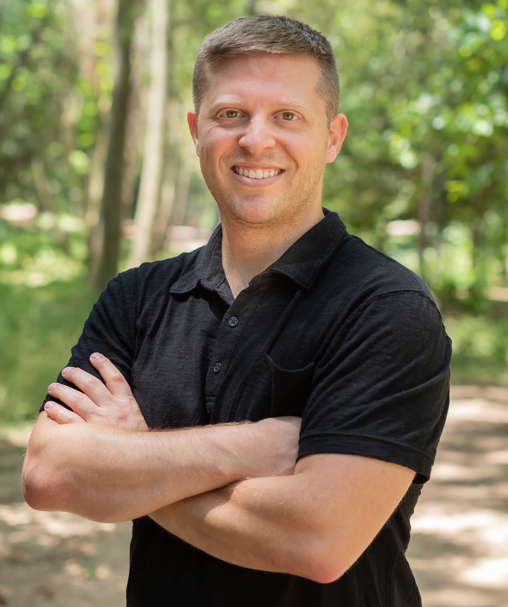

Guest
Ben Narasin
Founder & General Partner, Tenacity Venture Capital
Ben Narasin is a veteran venture capitalist known for his disciplined investment approach, having reviewed over 2,500 pitches in a single year while funding only one. He made the first institutional investment in LendingClub, which went on to become the largest tech IPO of the decade, and has backed notable companies including Rippling (currently valued at $17.8 billion) and Omada Health. With decades of experience at the highest levels of venture capital, Ben is known for maintaining rigorous investment standards and his ability to identify and re-back exceptional founders.
Chapters


Build Executive Visibility
Press placements on CNBC, Bloomberg, and MSN.com,
guaranteed, from one 30-minute interview.
Extracted into a month of content: press, LinkedIn posts, and video, so investors and buyers find real credibility before the first conversation.


Distribution through a channel with 2M+ real views
Full Transcript
Sean Weisbrot: What's the hardest thing about what you do?
Ben Narasin: You know, I think it's the patience to not start to do things I know I shouldn't. In other words, I see thousands of pitches a year. Last year I saw 2,500 pitches, I only funded one. But I believe that the death of venture is when you lower the bar. Having said that, at the end of the day, my job is to find phenomenal founders to fund them and to help them. And so when you see thousands of pitches and you can't find one that you think hits the bar, it makes you a little sad, but I've learned the hard way that you can't let that get to you. You have to just stay strong and maintain the bar where you see it and if you're wrong, you're wrong, but you start making compromises, it's a downward spiral, it doesn't look good.
Sean Weisbrot: What are some of the companies that you found that were outstanding that you invested in that maybe we've heard of today?
Ben Narasin: Well, the first institutional investment ever made was a company called LendingClub, which when it went public was the largest tech IPO of the decade. So, it's still a public company. That was an interesting one because it was sort of my first week on the job. I was driving to the office, I was listening to the local public radio station and and they're interviewing this French guy named Reno LaPlange about this new idea he had to basically dismediate the banks and allow consumers to borrow from consumers. His pitch was super crystalline. You pay 18% on credit card debt, other people put their money into banks and earn four. Why don't we let the people that are earning four loan to you at 12? They make more. You pay less. It's all great. And I thought, oh my god. This is gonna be huge. And so I spent, you know, a couple weeks trying to get to them. I finally got to some mid level person. They're like, I'll be happy to meet you. I'm like, no. No. No. I need to meet the founder. And then it took me forever to make the decision. I did make an investment. There's a lot of larger investments I made. And that was a great company, a great run. Interestingly, they fired that founder as they did with Zenefits. And both founders I've funded a second time, and both founders have gone on to build companies that are even more valuable. Zenefits was worth about 5 and a half billion at peak when he got fired and his next company, Rippling, which I invested in is currently worth $17,800,000,000 So a lot of people have heard of Rippling. I have five different companies that are publics at different levels. The most recent one's a company called Omada Health, that one took about fifteen years. There was a three d metal printing company, there's a company called Surf Air. That one's was it's funny. That's a not as fun story. I was in their first investment round and I'm still underwater on the public company. It's ridiculous
Sean Weisbrot: Hello?
Ben Narasin: because of a bad round done by bad people in my view, that crammed me down even though it was an up round. You gotta company success doesn't always equate to investor success, and that's something you all learn to mitigate.
Sean Weisbrot: Can you speak to a little bit more in a way that founders can understand how to mitigate?
Ben Narasin: Well, there's a one of the key realities, there's a large incubator out there that spends, I believe, too much time, and I've funded a bunch of their companies, too much time on game theory and how to maximize your valuation. These are ten plus year relationships when it works out. Imagine that you were dating and you decided in order to get the most attractive in the sense of the entire package of smart and beautiful and wonderful and hardworking and all that stuff, mate. And so you decide to use game theory to trick them. Now you're married, your life sucks, same thing. So, I think that founders should spend more time at the beginning curating and diligencing their investors. Now, I get that not all founders have choice and I was one of those. I mean, basically, if you have no choice and there's one offer, you pretty much know what you're gonna do if you wanna run your company. But given the opportunity, you want someone that you can believe will stand by you. That can be all the difference in the world. And to be fair, you should also treat your investors like partners as long as they are partners to you. You know, I, I had a company oh, it's not I can't say the name of it, but company that went public and I was looking at my share account and I was like, this seems off. And I called the foundries like, that's what we have on record. Now interestingly, sometimes my founders and I will negotiate on terms, and that's just life. Lawyers have to get paid. And I remember one of my entrepreneurs was getting all upset about a clause. And I said, Bob, let me ask you a question. I've done over 180 deals in eighteen years. How many times have I looked at the original documents? Zero. The only time was that time when I didn't even look at the original documents, I searched for weeks through my office, which is just piles, to find a document he had lost. And then he said, oh, no problem. We'll take care of it. And he added the shares even though it was after the filing. Same person, you know, I had ten year warrants, they expired. He's like, no problem. We'll just renew them. Them. You know, he wanted us to win. He treated us fairly. He treated us the way he would treat, you know, one of his relatives, like just do the right thing, do the right thing, things will work out. When you try to gain people, when you try to gain the system, it will come a day when it'll come back to haunt you. We we call these the self inflicted wounds that you're taught, which you suffer for later. So, you know, it's about truly finding a partner. Now I'm not gonna tell you all VCs show up and do the work. They don't. But it doesn't mean they're not entitled to participate as long as, you know, they empowered you with the capital to do the things you're gonna do. To erase them out of the history is entirely unfair.
Sean Weisbrot: Don't you think there's way too many VCs who just they claim we care about founders, but then they really just are a check?
Ben Narasin: Yeah. Oh, totally. No. It it it they've all been taught. Look, it's funny. I was, I was at a big, Silicon Valley Summit yesterday and this guy came in and was like, Ben. And I was like, yes? Said, oh, you don't know me, but I follow you on LinkedIn. I was like, I didn't even know that was a thing. He said, yeah. No. I love them. Like, you're just so you're such the advocate for founders. And I'm like, well, yeah. Yeah, I was a founder for twenty five years. I know what that life is like. That is what I wanna do. That's why it's so important you do the diligence. Everybody says, I'm phenomenal. I help my founders. Great. Why don't you call their founders and find out? And not the ones they tell you to call. Here's the trick I tell my founders. You you have a VC you like. Okay. Great. Give me some references. Great. Here you go. Boom. Okay. Now give me the list of the founders you funded or you look on their site and you look at the founders they funded. Now do a separate Google search for these days, ChatGPT, and find out the founders they didn't mention. So if they've got a list of 30 companies on their website and you find 33, call the three they didn't list. Find out what happened when things went poorly. Things are going well. I mean, you know, open and eyes about to go public and you're fat and happy. Of course, you're Sam's best friend. What about Sam was very unhappy with the company he had before called Loop'd? I think he unfairly I think he got too mad. I don't think it was the VC's fault, but I wasn't there. I wasn't in the room. But Nat Nat talked to him about how it went then. So talk about the failures, talk about the difficulties, talk about the hard times, look for those messages. I had all my founders come to a party and I asked them each to record, like, a two minute video, and I put it up on my LinkedIn page. And you wanna see any founder whether they've succeeded or failed, they're up there. I I actually had an LP meeting where I all the founders of Tenacity. I mean, I have a bunch, probably 30 founders from before Tenacity that have done testimonials for me, including companies that went to zero. And, you know, I think that's a useful way to understand me and I think others should try and do that. But net net, I we had our LP meeting, brought our LPs, and we brought a 100% of our founders in from around the world. They came from London, they came from Mexico, they came from everywhere. And at the end of the session, I said, okay, here's what I'm gonna do. I've told you everything about us. I've told you everything about these founders. We've interviewed these founders. I'm gonna leave, and and you can ask my founders anything you want because I have absolute confidence there's no skeletons in my closet. And so when I heard later was, well, your founders love you. They have one complaint. You don't have a website. I'm like, why do I need a website? I don't care. They go to LinkedIn page. They said, well, they like to have something to point to because there's another fund out of India called tenacity. So they don't want people to think that's who funded them. They wanna be able to point to you. But I still don't have a website. That was several years ago. So haven't been convinced it's worth doing.
Sean Weisbrot: I have seen I have seen websites that say coming soon under construction, and my first thought is, why should I trust you?
Ben Narasin: Well, I have a LinkedIn page for Tenacity, which has, you know, those videos from the founders and my various TV appearance, whatever. So there's plenty of content to be accessed about me. But, you know, most people are like, oh, you need a website for deal flow. It's like, dude, the last thing I need is more unsolicited deal flow. I mean, it's already ridiculously difficult to get to the number of times I've had to burn up a weekend just getting back to inbox zero, it's like weeds. You know, you prune the damn garden, and then a week later, you're like, oh, I gotta spend a weekend on this again. So, you know, there are a lot of venues for people. They can go to the LinkedIn page for me. They can go to LinkedIn page for tenacity. They can see hundreds of interviews with me. I mean, you I don't I don't Google my own name, but I'm suspicious if you Google Narison, you're gonna find plenty. So you shouldn't trust me because I paid $50 for some random out of a box piece of crap website that looks nice because it was designed by AI or Wix. Does that make me more trustworthy? By the way, it's sort of like think about this. When you go into a bank, you ever seen a a bank built out of wood? Oh, he's marble, big and beautiful. What does that have to do with anything? All it does is create this false sense of trust. I get it. Marketing and brand are important. But at the end of the day, if you're a scammer bank, your bank's gonna be the most beautiful bank in town. And if you're a scammer VC, wow, are you gonna have a nice website. Look, Benchmark didn't even have a website for a long time, and then I think they put up a page. Their reputation preceded them. I've been doing this for eighteen years. It's not that everybody knows me, but a lot of people do. And I think, you know, look, when entrepreneurs diligence me, I've never had an issue. I did have one guy say, yeah, I called a lot of people. I mean, you generally got a great reputation. I mean, what do you mean generally? Well, a couple of people's shirts. You know, you you could be a pain in the ass. I'm like, okay. You know, that's life or whatever. I'm neurodivergent, so fine. That's the current word for weirdo. It comes through every once in a while. But the the I remember once Renault from LendingClub was doing a someone was calling in for diligence, and he said, Ben is tough but fair. And I was like, dude, that's all I can ask for. I don't wanna coddle an entrepreneur. You think anybody's doing you a favor telling you how great you are when you're doing something horrifically stupid? I'm not gonna say that's horrifically stupid, but I'm gonna tell you stories how I did something horrifically stupid and how it ended up, and I will be hoping that you will listen enough to understand that we all make mistakes, maybe learn from other people's mistakes. I do not think being supportive of an entrepreneur is just blindly saying yes to every idea they come up with. I'm not there to veto you. I'm not there to get in your way, but I am there to provide you counsel if you're gonna ask me for it. And, you know, it's in some ways like being a parent. You know, you you spare the rod, spoil the child. I mean, I didn't beat my kids or anything, but net net, you gotta be tough enough on them so they can actually get stuff done. You don't just let them chew glass and be like, ah, he'll be fine, which by the way, of course, is a great metaphor for entrepreneurs. They have to chew glass. But if you actually say, you know what I'm gonna do? I'm gonna stand on stage at TechCrunch and chew chew glass to prove that I'm tougher than anybody out there. I'm gonna tell you, you know, you might wanna consult a surgeon that had to repair the mouths of people that chew glass first because it feels like you could do some permanent sparring.
Sean Weisbrot: Right. So I feel like that mentality was how, like, my great grandparents would parent or my parents would parent where or not mine, but like the generation. I think like two generations of parents or three generations of parents ago, it was kind of like, well, let's, you know, let it, you know, see what happens. Like, you know, you break your leg. That's fine. Just walk it off. You'll be fine. Just walk to the hospital and you'll get a cast. You'll be okay.
Ben Narasin: Yeah. Kids are amazingly resilient, and I do think we've gone from two you could use the word tough, but maybe it was too unengaged to too engaged. It was a great learning for me. We were at, my kids are all out of the house now, we're empty and ass. But I was at, we, when we moved here, we moved from New York and we went to this school and I was like, tell me about the teachers, tell me about this, tell me about that, all the typical questions. So I have the math program. We're talking pre k, by the way. But in New York, you have to take an SAT style test to get into pre k, like fanatical parents. Anyway, so here, they're like, you know what? What really matters to us is we want the kids to learn to love and love to learn. And I'm like, yeah. Thanks for the hippie bullshit. Now let's talk about the teachers. But what I came to appreciate over time is they meant that and it worked. The kids graduated with what they needed and along the way, they became well rounded children. And the thing that I remember the most, because I was not working, I resigned for quite a while, so I spent a lot of time with that school and being on different pair of committees and stuff, and a kid's on the playground, falls down, scrapes up his knee, teacher's standing on the sideline, teacher watches the kid, and I'm like, why is the teacher not going to the kid? Kid gets up, looks around, nobody's coming to help him, runs off. There's a book here that's very popular called The Blessing of the Skin Mean, but it was a crystalline moment of just like, Wow, that kid's fine. He doesn't need some parent to go hover over him, and, Oh my God, is your knee okay? Let's get the Bass of Tracen. He just went about his day. And it was a great reminder of the resilience of youth. Like, they're they're built to survive almost anything. Not anything, but a lot. In New York, you get pregnant, you hire somebody to come in and baby proof your house. Every plug must be protected. Every corner must be padded. Every window must be barred. It's crazy. And, yes, tragedies do happen. They're quite rare. But, like, the level of go from zero to a 100%, like, oh, it's it's crazy time.
Sean Weisbrot: Well, they do that because according to my friends who have really young kids, they're constantly trying to kill themselves.
Ben Narasin: Yeah. It's a bit of an exaggeration, but, yes, there's I okay. Here's an example. Yes. We put the little dollar plastic things in the in the sockets. How many people do you know? Now, I would say in life we come across probably in excess of a million people, not that we necessarily get to know, but that we come across in different forms. How many of them do you know that were electrocuted as a baby by sticking their finger in a socket? I know one person who, as a child, chewed through an electrical cord, which you couldn't protect against, and now and her mouth never grew. But,
Sean Weisbrot: Her mouth never grew?
Ben Narasin: dude, yeah. So she's an adult person with a very small mouth. It's I mean, not disproportionate. It doesn't look freakish. It's just but the story
Sean Weisbrot: I don't think an electrocution is gonna prevent grow. That seems strange.
Ben Narasin: I don't know. It was a weird that's the story I heard from her or one of her friends. Maybe it's a myth. But my point is, when was the last time you heard a story of, oh my god, my baby died from sticking her finger in the socket? Oh my god, this happened. I'm not saying it never happens. The problem is that today,
Sean Weisbrot: Well, Yeah.
Ben Narasin: when some outlier event happens, like, the baby that got abducted in Jamaica, everybody knows about it immediately. And so we perceive
Sean Weisbrot: I didn't hear about it.
Ben Narasin: this was many, many years, like ten, twelve, fifteen years ago. We perceive that these sort of incidents are going up. Statistically, they're going way down. This is another event from a school that was an interesting learning for me. They do all these educations for parents things, so this person comes in and presents and he's like, well, by show of hands, how many of you already know that child abductions have gone way up in the last thirty years? You know, like, 70% of people's hands go up. And he says, that's not true. Child abductions are down 80%. It's just that we see them all immediately online and in the news because now we live in a flat world of information. So the world is much better. Our lives are more abundant, but everybody writing a story likes the tragedy. You know what they the old saying in the news is if it bleeds, it leads. So the same is true, by the way, for the economy. There has never been a time in all of history where every strata of society is better off in all sorts of ways. But, you know, that doesn't get the whack jobs elected, so they gotta whine about this, that, and the other thing and try to take money from one pot to put it into another. Never has worked throughout history, but, of course, there's a group of people that try to do it. I don't even know if they actually believe in trying to do it. What they care about is getting their votes. Career politicians that will basically do nothing but be politicians for the rest of their life and become enormously enriched. Well, you know, damn, you know, let's let's screw the rich while they're themselves getting rich trying to milk off the system. Sorry. Drifting down on a tangent, we probably don't need to spend time on.
Sean Weisbrot: It's okay. There was something that you said earlier, which I've been thinking about. I've thought about it many times over the years. You said, I've seen 2,500 deals, and I only invested in one. Why is it that investors are so excited to tell people how many deals they've looked at every year?
Ben Narasin: I think it's well, I say it for multiple reasons. In the beginning, we used to count, I'm estimating now. There was a two year period, 2023 and 2024, where we saw 10,000 pitches and funded six. I think it conveys a couple of first of all, I like data. I think general statements are weak. I always tell my founders, specifics are your friend, generalities are your enemy. So some investors will say, we've invest only in the top 1%. I immediately think those are weak investors I mean, because clearly, I invest in, like, the top one fifth. It is hard in the current economy to find if you invested in one of every 100 pitches, you saw, man, you better be seeing some phenomenal deal flow. Part of it is I want entrepreneurs that pitch me to understand what they're up against for two reasons. One, the vast majority of the time, it's gonna be a no, and I tell them in the meeting if it is. The other thing is if I do fund you, I really want you to understand how special that is. I applaud my entrepreneurs all the time. To me, they are the superstars of the planet. They are the triple gold medalists of the Olympics of of economics, and I want them to know that and be proud of it. It. So I will trumpet from the rooftop how rarely it is I fund somebody if only to make sure the one that gets through the gauntlet is applauded for it by me if no one else. And so that you know, I've done, essentially, my entrepreneurs will often have me come to their annual offsites, you know, their company wide things. And I often tell the following story. I tell them that. Say, I want you to understand something about where you are right now. In two years, I saw 10,000 pitches, I funded six. In five years, I funded a total of 24. This company is one of the top three. Think about what that means. You have landed at what is likely, if you look at my track record as proof, which it is a reasonably good proof of this, at one of the best startups on the planet. Now you're here, so it just feels normal, but don't underestimate how special this is. You are at an incredibly exciting place and you need to appreciate that. And that message tends to resonate, the founders like it to be told and it's a little harder for them to tell it and the people like to hear that they're there. It's like there's a concept that wherever you end up is where you should be, maybe, but if you end up in a super elite place, it's even nicer to think about how you deserve that being there because these companies are always very rigid in their hiring, etcetera. So, you know, I want people to look, there's very it's a grind. It is an absolute grind to be a founder. It is mainly pain. But anytime you can add a little slice of joy, awesome. You do a big deal, buy a bottle of champagne and celebrate. Is it gonna take a whole day? No. Is it gonna be a toast at the end of the day at 05:00, 06:00, 07:00? Yay. Ring the bell. Clap your hands. Have champagne. Back to work. But give yourself that little sliver of joy. And I hope I can give a little bit of it in that way. But I also think people have just gotten used to it as a metric. I think part of it is, so how do you communicate this? I go back to I like data, I like specifics. I can say to you, I work incredibly hard and it would be true. You know, like, okay, doesn't everybody say that? But if I tell you how many pitches I saw in a year, it gives you a little bit of a it's funny, my son gave me pushback very much like yours. I was writing my annual report for my LPs and I said something like, we saw this many things. It's too even that's not specific enough. You say you traveled a lot. Go back and give them specifics. So I looked it up, I went through my whole calendar and I think, I don't know, it was something like, I can't remember the exact number, I'd have to read it, like, 52 conferences or visits to 22 different cities or something crazy because, you know, New York gets repeated, Mexico City gets repeated. And so I was like, here's that data. Now maybe they don't care at all, but, I mean, part of it is the harder you work, I don't need to stand on a hill and scream about it. But I'd like my LPs to understand Ness. He is actually doing the work. He is trying really hard to get us what we need from him, which is these phenomenal investments.
Sean Weisbrot: I don't envy that. It when you were saying that, it made me think of, like, I have several companies in different countries, and so I have to manage the tax filings every year. And so I have to go through and look at the invoices and the contracts and prepare all that stuff. And it and what you just said made like, I have PTSD from this. Just like every year having to go through the specifics because every one of these countries requires every transaction.
Ben Narasin: Yeah.
Sean Weisbrot: And, like, Estonia, for example, they they don't wanna just see a payment slip. They wanna see an invoice or a contract. They wanna see proof that there was a reason why you had to send this money or why you received this money. And it's very frustrating to have to do.
Ben Narasin: Fortunately for me, look, I cover The Americas. I used to cover The UK with some of Europe. But right now, it's US, Canada, LATAM. And so, you know, I'm I went to Salt Lake City half a dozen times last year, but there's no special requirement. I mean, yes, my I fortunately get to use an accountant to do that stuff. And, yes, we I'm always surprised at some random place we have to do a filing, but it's usually a random place in The United States. Also, as an investor, oh, you you are I can I I sympathize with the pain you have to suffer because, like, we have when we make an investment in, say, Mexico or Colombia, inevitably, some big old pile of documents from the government, oh, you gotta tell us everything that's ever happened in your life and who you are and, you know, get a proctology exam? I'm like, yeah. I'm not going to. And then they're like, then your company won't exist. And so it's like, really? So you have no choice. But, I always get I get PTSD over and over and over again when I, you know, I I tell the joke quite frequently because because I live in California, people are required to respect the identity I choose. And I identify as a 23 year old male. But the problem with that is while my friends in California might have to nod their head and smirk and say, Sure, Ben. Okay, fine. You're a 23 year old male. We'll take that. Mother nature doesn't care and she just kicks me in the teeth relentlessly because, you know, I'll still do the stupid things like take the 6AM flight because it's cheaper or, you know, try to get the go to oh, I mean, literally, like, I'm in Switzerland, but I wanna commit to this other conference. The only way to make it is take a red eye plus two connections to get there and then go straight to the conference. And it's like and then, of course, I say yes. And then at the end of it, you're just so beaten down because I can no longer travel like a 23 year old as much as I'd like to believe I am. And so that has become hard. And then I'll go for three I just came back from three weeks to travel. At the end of the three weeks, I'll be like, okay. I gotta take a break. I can't travel anymore. And then literally a week later, someone will say, hey. Do you wanna come on the show in New York? I'm like, absolutely. And I jump on a plane and and then that's literally what happened. So I think I'll be home for a month and then I'm home for two weeks. It it's just but having said that, look, I learned something a long time ago. I do believe I have an exceptionally fierce work ethic. I learned it from my father. I respected him and his. Working hard is required to get material things accomplished, but you work hard when there's a reason to, not just to appear to be working hard. So I'll work weekends, no problem, if there's something that requires me to work the weekend. But if there's not, I'm gonna sit on the couch and play Arc Raiders, or a founder will come over and we'll have whiskey and scar in the pit, or my wife and I will play pickleball with friends, whatever. But, you know, when the need is there, I'll fulfill the need. I just don't need to do it just so that I can say I worked every weekend. I I have a lot of respect for Elon Musk and it's always funny when people compare themselves to him and I wanna say and I usually will say, well, so just out of curiosity, I really care a lot about sleep. I like to get a good sleep. I think it's healthy for your brain. Do you sleep well? Oh, yeah, I do. So that's interesting because it's Elon Musk's next equivalent. He works seventeen hours days, seven days a week, fifty two weeks a year and makes people work through Christmas. I'm confused as to how you are the next Elon Musk when you are not sleeping under your desk for four to seven hours and you are not working weekends and you are not working holidays. So just out of curiosity, when you say Elon Musk, is it Elon Musk that exists or a fantasy of Elon Musk in your mind where he just did all this nine to five? Because I don't think you understand how hard that man works. He actually had a board member that used to get on him about not having enough sleep, Arianna Huffington, because that's her was one of her big things. And he's like, yeah, I just don't have time. It's like when I was a young entrepreneur in New York, we used to say, and I'm pretty sure it's what he says, We'll sleep when we're dead. You just don't have time right now. But now I have time. Now I can sleep. That's one thing. That is my that is my conceit. I will get my sleep.
Sean Weisbrot: I've always slept, like, at this like, my my body just goes to sleep when it wants to go to sleep, and it wakes up when it wants to wake up. Alarm matter alarm clocks don't matter.
Ben Narasin: Yeah. That's my goal.
Sean Weisbrot: And I think that's actually how we're supposed to live. It's supposed to be like, you know, go go to sleep when the sun goes down, wake up when the sun goes up. And I could go to sleep at two in the morning or 08:00 at night. I'm still gonna be up at, like, 04:30 to 05:30 because that's when my body wants to wake up. I have no control.
Ben Narasin: Yeah. I'm, I I sleep I'd almost never set an alarm unless it's, like, when I was on CNBC at 4AM. Yeah. I had no choice. But, normally, I go to bed at eleven. I wake up at sometime between six and seven, and that looks fine. And it's the the travel screws it up, which is probably one of the reasons that upsets me. But you adjust as best you can and you keep moving. But, yes, I do think in fact, there was just a story today about a new study that came out where because we don't really understand sleep and what it truly does, but now they think one of the most important things it does is literally flush everything out, like clean your brain.
Sean Weisbrot: It does. Yeah.
Ben Narasin: And I like that. Yeah. So it seems good to me. I like a clean brain.
Sean Weisbrot: Something I I learned about that specific function probably like ten years ago. And that's been always really important because I used to smoke weed when I was younger and I quit about six or seven years ago. And one of the reasons I quit was because the theory was smoking marijuana could potentially prevent your brain from not entering REM sleep, but it could severely compromise its ability to to do REM sleep, where REM sleep is the point at which it does that cleaning. And so I thought if smoking weed is gonna potentially be the thing that gives me, like, Alzheimer's because, essentially, what happens is this cleaning process allows you to take the there's, like, a plaque buildup. And so during REM sleep, it cleans out the plaque.
Ben Narasin: Right.
Sean Weisbrot: And so if you consistently don't get enough sleep and or you don't get enough REM sleep, it can't clean the way it needs to, and it builds up, and it causes Alzheimer's and dementia.
Ben Narasin: K. And one would like to avoid that with any ability he can. By the way, apparently, now I'm seeing a lot more data on I always assumed everything was about REM sleep, but now I'm seeing more and more data on the importance of deep sleep,
Sean Weisbrot: And I said, right.
Ben Narasin: which is not always my best number on the Oura ring when I do wear it, although I don't know, it's been years. So, it feels look, at the end of the day, I believe there's one undefeated entity on the planet and that's mother nature. And she's an incredibly effective vehicle for which is, you know, basically, it's all of evolution of all time, it ends up in you. And so I have to believe that if we let our bodies do what they are naturally intended to do, particularly, like, you know, sleep being an example of that, then we will deal with and process the things in the way they are needed. So whether it's REM sleep or deep sleep you know, I got one of the very first Oura rings, and I used to be a little fanatical, and then I got the next version. I was less fanatical, and now it's like, Sometimes it's useful, but for the most part, like I met the first investor in Aura and he went and used to be like a big humpback and I almost invested in the first round. Interestingly, it was the round that ended up being led by Prince Andrew and the Fresh Prince of Bel Air, Will Smith. And I was like, I'm not paying Prince prices. These people are amateurs. They don't know what they're doing. And I think it was like $100,000,000, no revenue, but clearly it worked out. So, maybe I should have been a little less snooty about who was leading the round. But I asked him if he had learned anything and he said, well, he'd learned two or three things. One, basically your body compresses caffeine in one of two ways. It's a genetic thing. You can either drink coffee at any point, including right before bed and fall asleep or you can't. I can't. If I drink coffee after about 01:00, I will be up at night when I go to bed. And I'll be lying there at midnight going, why can't I fall asleep? And And I'll be like, oh, damn it. I had that cappuccino after lunch. But what he learned is he's one of the guys that can drink right up to the point of going to sleep, but it materially impacted his deep sleep. Same thing with a big meal and red wine. All three of those things, even though he could go to sleep with no problem, impacted the quality of his sleep. So, you know, that might have changed my own thinking about it because I would have thought a nice big meal and then you're tired and you go to bed more easily, but the digestive process is quite straining. So
Sean Weisbrot: No. It's really bad for you to lay down and not and have food sitting in your stomach, not digesting.
Ben Narasin: yeah. Apparently.
Sean Weisbrot: What's the most important thing you've learned in your life so far?
Ben Narasin: Happiness is not about having what you want, it's about wanting what you have. And, you know, I think we all it's funny, I had an entrepreneur over one weekend. He said, hey, I need some advice. Can I come over? I'm like, absolutely. Back in the day when my kids were home, I said, you can have me during the weekend, but you have to have me at my house because I need to be with my family. So he came over and we're talking about a half an hour in. And I said, you know, you're not asking me for business advice. You're looking for the meaning of life. And he's like, oh, maybe. And I said, look, at the end of the day, it may or may not be different for each of us, but we have to find it. And by the way, no matter how hard you look, you won't find it. It will find you. And so for me, it was it finding me that happiness is not about having what you want, it's wanting what you have. Now, admittedly, that is a much easier to say concept when you have an abundance. But I have run into people that have very little that are very happy because they're very happy with what they have. And I think, and I know more than plenty of people that have a lot, a lot more than me and are very unhappy because they don't have enough, because it's never enough, because there's always more that needs to be had to keep up with fill in the blank. And that balance, once I sort of realized that or it came to me, it actually came to me in a very odd way, through a movie, a crappy movie, a really terrible movie. But I was I started to look around at my own life and say, I am so happy for what I have. You know, wonderful family, great kids, wonderful wife, you know, a reasonable amount of abundance that, you know, gives me freedom, a great house, live in a wonderful community, all that stuff. Like, I don't need the trappings beyond that. You know, it's not there are people that I I know somebody who's who said to me, well, what I need is to have a a jet that's big enough that I can drive my car onto it and go on a moment's notice anywhere in the world that I want to. Okay. Well, I don't know what spawns that need, but, you know, that's a that's a quest that I don't have. I don't need a plane. I don't need more than one house. One's good enough. I love the house I have. So that's probably been the single most important thing. I think over time, tide is life's hard, get over it. It's hard for everybody. And everybody thinks other people have it better. They might have it better, they didn't have it easier. And if you doubt this, everybody thinks their life is hard. You know that there was that prince in England who gave up his princelyhood and married some television star and moved to The US and got a TV contract and he wrote a book called Spare. Do you know where the term spare comes from in that book?
Sean Weisbrot: No.
Ben Narasin: So there's an old school WASPy term about having children, which is you want an heir and a spare. Two boys, one to inherit and one in case the first guy dies. He was the spare. And, oh my god, was that horrible. And you're like, you're a prince. You're literally a prince, and you're whining about, oh, woah, woah is me. Really? Really? I mean, I'm pretty sure 99 plus percent of the population of young males would be perfectly happy given the opportunity to be a prince. And I'm pretty sure a vast number of women would be very happy to marry a prince. Isn't that what young girls look at as the ultimate? So it was just like, wow. Really? Your life is so hard. Oh, world's smallest violin playing just for you. So life is hard for everybody. You gotta you gotta rely on yourself. Nobody's coming. It's up to you. It's a Navy Seal saying, like, just just get it done. I mean, be quiet. Do the work. Get it done.
Build Executive Visibility
Press placements on CNBC, Bloomberg, and MSN.com,
guaranteed, from one 30-minute interview.
Extracted into a month of content: press, LinkedIn posts, and video, so investors and buyers find real credibility before the first conversation.
Distribution through a channel with 2M+ real views
