Why "Green Premiums" Fail: The 3x Rule for Climate Tech
Why do most climate startups fail to scale? Tom Chi, a founding member of Google X and inventor with 77 patents, argues that relying on "Green Premiums" or even price parity is a death sentence. In this interview, he reveals the "CapEx Inertia" trap that prevents factories from adopting new tech and why your solution needs to be 3x cheaper than the incumbent to survive. Tom shares the heartbreaking story of watching a coral reef die in just two months—a tragedy that pushed him from inventing to investing. He breaks down his unique physics-based diligence process (analyzing Matter, Energy, Time, and Space) and explains why he focuses on the four industries responsible for 90% of water pollution. Finally, he shares his life philosophy on why you should focus on "verbs" (your metabolism of learning) rather than "nouns" (status and titles).
Guest
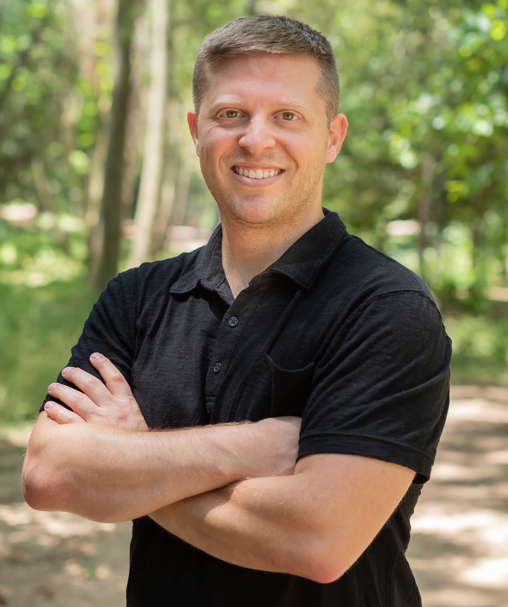
Tom Chi
Founding Partner, At One Ventures
Chapters
Full Transcript
Sean Weisbrot: What made you so interested in investing in climate startups?
Tom Chi: So, uh, truthfully, I wasn't interested in being an investor at all because my overall career has been as an inventor technologist.
Tom Chi: I'm a named inventor on 77 patents. I've like all those things were actually built.
Tom Chi: I've probably patented maybe three or 4% of what I've actually built as opposed to just.
Tom Chi: Patenting a bunch of stuff to go protect a space with no intent to build, uh, intent to build it.
Tom Chi: Um, and given that that I've built a whole career around being the person that can actually just literally make the thing, or if I am projected, I'm like the leader of the team that's making the thing.
Tom Chi: And when you build your career with that sort of skillset, then going into investing where you just talk about making the thing as opposed to making the thing actually seems like a step down.
Tom Chi: So like in truth, like people with my background relatively rarely become investors.
Tom Chi: 'cause I, I will say that it is a little bit less, um, you don't get the satisfaction of the solve and the completion that, that I would normally get in a build process, right?
Tom Chi: Like I, I'm needing, there are important problems to solve, but, uh, I, I'm working with the founder to be able to complete them so I can't complete them in the ways that I would've if I were just running.
Tom Chi: A thing, but to answer your question directly, why would somebody of my background end up in this field?
Tom Chi: Then it is, um, what I think actually drives a lot of people, but is talked about less, which is tragedy, right?
Tom Chi: We, we like the inspiration stories because when, when you hear the inspiring thing, it's like, oh gosh, they got, they got so curious about this, and then they got a little bit obsessed with it and they built this amazing thing and honestly, it's a fantastic narrative and it really.
Tom Chi: Fits with the kind of positive vibe that we like to put out into the world when we, when we talk about things.
Tom Chi: But I will tell you that like some of the most deeply committed people, they got into it because of tragedy.
Tom Chi: And actually tragedy oftentimes has more staying power than inspiration. So for me in particular, then.
Tom Chi: I was, um, kind of at the height of my career as an inventor.
Tom Chi: I was one of the founding team members of Google X. I had hired an amazing team that was inventing at a pace, which is dramatically faster than, than, you know, the Google mothership had ever invented at.
Tom Chi: And we were working on self-driving cars and Google Glass and Project Loon and new approaches to ai, which became Google Brain and so on and so forth.
Tom Chi: It was about as technically compelling and exciting, a work that somebody with my background could ever do.
Tom Chi: But what happened during that same time period is I, um, you know, I was a, I was a technology exec, which meant that I've gotten my San Francisco home and I also had a vacation home and out in Hawaii.
Tom Chi: And my home in Hawaii was about two minute walk from a.
Tom Chi: Astoundingly beautiful coral reef, which I spent a lot of time on whenever I was in Hawaii.
Tom Chi: And while I was at Google XI actually watched that reef go from every color of the rainbow and life coming outta every pocket and corner to, um, gray and brown and no life in less than two months.
Tom Chi: And what I had witnessed was basically a mass bleaching and, and total reef collapse event.
Tom Chi: And, uh, look, I'm a, I'm a former scientist and I wanted to really understand what happened.
Tom Chi: I will tell you that the feeling of it was like tearing a hole in your heart because when you live next to a reef as opposed to just visited on vacation, it actually, at least to me, it became like an extended part of the neighborhood.
Tom Chi: Like I, I knew a bunch of organisms that lived on the reef, like I knew my neighbors.
Tom Chi: And watching that whole reef die was like watching all your friends and neighbors die or move away.
Tom Chi: And it just kind of tore this hole in my heart where I went and spoke with a bunch of coral scientists, marine biologists, to understand what was happening.
Tom Chi: And they told me that not only had my reef died that year, but a substantial proportion of all reefs on planet Earth had experienced, you know, some bleaching.
Tom Chi: And, and when I went and asked, you know, okay, um, how much time do we have left?
Tom Chi: Then if this type of thing is happening on the planet, then what, how much time do we have left?
Tom Chi: The consensus amongst two dozen coral scientists and marine biologists. 'cause I'm very thorough when I go after a thing.
Tom Chi: I didn't talk to one scientist. Um, then, you know, the consensus was that we were on track to basically extinct coral reefs as an ecosystem from planet Earth by the year 2055. And I was like that.
Tom Chi: That's insane. That means like the pain that I just felt the whole world is going to experience.
Tom Chi: But we're going to lose all the reefs, not just. A reef next to a neighborhood in Hawaii.
Tom Chi: And I, I asked them like, well, if that were to happen, is there any chance that corals like come back on planet Earth?
Tom Chi: Like, could they reeve? Like what happens if we extinct all these corals and these, these are biologists, marine biologists, you know, coral scientists.
Tom Chi: And they're like, it is possible. I mean, evolution can do a lot of things, but I think you got a budget like 20 million years.
Tom Chi: And I was like. What, what are we doing?
Tom Chi: We're making these decisions right now that are 20 million year decisions and I, and I have like, no, oh look, I have faith in humanity, but I don't have a a hundred percent certainty that we're gonna last a million years, much less 20. And this idea that like we're about to go do something that is going to wipe out the, you know, one of the richest ecosystems, well, you know, obviously the most biodiverse ecosystem.
Tom Chi: In the oceans for the rest of human history. It didn't sit right with me and I wanted to kind of figure out how to step up to prevent the same tragedy that I experienced.
Tom Chi: I wanted to see if we could make the big moves to, to try to avoid that tragedy for the totality of the world.
Sean Weisbrot: Hey, business leaders and marketers.
Sean Weisbrot: What if your brand could be featured right here? This ad spot could be yours.
Sean Weisbrot: This channel is watched by a dedicated audience of ambitious founders, executives, and professionals who are actively looking for tools and services to help their business grow.
Sean Weisbrot: If you wanna put your brand in front of this highly dedicated audience, that's difficult to reach.
Sean Weisbrot: I'm currently looking for a few strategic partners for the channel.
Sean Weisbrot: To learn more about sponsorship opportunities, click the link in the description. Let's go together.
Sean Weisbrot: I went through your website after our first conversation, and I'm so used to venture capitalists saying, we back, great founders doing blah, very, uh, monotone.
Sean Weisbrot: Nobody really says the thing that they, they are focused on and.
Sean Weisbrot: When I saw your website, I was like, oh, this is not the way investors talk.
Sean Weisbrot: This is the way that someone who's deeply concerned about something, talks about something, talks about a topic, and I've been deeply concerned about the environment for a very long time.
Sean Weisbrot: And I am constantly harping on everybody I know to do better.
Sean Weisbrot: Um, even though, you know, we could go on and on about how there's a number of companies that are probably the largest reasons for these problems, but also we have a responsibility because of our actions and the actions of those around us.
Sean Weisbrot: And you are, what you're doing is the first time in my life where I felt compelled to.
Sean Weisbrot: Think more about how I can be involved in climate tech, because anyone can build an ai.
Sean Weisbrot: Anyone can build a B2B SaaS, but people that are out there trying to build something that's gonna change, you know, how the environment is in a positive way.
Sean Weisbrot: They're trying to take out industries that are destroying the planet with better solutions and whatnot.
Sean Weisbrot: It's, it's inspiring because there's so many people that are out there. That are saying but not doing.
Sean Weisbrot: And something that was also really interesting to me, I don't have the exact statistics, but I came across something where some people were saying the best exits they've had or the most consistent exits they've had were from climate tech companies.
Sean Weisbrot: That of all of the other companies that they've invested in or been involved in, climate focused ones changing the way things operate, are the, by far the best, uh, returns on their investment.
Tom Chi: A lot of people are chasing, you know, AI have been chasing enterprise SaaS, have been chasing all these sorts of things.
Tom Chi: And it means that for a lot of these things, it's like the, like the 10th version of the thing.
Tom Chi: Like it's the, it's the 10th option. So like if you're an enterprise SaaS and you make like new procurement software, you make new a TS tracking software, you new make new project management software, there's literally 10 other good options.
Tom Chi: And like when you introduce, you know, the 11th option to the marketplace, then we, we tend to call these sorts of decisions, discretionaries.
Tom Chi: 'cause Oh, I use my discretion and I try to pick the best option out of 11. Right.
Tom Chi: But in the, in the work that we do, here's the, the, the thing about physical production and physical industries, they're actually way less diverse than that.
Tom Chi: There aren't 11 options. Everybody that produces a particular good has basically.
Tom Chi: Zeroed in on the, the technical approach, the, the manufacturing approach that is currently the lowest unit economic. That's it.
Tom Chi: There's, there isn't like 5,000 different approaches to these things.
Tom Chi: There's not even 11. You, you typically have one or two approaches, which means if you beat that approach, you are the monopoly.
Tom Chi: It's not discretionary. If you actually have three times, you know, cheaper unit economics than the current cheapest approach, you are the new monopoly immediately.
Tom Chi: And this, you know, because honestly it's a little bit harder, uh, to go get these things done, you know, out of the gate than it is to just write another piece of software and.
Tom Chi: The people that are able to, you know, bring the right skills to bear, it is less hard for the people that have the right skills to bear.
Tom Chi: Like, for example, in, in our team, all three investment partners have a background in manufacturing and we have three other people on the team that just support the manufacturing de-risk for our companies.
Tom Chi: And I think if you have that, then physical businesses are not nearly as daunting.
Tom Chi: I think a lot of folks get into physical business. Oh, it's a hundred times harder.
Tom Chi: No, it's a hundred times harder for you 'cause you've never done this type of work before.
Tom Chi: But if you're a person that has set up lines before has done manufacturing in various types, it is another turnaround the block.
Tom Chi: And not to say that you can't have a cost overrun or that you can't get an estimate wrong, but it's not an alien thing to you.
Tom Chi: It's a thing that you've shipped multiple times in your career. And here's the n plus one.
Tom Chi: Iteration of you shipping another thing like it. So that said, if you are able to build the right team that's got the expertise to, for, you know, for which it's not as hard a discipline, then yeah, you end up, you know, you end up backing things and getting them over.
Tom Chi: The manufacturing de-risk that become the new defaults. And the new defaults basically are economically a monopoly.
Sean Weisbrot: So what exactly are the things that get you excited?
Sean Weisbrot: Like you had mentioned, uh, uh, several times, cheaper cost of production, something like that.
Sean Weisbrot: What, what exactly do you look at?
Tom Chi: Uh, I'll tell you exactly how we do it.
Tom Chi: So basically, purpose of our firm is to help humanity become a net positive to nature, which sounds very lofty.
Tom Chi: So how do you go and concretize that nature to us has. Four physical sub components, air, water, soil, biodiversity.
Tom Chi: And now that we have the sub components, we can stack rank the industries that are currently doing the most damage.
Tom Chi: So for example, for water pollution, over 90% of global water pollution by volume comes from just four industries.
Tom Chi: So, agriculture, textiles, paper, and pulp. Oil and gas. Oil and gas will say they're not on the list, but they have enough.
Tom Chi: Spills and accidents that I consider that to be the normal action of the industry.
Tom Chi: 'cause when you're doing spills and accidents every year, that is just what your industry does.
Tom Chi: Even if you say, oh, that's not officially how our industry works. Anyway.
Tom Chi: So between those four, if all you did was change how those four industries related to water, you could address 90% on the global water pollution.
Tom Chi: If you, you know, if you care about the last 10%, well that's a thousand more industries.
Tom Chi: So if you have limited capital and limited time to be able to go and invest in such a way to be able to have the biggest positive impact on the planet, then you should focus on the industries that are at the top of the stack rank.
Tom Chi: It also has the benefit of the industries at the top of the stack rank are some of the largest industries in the world.
Tom Chi: You don't have this kind of like niche tam problem where, oh, I care about the environment and now I'm on some little niche.
Tom Chi: You know, sub wrench. No, we're going after the big metal, the stuff that basically creates our modern world.
Tom Chi: Now, what we're looking for when we're trying to go upgrade that is we, we look at our investments through this lens that we call the triad.
Tom Chi: The triad is a disruptive deep tech, which helps to usher in radically better unit economics, paired with radically better environmental economics.
Tom Chi: And what does radically better mean?
Tom Chi: For us radically better. If you're trying to go displace primary manufacturing production of goods and services that are driving a lot of the damage to air, water, soil biodiversity, then a good rule of thumb is whatever the margin is for that industry, you're gonna wanna find the deep tech that is gonna crash the primary cost of production by more than three x that margin.
Tom Chi: And that is basically the range that basically drives, um, incredibly um.
Tom Chi: Incredibly robust and active upgrading of the industry as opposed to kind of like, oh, let me pilot and let me sample and let me kinda like muck around for three, four years and then maybe I'll do like a little co like a like a little co facility with you.
Tom Chi: And then maybe on year eight, no, like you want landslide sort of adoption.
Tom Chi: And I think what people have not been thinking about in this space before.
Tom Chi: Because look, a lot of people that do this type investing, they do it because they think that they're doing the most moral thing.
Tom Chi: So they're like, yo, I'm gonna do this because I really care about things and I'm gonna make these amazing products that people are gonna pay more for this.
Tom Chi: The idea of a green premium, I'm gonna tell you, green premiums will never change. The industrial defaults.
Tom Chi: The the B2B players that are basically doing the industrial defaults could care less, that you might be able to sell a luxury green good to, to two to 3% of the audience Who cares?
Tom Chi: Right. They care about lowering the lowest cost, not raising the highest cost.
Tom Chi: So green premiums step out. We don't touch it. But amongst the people that care about the environment, there's also a big camp that is excited about getting to parody.
Tom Chi: They basically say, well, what if the, what if there's a clean, green way to do this industry that had the same cost structure as the dirty damaging industry we have today?
Tom Chi: And honestly, that sounds pretty promising. But if you try to go do that in practice, you're gonna find that you are.
Tom Chi: Devilled by what, what in our firm we call CapEx inertia.
Tom Chi: And what that basically sounds like is if you went to a factory owner and you said, oh, I have this clean green solution.
Tom Chi: And it like produces equally, you know, a good of equal quality and you have the same opex, but you know, it reduces your emissions by 90%, it gets rid of half of your water pollution.
Tom Chi: The particulates are gone. So your, your staff is not going to wear, need to wear masks when they're at these two stations.
Tom Chi: Right. Sounds like a great pitch. If you gave that pitch to a actual factory owner, then they would reply with something like this.
Tom Chi: They would say, okay, let me get this straight. You have this new invention, I gotta, you know, and you want me to adopt it.
Tom Chi: And if I adopt the invention, I get to go from my current CapEx.
Tom Chi: So let's say it's a hundred per unit CapEx. I get to go from that to your, the new CapEx, which is a hundred per unit CapEx.
Tom Chi: So what you're telling me is I get to go from a hundred per unit CapEx to a hundred per unit CapEx, and all you ask of me is that I, uh, that I dump $250 million of productive CapEx and the conversation's over, right?
Tom Chi: And this is why parody doesn't really do what people think it does.
Tom Chi: Like parody could only really compete on a greenfield build, where the people are confident enough in the new approach that they would be fine getting the same opex on a greenfield build.
Tom Chi: But when you go and look at the industries that are doing the most damaged nature, they already have huge install bases.
Tom Chi: It's mostly brownfield, and it means that largely it is brownfield upgrades.
Tom Chi: It is not greenfield builds, which means that you actually need to beat the unit economics profoundly.
Tom Chi: And if you beat the unit economics by three x more than margin. The math flips around.
Tom Chi: It flips around to if I don't upgrade within three years, if I don't upgrade within five years, I'm losing crazy money.
Tom Chi: But with the parody math, then if you do upgrade, you are losing crazy money.
Sean Weisbrot: How can founders. Get their head out of the box so that they can come up with these solutions.
Sean Weisbrot: Because, for example, I just came across a startup that I wanna talk to you about a little bit later, that they're, they found a way to get costs lowered by 40%, and that's not the three x that you're looking for, but I think they, they're trying really hard.
Tom Chi: So let me go to the foundations of where the, the winds come from.
Tom Chi: And, uh, we didn't talk about this, but you know, I have, my formal training is in physics and electrical engineering with a specialization of robotics and signal processing, but I, I actually was a working physicist for six years.
Tom Chi: I was an astrophysicist and published research and did peer reviews, all those sort of things.
Tom Chi: So I do know how to do the fancy equations in physics, but like what I explain to people about our investment work is.
Tom Chi: It's amazing investing in physical businesses because when you invest in physical businesses, literally everything has to follow the laws of physics.
Tom Chi: So it actually gives you all these additional diligence tools that you would not have.
Tom Chi: If you're looking at software. If you're looking at software, software is a little bit like clay.
Tom Chi: If a person can imagine it and they're a good enough coder, you just need to believe that they could code it.
Tom Chi: Will it actually be coded at the level that it can achieve all the things that they said a lot of times, no.
Tom Chi: Could, you know, even if they code it right, does it always get picked up in the marketplace?
Tom Chi: No. A lot of times, no. So there's a lot of have to believe that, that you do in software that you don't need to do in hardware.
Tom Chi: In hardware, the physics, if you get way better unit economics, it is typically because you have way better physics and you can actually check the physics at the beginning.
Tom Chi: So even though I'm a, I'm an actual physicist and I know how to do fancy equations, I like to go and.
Tom Chi: Simplify physics for, for folks that didn't study it formally by saying it's really nothing more than the study of matter and energy moving through time and space.
Tom Chi: So there's only four things to track, and if you're trying to understand whether a new piece of technology has the ability to go displace the incumbent industry, you actually just go head to head on those four attributes.
Tom Chi: How did matter change between the old system and new?
Tom Chi: How did you know energy use change between old and new? How did time change? How did space change?
Tom Chi: And if you don't have a big win on at least one of those four attributes, you can already pass on the deal because it means that they're using similar physics to what is uh, the incumbents have been using.
Tom Chi: And if you use similar physics, you're going to end up with similar unit economics and it's gonna take you 10 years to catch up to the unit economics of the existing industry, which means it's kind of a dud as investments go.
Tom Chi: So to answer your question really directly, for this team that has got the 40% win, I would actually sit down and say, well, are you at the theoretical maximum of your physics win?
Tom Chi: Right? So for example, if you know half of the cost of the, of the system was the feed stock cost, the atoms that went into it, but you're able to go reduce the amount of atoms really substantially because of the, you know, the way that you're handling matter.
Tom Chi: You just need way less of it to be able to go build the thing.
Tom Chi: Then I can already say that like just based on your physics, you have the potential for savings that is this large, right?
Tom Chi: Because you were able to get rid of 80% of the feed stock on 50% of that cost structure.
Tom Chi: So that's where the 40% wind comes from. Now, if that's where the wind came from, and they had actually all fully realize that, then the 40% that they're at is actually the theoretical maximum and they can't go further, but.
Tom Chi: If some of the wind was coming from matter and some of the wind was coming from energy.
Tom Chi: 'cause let's say the other half of the cost structure of this hypothetical business was energy cost, right?
Tom Chi: Well, if you could reduce that by half, then you could say, well, there's another 25% that I can get on top of that 40%.
Tom Chi: Does that all make sense?
Sean Weisbrot: Yeah. And so is this something that you go through with any company that you invest in?
Tom Chi: It's the literal first set of questions in the technical review.
Tom Chi: And it's actually honestly very easy for technical people to answer questions about matter energy, time, and space.
Tom Chi: 'cause I'll go in there and it's like, Hey, how did energy change between the old process and the new process?
Tom Chi: And they're like, well, in the old process, the reaction requires, you know, 550 joules of input in order to go drive.
Tom Chi: And in the new process then it only takes 143 joules in order to go, you know, have the reaction take place.
Tom Chi: And I'm like, okay. So like, honestly, technical people can answer these questions incredibly crisply and the, and this is in comparison to when technical people make like business performas and.
Tom Chi: And you know, these extensive decks, I know that a bunch of that stuff's bullshit, right?
Tom Chi: Like people draw like the, you know, the ascent to like the hockey stick curve on all these things.
Tom Chi: It's like, that's not gonna happen. I know we're doing the dance. You need to say it'll happen.
Tom Chi: I use it to go see how you do business modeling.
Tom Chi: And that's really all that's happening on this slide. But when it comes to the physical stuff, technical people are very close to the metal.
Tom Chi: They can typically tell you exactly how much matter has been reduced, how much energy has been reduced.
Tom Chi: How much time or space has been reduced in the new solution?
Tom Chi: It's lit. Literally the thing they built.
Sean Weisbrot: It's really interesting 'cause yeah, just going back to other conversations with investors, like they, especially on the software side, you don't have those conversations usually.
Sean Weisbrot: It's always just, you know, how many customers do you have? How much are they paying?
Sean Weisbrot: How, what's your churn look like?
Sean Weisbrot: And, and some investors don't even ask those questions.
Tom Chi: Software, like I said, is like clay.
Tom Chi: And actually this is why I think the conventional wisdom is wrong, right?
Tom Chi: A bunch of people recently, because we basically had two and a half decades of almost entirely software focused venture.
Tom Chi: And it means that the people that created Silicon Valley, they've all aged out, but it's called Silicon Valley.
Tom Chi: It's not called lines of Code Valley, it's called Silicon Valley, because original venture capital was all hardware.
Tom Chi: So the idea that suddenly, oh, there's no way to make money in venture capital when you do hardware, what are you guys talking about?
Tom Chi: It was literally invented, the entire discipline was invented on hardware.
Tom Chi: The fact that we'd spent a generation just looking at software, well, that's our fault, right?
Tom Chi: And because we spent a generation on it, then we convinced a bunch of folks like, well, if you really wanna be a serious investor, you really gotta understand software.
Tom Chi: Look, I actually understand pretty software.
Tom Chi: Uh, I understand software pretty well. I was a software engineer. Did that for several years.
Tom Chi: I like ran two multi-billion dollar software businesses. Like I, I do know what that side of the coin looks like.
Tom Chi: But even with all of that background, then I will tell you that I love the additional diligence constraints that physical businesses allow, that you cannot apply to software.
Tom Chi: 'cause I can get so much clarity on this investment, even when it's three people and then we're just talking about.
Tom Chi: Time, energy matter and space on their approach versus the old, right?
Tom Chi: Like with software, when it's three people, it's like, oh, well, you know, we haven't built that much yet.
Tom Chi: And um, you know, if you just believe then and put in some money then, and you believe in our pedigree is that we can build this type of software, then maybe it'll turn out well for you.
Tom Chi: And the reason that those investors asked for the metrics that you just mentioned is those are the first times that you can dive, you know, depart from just pure faith and belief.
Tom Chi: And actually get a number like, oh, what was your monthly, you know, recurring revenue. Oh.
Tom Chi: Like, you know, tell me about like, which features the customers are using.
Tom Chi: That's the first, like actual feedback that you can get on software with the, with, you know, physical businesses.
Tom Chi: I can pre-assess all the things just on matter, energy, time, and space, even before they've done 90% of the work.
Sean Weisbrot: So even though you're able to do that.
Sean Weisbrot: What's the point in which you like to invest in them?
Tom Chi: Yeah, absolutely. So there is a specific point that we wanna be in the, in, uh, getting into the business and if you're familiar with the government TRL levels, um, which are basically about technology readiness, um, then I basically have a version of that for venture, which is a bit simplified because why add extra things for a model if it's not relevant to you?
Tom Chi: The particular application space you're, you're applying it to. Uh, but for, for me, you know, in venture there's kind of six readiness levels which are of interest.
Tom Chi: There is early lab bench, mid lab bench, late lab bench, early commercialization, mid commercialization, late commercialization.
Tom Chi: We're doing all of our investments as a early stage venture, uh, firm in late lab bench, early commercialization.
Tom Chi: Because what we want to do practically is not take on science risks.
Tom Chi: We wanna take on engineering risk and manufacturing risks because, you know, science risks and, and engineering risks are quite different.
Tom Chi: Like science risk is, I don't even know if this thing could be invented and I have no like, sense of exactly how much time it would take me to invent it, but I have a hunch that it could work.
Tom Chi: And okay. I mean, there are some investors that want to take on that type of risk, enormous risk profile.
Tom Chi: A lot of those things never work. Or if they do work, then they take substantially longer than the 10 year fund life to be able to get into any sort of interesting commercial outcome.
Tom Chi: Um, and that's why we don't really touch that.
Tom Chi: But engineering risk is quite different. Engineering risk is, you know, the thing can be engineered.
Tom Chi: It is just a question of whether you can put the right team in place to go do it in the time that you hope to go do it.
Tom Chi: That's a very manageable risk compared to the unknown time risk of scientific discovery.
Tom Chi: Now, how do you tell the difference between early, mid, and late lab bench?
Tom Chi: Early lab bench basically sounds like first time in the world a thing was discovered or achieved and you know, and because it's literally the first time.
Tom Chi: Then we haven't gone through the entire process of multiple labs have also gotten the, the effect.
Tom Chi: And given that we've been able to do peer review validation, that the effect exists.
Tom Chi: And we've already seen a bunch of points in history where, you know, people jumped at the chance to go do early lab bench and a lot of money flowed.
Tom Chi: So like back in the early nineties there was a belief that, you know, with a single research team that they had discovered cold fusion.
Tom Chi: And it turned out that it was not the case, but a bunch of investors were ready to be like, how do I put all my money into cold fusion?
Tom Chi: And then like about three years ago, we had a similar sort of early lab bench thing where a bunch of folks said, Hey, we made room con room temperature soup protectors.
Tom Chi: It's gonna change the whole world. And a bunch of investors like, how do I throw money at it?
Tom Chi: And it's like, guys, it literally has not been validated by one other team.
Tom Chi: And for both of those, when they actually tried it, it wasn't a thing like, it, it, it never even existed.
Tom Chi: Look by by comparison. I actually still consider the, the nif rean, uh, the NIF result National Ignition Facility at, uh, Los Alamos, which is the first in the world to get Q greater than one for fusion.
Tom Chi: I actually still consider that to, well, that is a verified result.
Tom Chi: Like we can tell that that actually happened, but I still consider that to be incredibly early.
Tom Chi: That's like somewhere between early and mid. Now what is Mid Lab bench?
Tom Chi: Mid Lab bench basically is multiple teams around the world have been able to replicate your result and verify that it definitely is a true result given that it's a true result.
Tom Chi: A bunch of people are contemplating. Well, you know, this might have important implications for industries.
Tom Chi: Oh, this might have a great application if we were to put it in this spot in the world.
Tom Chi: But at Mid Lab bench, you know, the result is real and they, people are speculating the industries that it could, that it could.
Tom Chi: Um. You know, drive fantastic innovation on, but nobody's like built a prototype to go show that, you know, um, that like it does the actual effect that it needs to do for that industry.
Tom Chi: And then late lab bench is the point where somebody has built that first prototype and you can just measure the inputs and outputs and actually see.
Tom Chi: That the, that the effect that you're trying to drive into industry.
Tom Chi: Oh, the reduction in thermal energy input, the, the higher efficiency on so and so, work cycle, blah, blah, blah, actually exists.
Tom Chi: And if that exists, then we're, we're ready to invest. Right.
Tom Chi: We don't care that there's a lot of engineering risk after that.
Tom Chi: We don't care that there's a lot of manufacturing risk after that.
Tom Chi: So we're still quite early, but we're past the science risk.
Sean Weisbrot: What's the most important thing you've learned in your career so far?
Tom Chi: Oh my career or in investing?
Sean Weisbrot: What, either way, what, whichever is you find is more, uh, important for you.
Tom Chi: Sure.
Tom Chi: I mean it like in my entire life, I think the most important thing that I've learned is that people are obsessed with states and status and nouns.
Tom Chi: Where it's like, oh, I have this title now, or I, you know, or you know, I am now a billionaire or whatever.
Tom Chi: Right. And really the most interesting thing is metabolisms.
Tom Chi: The thing is the verb that you are right. The verb that you live in the li in your life is you know the crux of what your life is.
Tom Chi: The achievements are just things that get integrated because you do the verb long enough.
Tom Chi: So for me, the verb of my most of my life has been incredibly simple, which is every day learn something, every day, build something.
Tom Chi: That's it. Given that I've like used that to go learn so many things and build so many things in so many spaces and become better at building every single day, and that is the metabolism that's created my entire career.
Tom Chi: But I think that like people get way more focused on like, oh, you got this outcome.
Tom Chi: You were a founding member of, you know, of Google X. Oh, you worked on the self-driving car.
Tom Chi: You shipped this product that 2 billion people use, and that's great. I'm fine with it. Like that.
Tom Chi: Those are also factual, but on the flip side of it, it's like, Hmm. Is that how that happened though?
Tom Chi: No. The, the, the how was the metabolism and the metabolism was incredibly simple.
Tom Chi: It was every day, learn something, every day, build something.
Sean Weisbrot: Thanks for watching. If you liked this insight, I've handpicked another video for you right here on the screen.
Sean Weisbrot: For more actionable strategies that get you real results, hit subscribe.