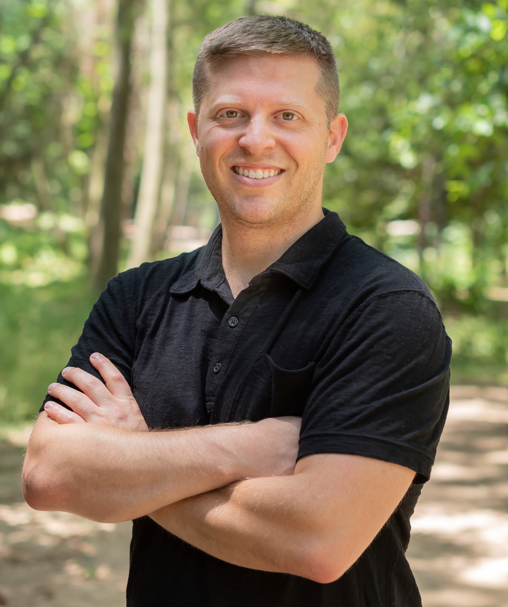
The 150-Year Vision for Humanity
What will human civilization look like in 150 years? Abdo John Hajj, partner at Type One Ventures, believes we are at the beginning of a deep tech supercycle that will transition humanity into a "Type 1 Civilization"—one that harnesses the full energy of its host star and becomes truly interplanetary. In this interview, Abdo explains why space is not just about rockets, but about building the infrastructure for abundance.
Guest
Abdo John Hajj
General Partner, Type One Ventures
Chapters
Full Transcript
Sean Weisbrot: What is the hardest thing about investing in and working with space tech companies?
Abdo John Hajj: Listen, I think the, the challenge with investing in space companies is particularly like how outsiders view the space industry, right?
Abdo John Hajj: I think about it. Think about it like this. When you think about, like, when you personally think about, okay, I'm gonna write an investment into a space company.
Abdo John Hajj: You're thinking about how do I get my RRI, how do I get my money back?
Abdo John Hajj: How does this actually work? What are the technical hurdles? What are the, well, how commercially pragmatic is this investment?
Abdo John Hajj: You kind of think about all these things at once, and I think that the biggest challenge I have is, is the educational curve, because I'm convinced, right?
Abdo John Hajj: Me personally, I'm convinced space is like the next most important deep tech supercycle, right?
Abdo John Hajj: Uh, space-based environments are gonna be the future of how we manufacture.
Abdo John Hajj: Um, uh, I believe that we're gonna become interplanetary. I believe in all these things I wholehearted, like you can't convince me otherwise, but in order to get to that vision, right, and this is kind of going back to our thesis as a firm, it's like, it's a type one civilization, right?
Abdo John Hajj: That's a hundred, 150 year vision. We have to deconstruct that into five to 10 year segments and think about what is an investible.
Abdo John Hajj: Practically technically feasible, but commercial investible strategy. And so the hardest thing, to go back to your question, the hardest thing is giving people the educational curve in a way that gets them comfortable with understanding the capital, types of nature of these businesses when you're investing in them.
Abdo John Hajj: And then understanding like there is a solid market opportunity.
Abdo John Hajj: Because I think so many people before, maybe SpaceX has kind of shown, SpaceX has kind of set the precedent that you can make money as an investor in the space industry and you could do it privately.
Abdo John Hajj: But um, there's still a lot of considerations that institutional investors are looking into and all these types of investors are looking into that are specifically tied to.
Abdo John Hajj: Um, how quick or how soon will this company stand up and be, uh, a revenue generating business?
Abdo John Hajj: And so we're here to like kind of the, the challenge at type one is like, we're here to like de like, like de myth that right?
Abdo John Hajj: We're, we're, we're here to tell you that there's a tremendous amount of revenue generating business opportunity that's going to derive from space infrastructure, from space businesses.
Abdo John Hajj: And, uh, the opportunity to invest in the time to invest is now.
Abdo John Hajj: I could point to like very specific things that give you those indicators, but I think it's a, I think it's a very exciting time to invest.
Abdo John Hajj: Um, but it's, it's educating people. That's simply the, the biggest challenge.
Sean Weisbrot: Hey, business leaders and marketers.
Sean Weisbrot: What if your brand could be featured right here? This ad spot could be yours.
Sean Weisbrot: This channel is watched by a dedicated audience of ambitious founders, executives, and professionals who are actively looking for tools and services to help their business grow.
Sean Weisbrot: If you wanna put your brand in front of this highly dedicated audience, that's difficult to reach.
Sean Weisbrot: I'm currently looking for a few strategic partners for the channel.
Sean Weisbrot: To learn more about sponsorship opportunities, click the link in the description. Let's go together.
Abdo John Hajj: If you're so passionate about space, why not start your
Sean Weisbrot: own company? Why invest in them?
Abdo John Hajj: Yeah. I think, I think that comes from like, um, understanding, like the way I see the ecosystem is like, uh, if you're gonna start a company, vertical integration has been like a key focus.
Abdo John Hajj: If you look at SpaceX from like how they're doing starlink to now, you know, more recently they've talked about Oracle to data centers.
Abdo John Hajj: The moat in building a space business, I think historically has been vertical integration. So you start.
Abdo John Hajj: By building everything top down, bottom up, however you wanna frame it.
Abdo John Hajj: And I think there's just like tremendous opportunity as an investor to look at it a little more holistically and objectively and say, okay, now that launch is getting solved by a, a, a few different companies.
Abdo John Hajj: And that cadence is gonna increase. There's gonna be, uh, a huge, uh.
Abdo John Hajj: There's gonna be a huge, and we're starting to see it, but a huge initiative across different types of companies entering the space industry.
Abdo John Hajj: Right. Um, are, is there going to be an opportunity to horizontally integrate, right?
Abdo John Hajj: Pick five or six, seven different companies that could work, work with each other, kind of creating that circular economy you see in the AI world where it's like you have the SpaceX or the Nvidia, right?
Abdo John Hajj: And then you have all these new companies that are starting to enter in and create value within.
Abdo John Hajj: A space-based environment, right, for commercial businesses and then you could start picking all those bets.
Abdo John Hajj: I think for me, um, there are no shortage of really talented technical entrepreneurs that are gonna build a space company that can and successfully do it.
Abdo John Hajj: There's a shortage of capital formation around it.
Abdo John Hajj: So the opportunity that we saw at type one was being the capital formation provider. That's the business itself.
Abdo John Hajj: And so in a way, I think of us as, like, I think of us as a space company, right?
Abdo John Hajj: It's almost like a space HoldCo that's building a, a suite of solutions across this.
Abdo John Hajj: Horizontally integrated ecosystem and then we could continue to, you know, support those companies and over time build enough influence to help them work with each other or collaborate with each other and do all these things.
Abdo John Hajj: So, you know, to be honest with you, I think it's less of a, I think, I think this is the space company, when we look at our like space portfolio, that is the space company for us.
Abdo John Hajj: Um, and I think it's actually very in, like people are, are in need of this, right?
Abdo John Hajj: Unique inflection points where a lot of space companies aren't getting funded because they're either not being validated.
Abdo John Hajj: Right. That your traditional VCs, which, you know, a lot of that oxygen sucked up in AI right now. Right.
Abdo John Hajj: Um, but then there's a lot of folks that are, um, a lot of folks that just don't necessarily have the access or the focus.
Abdo John Hajj: Right. And that required us, we've been doing this since 2019, so that required us to.
Abdo John Hajj: Really focus in on how do we attract the right founders?
Abdo John Hajj: How do we talk to the SpaceX guys that are leaving, right?
Abdo John Hajj: That are building interesting solutions that are finding really interesting gaps in the market that they could go after.
Abdo John Hajj: How do we look at, um, how do we actually think about capital formation?
Abdo John Hajj: Because we're, we're, we're VC has made this historical assumption that, you know, the way that you've developed the software error fund.
Abdo John Hajj: Right. We are in a software supercycle as our, as our firm likes to describe it.
Abdo John Hajj: Is that gonna translate perfectly for highly capital intensive space companies? Probably not.
Abdo John Hajj: Uh, do I have the answer? Not yet. But is there a world in which we should probably question the formation of capital around space companies?
Abdo John Hajj: And we live in this like, really interesting, unique period of time where, you know, myself, I could talk to an entrepreneur like, uh, Elon Musk and, and ask him.
Abdo John Hajj: Okay.
Abdo John Hajj: Like if you were to, if, if you were to look for a VC firm.
Abdo John Hajj: Was with you in 2003, right? Two, 2003. That was, that was specifically interested in funding you throughout the life, like the story and the lifecycle of SpaceX.
Abdo John Hajj: What would that firm look like? And I could take that feedback in real time now and try to create a company that's, that's that that fits that, that mold, right?
Abdo John Hajj: Talk to all these entrepreneurs, talk to. The biggest AI guys talk to the biggest interesting space guys.
Abdo John Hajj: Like what is it that you guys needed to get this done more effectively?
Abdo John Hajj: And how do we craft our product as a company, as type one to, to, to encapsulate that journey for them?
Abdo John Hajj: And so that's, that's how we think about this.
Abdo John Hajj: So when, that is probably one of the most interesting questions you, you asked me, like, what are, what are questions that you don't think you've been asked before?
Abdo John Hajj: I think that's one of the most interesting questions I've been asked. I don't think people see us as that.
Abdo John Hajj: They kind of see us as stock pickers, and I think that if you're gonna go into something like space, you have to be way more active.
Abdo John Hajj: In fact, I'd argue Elon Musk is one of the best venture capitalists, but he's really a venture operator, right?
Abdo John Hajj: He's very involved in all these companies. He looks at their engineering challenges.
Abdo John Hajj: He, he sits at like a chairman at all, almost all these companies, and he, and he helps formate the capital around them because he knows if he leaves it up to other people, it's not gonna happen.
Sean Weisbrot: You said that your vision is looking at 150 years into the future.
Sean Weisbrot: Right now, most of the companies in this space, it seems like are making their money from working with governments, for example, like NASA and probably ESA.
Sean Weisbrot: How many years is it until companies are working with companies and government isn't part of the picture anymore or it's a small piece of the pie?
Abdo John Hajj: Yeah, I think it's situational, right? Uh, I agree with you.
Abdo John Hajj: I think it's like it's, you know, there was, there was a whole, there's a whole genre of people in the space industry that are, that are highly convinced that, um, and, and I don't know if this is a, a, a big group, but I've heard enough conversation where commercial business is gonna take over, you know, faster, sooner now that Starship and all these things are coming up.
Abdo John Hajj: I'm still a little reluctant on that. I still think that.
Abdo John Hajj: When we look at a company in the space industry, we have to, you know, we have to think about how it serves government, um, and how it has dual use capabilities because ultimately a lot of the way these companies have stood up, and I think historically speaking, you could look at SpaceX as well, is you're almost like subsidized by the government to build for the government, but in a way keeps your business flowing while you innovate and build out the technology.
Abdo John Hajj: I think a lot of companies are gonna be. Contingent are, are gonna be reliant on government initiatives.
Abdo John Hajj: But I think that's any massive deep tech. I think that's any massive, you know, cost curved reducted business, right?
Abdo John Hajj: Where there's a huge technological outbreak. In this case, launch, right? Capability blows up.
Abdo John Hajj: Now. Now we're, the cost decreases. It, it, the cadence to launch is much faster.
Abdo John Hajj: Now you have a bunch of people and the government themselves thinking to themselves, okay, what is, is, is space the higher ground?
Abdo John Hajj: Well, how do we, how do we build up capabilities there now that we can launch it much cheaper?
Abdo John Hajj: So then you're gonna see a lot of businesses playing off the back of that.
Abdo John Hajj: But I think anyone that's building a space industry needs to have a, or building a, A space company needs to have a dual strategy.
Abdo John Hajj: I think it's necessary. I think when I look at any company in the early stage space, at least personally, I look at, okay, what are the immediate needs for this type of technology?
Abdo John Hajj: Usually that falls within the government suite. Solutions. And then what are the long-term commercial value that it's gonna create?
Abdo John Hajj: Right? And then let's also take a third scenario where the space ecosystem is just robust and it's fully developed.
Abdo John Hajj: What is their moat? What is their moat in that? Is it water-based fuel?
Abdo John Hajj: Is it, um, is it the, the caterpillar of lunar surface? Is it the mining asteroids?
Abdo John Hajj: Like what is your moat that you're going after in a world where, in this sci-fi world, where this seco ecosystem is fully developed?
Abdo John Hajj: And so we look at it from those, I would argue like those three different lenses, and we make a decision propped up on that.
Abdo John Hajj: I don't think you could build a space business without a government customer at this point in time.
Abdo John Hajj: And, and if I'm wrong, talk to every single, you know, and maybe you could build the space subcontractor, right.
Abdo John Hajj: That's servicing another space company that's getting its money from the government. Right.
Abdo John Hajj: And maybe you're, you're only interfacing with another space company, but ultimately those dollars are being subsidized by someone.
Abdo John Hajj: And I think most case scenarios, um, it's, it's a government in some cases, an individual.
Sean Weisbrot: There's a number of TV shows and movies that are, you know, a hundred, 200, 300 years in the future where people have, uh, anti-gravity or they, they have artificial gravity and they have their own little ships and they're ferrying supplies from planet to planet.
Sean Weisbrot: And then you have other things like Star Trek where you have this massive, you know, uh, military exploratory, you know, industrial complex that's controlling parts of the galaxy.
Sean Weisbrot: And then you have others like Star Wars, where you have empires and, and republics spanning the galaxy.
Sean Weisbrot: What do you think the future of human civilization looks like?
Sean Weisbrot: If we can survive this next a hundred years?
Abdo John Hajj: Honestly, it's, it's, it's interesting to speculate on like what, like when I think about space exploration, I think about any, any time where you have like a massive technological breakthrough where governments start to like try to regulate.
Abdo John Hajj: And I'm very curious to how geopolitics, and I don't know the answer to this, Sean, but I think the, I, I'm very curious to see how.
Abdo John Hajj: Geopolitics play a, play a role into the exploration piece of space.
Abdo John Hajj: Like let's assume a scenario where we land on the moon tomorrow, right? I think it's not so much about.
Abdo John Hajj: Who lands on the moon first, it's about who can enforce policy and law on the moon first. Right.
Abdo John Hajj: I think that when I think about that lens, so I, I kind of see historical parallels to maybe discovering the Americas.
Abdo John Hajj: Uh, I bet there's probably not life forms and indigenous people on, on the lunar surface as far as I know.
Abdo John Hajj: But I think, I think there's gonna be a lot of this like.
Abdo John Hajj: Aggressive push once, you know, once Artemis is going, everything's going. It's like to build and build and build.
Abdo John Hajj: And the question becomes, okay, well who's enforcing a future on these different terrains and surfaces?
Abdo John Hajj: And, um, if I were to think about if, if I want to think about my, like, optimistic, excited hat on the future of space.
Abdo John Hajj: I think it's a world of abundance. I think it's a world of shared resources.
Abdo John Hajj: I think space has a tremendous amount of value, um, for us here on earth to extract from, um, at a, at a way less cost.
Abdo John Hajj: You know, I don't know if it was Elon or who was talking about this.
Abdo John Hajj: I think Peter Di Mendez was talking about this recently, but it's like, dude, we're so small on earth.
Abdo John Hajj: Like we are, like, we are like a small ant, right? Compared to the rest of this. Galaxy. Right?
Abdo John Hajj: And, and the question we have is like, it just takes one thing to squish us, right?
Abdo John Hajj: If you really put it into relative perspective. And the question is, is like, how aware are we gonna be as a civilization that's going to continue to explore into this thing?
Abdo John Hajj: And I'm talking about humans as a species. How aware are we to value that in a world in which we successfully, um.
Abdo John Hajj: Conquer or take over Mars or the moon or whatever it is, right?
Abdo John Hajj: And hopefully keep pushing that direction. And the question is like, how disconnected do we become, um, whether it's driven by economic read or whatever it is, how disconnected do we come, do we become from the human aspect of it, or the fact that we have another planet that, that is so sacred and special, so.
Abdo John Hajj: I don't know. It's the optimistic version of myself is gonna be a world of abundance.
Abdo John Hajj: The not so optimistic self is, it's gonna create a lot of chaos between how we enforce and try to keep policy moving forward.
Abdo John Hajj: And is there a world in which it over dramaticized version of the Empire and all these things happen?
Abdo John Hajj: Maybe, maybe. But that's, that's up to humans and how evolved we are when we think about it.
Abdo John Hajj: Um, but I'm, I'm. I'm hopeful in a world where harnessing the sun's energy and using it sustainably, uh, creates a better earth, and hopefully, at least here on Earth, we could benefit from that tremendously.
Sean Weisbrot: I know you're heavy on space, but it would be remiss to ignore AI benefits of space travel, benefits on space travel.
Sean Weisbrot: How much of AI do you think will be responsible for human success outside of Earth?
Abdo John Hajj: Oh, I mean, I, I think, I think, you know. Having the capabilities.
Abdo John Hajj: I mean, it depends on like what we're talking about.
Abdo John Hajj: I think AI is influencing the way that we think about manufacturing.
Abdo John Hajj: It's the way we think about, you know, operating systems within these vehicles.
Abdo John Hajj: Autonomy, like all of these things are being, like physical AI is like playing a, a, a big role.
Abdo John Hajj: And we've done it really like very impressively up until this date.
Abdo John Hajj: And now to see the advent or, or really the, the, not the advent but the, the successful deployment.
Abdo John Hajj: Of more, you know, intelligent models. I think it's only going to increase our ability to explore more effectively autonomously, whether it's in swarms of, of robotics, whether it's, um, literally humanoid robotics that could see how our physical form, like a human form can, um, can actually operate on Mars with, with, you know, the different gravities on the lunar surface.
Abdo John Hajj: All of these things. So I think there's just like incredible opportunity too.
Abdo John Hajj: Use AI and the functions of AI to limit our risk as humans in that exploration. Right. Run scenarios.
Abdo John Hajj: Look at how physics works in certain areas. Right? And it's like we could use, almost use these like use AI as like a test dummy to human proof it as much as we can.
Abdo John Hajj: There's always gonna be that human risk, but, but human proof it as much as we can to to explore.
Abdo John Hajj: And I think that's gonna be an interesting. I think, I think everyone's thinking about it like that.
Abdo John Hajj: I could only imagine Elon's like, Hey, before we send a bun, you know, Joe and, and Jackie to, to Mars.
Abdo John Hajj: Let's throw a bunch of humanoid robotics on there and see how that works out, right?
Abdo John Hajj: For whether, I'm sure he has a way more scientific reason to do it or technical reason to do it, but I'm just thinking like, this is a very rational thought.
Abdo John Hajj: Let's send humanoids up there first to see what happens. How long they function, right. Uh, what, what could work.
Abdo John Hajj: And we, we have ways of emulating that here on earth to see their, that interaction.
Abdo John Hajj: But I think it'd be more interesting to, to send them up first and see how long, you know, maybe, maybe humanoid robotics are building the first infrastructure for us before even humans get there.
Abdo John Hajj: Right. Um, so there's, there's a world in which I think AI is the most, I, I think it expedited.
Abdo John Hajj: The timeline for us to really explore Mars and things.
Sean Weisbrot: Do you think he's going to try to send Tesla's robots?
Abdo John Hajj: I, I mean, I would if I was him.
Abdo John Hajj: I mean, like who, who else would you send? He's gonna, he's gonna have pick a competitor's, right?
Abdo John Hajj: No, I think, I think I would, if I was in Elon's shoes, I can't speak for him, but if I was in Elon's shoes, yes, absolutely.
Abdo John Hajj: I would send Tesla.
Abdo John Hajj: Optimist is up to Mars and let them roam around and build us some, somehow some homes up there
Sean Weisbrot: so he can, he can raise $500 million for SpaceX and then just buy robots from Tesla to send to Mars.
Abdo John Hajj: Yeah, I think he could raise it, or I'm pretty sure he could fund it himself.
Sean Weisbrot: Well, there's a circular economy though.
Abdo John Hajj: True.
Sean Weisbrot: So are you. Are you seeing a lot of companies come to you that do have AI already imbued in that side of their product?
Abdo John Hajj: Yeah. I think if you're building a, I think if anyone's building a company now and they're not integrating AI workflows, I don't think you should be.
Abdo John Hajj: It's kind of like the other thing I say, it's like if you're not a building a company that integrates AI workflows and trying to build something as sustainably as possible, then why are you building a company in 2026?
Abdo John Hajj: It's like pretty that that matter of fact to me.
Abdo John Hajj: I don't even think it's like a diligence question for us.
Abdo John Hajj: It's not like, how are you using AI in your workflows?
Abdo John Hajj: I think it's like just the assumption that if you're in tech, if you're building for, and you're trying to attract VC money in a world where AI is literally on every headline, uh, I'd be shocked if you're like, ah, we're not gonna use an, we're gonna, we're gonna use an enterprise SaaS, you know, platform and grow our business that way.
Abdo John Hajj: I'd be like, okay, well interesting. We're going to analog.
Abdo John Hajj: Um, so I think it's, it's, it's more of like, um, if they're creating a moat, leveraging ai, what is that moat and, um, how is it unique compared to other folks, you know?
Abdo John Hajj: Um, and, and that's, that's kind of what we think about, uh, at the intersection of that most space companies, um, most space companies leverage AI in some capacity.
Abdo John Hajj: I find it hard to believe if they don't.
Sean Weisbrot: Of all of the companies you're working with right now, which one makes you the most excited for the next five years?
Abdo John Hajj: Oof. That's like a, that's like picking your favorite child. Um.
Sean Weisbrot: Mm-hmm.
Abdo John Hajj: Listen, I, I'll, I'll talk about the one that I'm, that I'm very active in right now, which is Axiom Space.
Abdo John Hajj: You know, we're doing a lot of work around, you know, uh, we, we did incredible work there around the spacesuits.
Abdo John Hajj: We did incredible work. We're building, you know, a lot of infrastructure there.
Abdo John Hajj: I think, you know, when I think about how the evolution of the space ecosystem is, is happening, and I think axiom's in a really unique position to benefit as a platform company, it's like, it's like.
Abdo John Hajj: The all-encompassing, um, you know, all-encompassing infrastructure company and space company where you're gonna help astronauts get, get on the moon, sustain life on the moon, preserve, preserve their.
Abdo John Hajj: Uh, preserve themselves on the moon. Um, it's gonna help build infrastructure, space stations, uh, space station modules, allow for research, allow people to provide in space manufacturing capabilities.
Abdo John Hajj: I think it's kind of that like next gen company that's gonna work deliberately with nasa, but also commercial companies and exploring how space could be a benefit to them for their business.
Abdo John Hajj: And so when I think about, um. A really exciting company in the space industry, it's them.
Abdo John Hajj: But if you talk with Tarek, if you talk with my, my, my partner Sanjeev, who's looking at bio, the intersection of biotechnology in space, right?
Abdo John Hajj: Um, and honestly I can't even speak that intelligently about that, but, you know, you talk to him, he's excited about that.
Abdo John Hajj: You talk to my partner, tar, he's super excited about, uh, these guys Argo space that are, uh, building, you know, uh, uh, you know, uh.
Abdo John Hajj: Uh, essentially a, a transport system in space, but they're leveraging mining regolith off the moon surface so that they could make water essentially propell it to, to transport goods.
Abdo John Hajj: And the idea is there is, they're, they're taking a bet on like, there is a, a long, there's a world out there where, uh, water becomes a very unique fuel source for transport systems and any sort of, uh, mobility in space.
Sean Weisbrot: Are you talking about H three? Sorry.
Abdo John Hajj: Yeah. Yeah.
Sean Weisbrot: Okay.
Abdo John Hajj: Yeah. So there's a world in which that is, that is a, um, um, that is a, that is a, a world in which that becomes the basis to, to transport systems.
Abdo John Hajj: And if we could successfully mine it off the moon surface, then we could do it.
Abdo John Hajj: Um, H three, I think there was another company we looked at to oof. Uh.
Abdo John Hajj: Inter inter interlagos is doing that. Um, but there's a lot, I mean, there's so much cool stuff.
Abdo John Hajj: So for me though, I think where I get really excited is the idea of that platform right now, right?
Abdo John Hajj: We really need infrastructure. We really need environments to be built and we need to do it at scale.
Abdo John Hajj: So companies that are solving for that particularly resonate with me because I think of things like, my partner talks amazing at vision, right?
Abdo John Hajj: I think about things from like, okay, what does the next two, three years look like?
Abdo John Hajj: How do we actually get there? And I think this is like one of the most, I think the bio orbit of the world will need a axiom space, right?
Abdo John Hajj: The, the different companies that are trying to build, you know, other value propositions will, will need that, will need that kind of platform.
Abdo John Hajj: So, um, I'm excited for Axiom.
Abdo John Hajj: Um, a lot. It's also a big, big space. Company's been a, it's been a name that people recognize for a while now.
Abdo John Hajj: Um, and I think that it's gonna be incredible outcome.
Sean Weisbrot: I'm glad you mentioned Axiom because I was looking through your portfolio and they're very interesting.
Sean Weisbrot: I've known about them for a few years, probably.
Sean Weisbrot: Um, I'm not so nerdy that I know like all of the names of the companies you're working with, but like I No worries.
Sean Weisbrot: I I heard of a few and so I'm, I'm actually looking forward to hopefully being able to interview them even though this isn't a space podcast, but like, you know, if they're open to it, I think it'd be really cool to talk to them.
Sean Weisbrot: About what they're doing. And Axiom was, I had a list of three and Axiom was the, the first one on that list.
Abdo John Hajj: Yeah, definitely, man. I mean, I, I think it's, I think it's always helpful for conversations and more and more people, you know, whoever your audience is to, to learn about space and we, we do something particularly.
Abdo John Hajj: Uh, called our frontier events where we literally bring, like Axiom has been to the last three or four of them.
Abdo John Hajj: You should come. I mean, it's, it's gonna be in Tokyo this year, so it's not a, not an easy flight.
Sean Weisbrot: Why wasn't it in Tokyo last year when I was there? I,
Abdo John Hajj: I don't know. So the, you, you know, last year we did it in Italy.
Abdo John Hajj: Um, usually we do, we just pick like really unique locations. We bring the space industry and we.
Abdo John Hajj: We have them jam out. We, we also invite a lot of people that are necessarily like outsiders of the space industry, similar to how type one was before we even started investing.
Abdo John Hajj: And we bring them together to see how they, how they, uh, you know, so, so to really, to educate people.
Abdo John Hajj: I think it goes back to that important piece of like educating people, having people understand how relevant space is to them at this point in time, more than they probably know.
Sean Weisbrot: So in 2026, we'll be seeing you do the next one in Portugal, right? In Lisbon?
Abdo John Hajj: Yeah. You know what? We're gonna do it just for you, Sean.
Abdo John Hajj: Just make sure to bring some mics. And some cameras better. Better camera light. Better camera lighting, please.
Sean Weisbrot: Yeah, it's a beautiful place and it's warm. It's good surfing.
Abdo John Hajj: Yeah. I wanna surf out there.
Sean Weisbrot: What is the most important thing that you've learned in your career?
Abdo John Hajj: I think I learned that like vision is almost, uh, is inherently what drives some of the most obscure but profound outcomes.
Abdo John Hajj: And, you know, there's a, there's a balance there. There's a balance between like meeting people who have just like incredibly ambitious vision, but then have this sense of.
Abdo John Hajj: Understanding on how to think in this like system thinking mindset.
Abdo John Hajj: And I just like, I, I've learned to admire people that think like that.
Abdo John Hajj: I've really clung onto it. What I've learned the most is that there's a way of thinking really, really big, and I think more people can.
Abdo John Hajj: Where we believe in something, where we believe the world is gonna go in a certain direction.
Abdo John Hajj: And I think there's this incredible opportunity if people are not lazy, to just deconstruct that and think about how that, what systems need to align to get us closer to that.
Abdo John Hajj: And I think that as we get into a world where, you know, the world's changing, what I've learned is that I don't know what's gonna happen in two years when AI just completely takes over.
Abdo John Hajj: Every piece of the workforce, right? Uh, what I know that is like where humans will inherently be the most valuable is our creativity and our, um, and our vision.
Abdo John Hajj: And so I just hope more and more people tap into that because what was not previously possible is gonna be very possible in a very short period of time.
Abdo John Hajj: I think people need to really dig into them, to that aspect, to, to, to, to start believing that because I, I wholeheartedly believe that.
Abdo John Hajj: So I think this job, this job specifically got me closer to folks that actually believe that, and, and it's been an incredible learning experience.
Sean Weisbrot: Thanks for watching. If you liked this insight, I've handpicked another video for you right here on the screen.
Sean Weisbrot: For more actionable strategies that get you real results, hit subscribe.