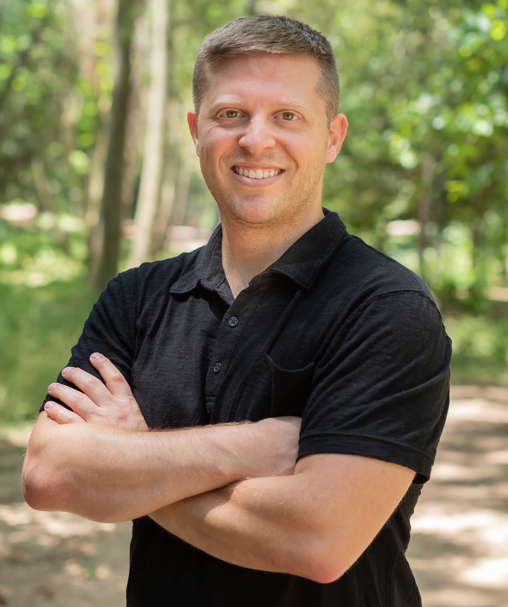
The Surprising Science of "Puppy Dog Eyes" (And Why It Eases Suffering)
What is the surprising science of "puppy dog eyes"? It's a complex cocktail of neurochemicals, led by oxytocin, that reduces stress, anxiety, and pain when humans and dogs interact. In this interview, Tombot founder Tom Stevens explains how dogs were selectively bred for millennia to have unique facial muscles that mimic human babies, creating an emotional bond that can be therapeutic. Tom shares his personal journey of becoming "the villain" to his mother after her Alzheimer's diagnosis, and how this led him to create robotic companion animals designed specifically for seniors with dementia. He also discusses the hidden dangers of psychotropic drugs for seniors and a new tool to monitor sundowning syndrome in dementia patients.
Guest
Tom Stevens
Founder & CEO, Tombot
Chapters
Full Transcript
Sean Weisbrot: What's the most important thing you've learned in life so far?
Tom Stevens: Uh, you don't have to be a lone ranger. You don't have to do this alone. Um, there are a lot of people out there that are going through similar things. That could benefit from you connecting with them and you can benefit from connecting with them as well. And that, and that there are a lot of really smart people. You don't have to figure out everything on your own, you know, intellectually, and you don't have to figure out everything on your own emotionally, you know, you reach out to people and, and share what's going on. And. And people, people generally will hear you and share what's going on with them. And probably the best experience of all of this at Tomba is meeting people like yourself. Who share tales about their families, whether it's the person who's going through a disease change or a family member who's involved with caring for them, people are doing it because they love the people you know, that they care for. Um, yet they still need things themselves. So it, it's been a wonderful experience to come in contact with the many thousands of people that we've.
Sean Weisbrot: So Tom, you've created this really interesting robot. In the form and function of a pet, what was the inspiration for all of this?
Tom Stevens: My mother was diagnosed with Alzheimer's dementia in 2011, and uh, I ended up taking over responsibility for her life and of the many difficult decisions I had to make by far the most difficult was when I realized. She could no longer safely, uh, care for her 2-year-old golden doodle puppy. Uh, fortunately I was able to find a new home, uh, for that puppy, but she was devastated. Uh, and I went from being the good son to being the villain, uh, in her life. Every day was, where's my dog? Why can't I have my dog? When am I getting my dog back? And, uh, and so I was motivated, uh, since my mother and I were always very close. To try to solve the problem for her. Uh, I went and bought every product I could find that was marketed into, uh, the Alzheimer's dementia space, but she hated absolutely everything that I brought home, and I realized that there was a gap in the marketplace.
Sean Weisbrot: What were some of the difficulties besides that in trying to take care for her?
Tom Stevens: Sure. So my mother, uh, my mother and father divorced when I was a teenager, and even though my dad remarried, my mother never did. She lived independently, uh, sort of prided herself on her independence. Uh, but her ability to maintain the home, uh, she, she lived in a, a fairly large home, uh, large amount of property, but her ability to maintain that slowly, uh, uh, deteriorated her ability just to keep a clean, safe environment, uh, around her, uh, deteriorated. So I made the, the first tough decision I made for her after her diagnosis was moving in a professional caregiver. And she hated that, uh, she hated this invasion of her privacy. Uh, and it wasn't very long after that that I realized that she was no longer capable of driving safely. Uh, every time I saw the car, there was more body damage on it, and of course when I spoke to her, it was never her fault. Uh, so taking away her car keys not only took away another source of independence for her, she had to ask permission, uh, to go anywhere. Uh. So really, really upsetting for her. Um, she had, uh, uh, mangled her finances, so had to, uh, work with all of her creditors to figure out how we were gonna dig her out from the hole that she had dug. Uh, she had developed hoarding tendencies, so we had a massive, uh, clean out of her home. And, and, and. Uh, which she fought tooth and nail, uh, every day. Um, so it, it, and, and what made this especially tough, uh. Was my mom, uh, was one of the nicest human beings you would ever you could ever meet. Uh, she was a special education teacher. She worked with, uh, visual disabilities and other disabilities for her entire career. Taught K through 12, um, multiple master's degrees. So very, uh, very smart, very well educated woman. Would volunteer for everything. The kind of person that. Would do anything for anybody. Um, but also the kind of person that would ask anybody to do anything for her, which is kind of the world that I grew up in. Uh, sort of, uh, sort of highly integrated, very free, very familiar world. Um, uh, and so for her to become. Mean, nasty, vindictive, protective, stubborn, uh, aggressive, um, uh, uh, was really bizarre and unsettling. So in addition to just sort of the logistical elements of her life that, uh, that I had to take over, it was coming to terms with the person that I knew, um, was just gone. Uh, uh, she was just this completely other person and. Uh, and, and it was very difficult for me that not only the frustration with that, uh, but also the guilt in becoming a parent to my parent.
Sean Weisbrot: I, I believe that she. The dementia she had was kind of concentrated around her prefrontal cortex. Am I right?
Tom Stevens: Well, it's Alzheimer's dementia, which manifests in a number of different ways. It, it's, uh, the hallmark of Alzheimer's is, uh, is, uh, beta amyloid plaques, and they can appear in a lot of different areas in the brain. Uh, uh, the most common symptom is short term memory loss, but beyond that. Uh, it can manifest in unique ways for each individual despite the fact that there are tens of millions of people around the world that, that are dealing with it at any given time.
Sean Weisbrot: So you were saying that, uh, it. It didn't feel good to have to become the parent to your parent. And my dad is like 66 now, and he doesn't have any, he doesn't have any mental issues, no dementia, nothing like that. He's, he's a dentist, he's still working. Um, but I do feel like I'm becoming his parent because oftentimes he doesn't listen. To advise. He, he's a doctor. He knows what's right and what's wrong, and he still chooses to do the wrong stuff. And I think the older he gets, the more adamant he gets about not listening to what the right, right thing to do is my mom as well. Um, and so I do see some of those, uh, parallels, even though it's more just frustration rather than actual, like psychological angst. Um, you know, and my grandma just turned 90 in September. And she was fortunate enough to be aware that she was lonely in her home. She, there were several years where she had a, a nurse come and spend a few hours a day with her, but she never had anyone live with her. And after COVID, she got lonely and she said, having these people is nice, but a lot of my friends, they've already died or they moved away because of COVID. So live with their families. Because it wasn't safe to live alone. They couldn't take care of themselves. And so my grandma decided to get rid of her carb like three years ago. And. Two years ago we moved her, or March will be two years, we moved her into an assisted living facility because she wanted to be around other people her age, and she wanted to be physically and psychologically active because she wasn't getting that stimulation at home, even in the presence of an aid. And so I put a tremendous amount of energy, like seven or eight months I put into helping her declutter her home and finding the right place and, and selling her house and coordinating with the movers and the real estate agent and my dad and aunts. And I was like, I was basically doing, I was basically leading the entire thing. 'cause she said to me one time when I was visiting, I wanna leave and I said. Uh, didn't you say this like a year ago? She's like, yeah. So I, it dawned on me at that point that no one in my family was gonna put any effort towards changing her situation to make her happier. I had to be the one to do it, and that was really frustrating because I'm her grandson. Not her son. Not her daughter. She has a son and a daughter living two miles away, right? That she sees once a week. It's not too much for, to ask for them to kind of do. They, they had the ability, the energy, the time to, to mount that kind of a thing, but they didn't. And for me, who literally, I was living in Vietnam and I, I spent like six or seven months there and just made sure she got moved and I didn't leave until she moved. And she was like, she's like, I don't understand why you would do this for me. And I was like, I'm alive because of you. What are you talking about? You're like. You're, you're the only person alive. You're the oldest person left, right? You are the one carrying the torch for our family. And like, it, it's, I just hope that someone cares for me enough when I'm at her age. You know, maybe, maybe I'm putting in good karma for later on. I don't know. And, but it was difficult. The entire thing was very hard to, to have those conversations with my family and her, and to actually make those things happen and. We thought that moving her into the place would be good for her. And she, she agrees it's been really positive for her, um, and that she enjoys all the stimulation, but she was paying her bills. She was doing a lot, she was a lot more self-sufficient before she moved into the assisted living facility. And after she moved in, she stopped doing a lot of the things. Like she doesn't cook anymore. She doesn't clean anymore, she doesn't do her own laundry. Uh, we have someone who's helping her to shower twice a week now. So we see her cognitive decline coming faster because she's not taking responsibility for taking care of herself in, in a number of ways that she did before. So it's, it's been a positive experience for her, but also a negative experience, and she's not aware that her, her cognition is, is in decline, which is kind of, it's, it's becoming sad, but she's, she's freaking 90, so like. My, her, her mother was 94 when she died. She had Alzheimer's. And for like the last 15 years of her life, she didn't know who I was. So for me to be able to have that kind of a relationship with her, even now at this age is like, I, I feel quite blessed for that.
Tom Stevens: It's absolutely a blessing. Uh, uh, thank you for sharing that. It, um. Uh, it is the sale that you're telling. First of all, uh, it was wonderful that you did all that work for her. Um, uh, it's not unusual for the immediate next generation, uh, to want detach from that. Uh, uh, they're much more emotionally charged by their parents decline. Oftentimes, they're too close to really see, uh, what's happening and they're in denial. Um, our relationships with our parents are very. Um, are very challenging. We have very high expectations for them. The last thing we want to do is become the parent of our parent. Mm-hmm. Uh, uh, and feelings of disappointment and frustration are not uncommon. Certainly weren't for me. Uh, and sometimes it takes a generation skip, uh, someone who's far enough away from that emotional tangle of that parent-child relationship to really see what's needed and, and be able to act effectively. Um, I know that my kids, uh, uh, were very active in supporting my mom and in many ways, much less judgmental. Than I was about it, certainly in the early, uh, years before I really understood, uh, what was, what was taking place. Um, you know, it's so for fortunate, um, to have a couple members of your family live to their nineties. Uh, we all go through normal, uh, age related cognitive decline. Um, uh, you, you're going through it. I'm going through it. I'm further along than you are. Uh, we'll all go through that. Um, dementia is an umbrella, uh, description of symptoms where the leading cause of dementia is Alzheimer's, but it could be frontotemporal, Parkinson's, vascular dementia, Lewy bodies, and so forth. Um, those are disease caused, uh, cognitive decline, and those happen at a more rapid pace. So what you've seen in your grandmother and your mother. Are two different instances of people aging where one had a disease. Cause, uh, her cognitive decline where your mo uh, your grandmother, uh, sounds like she's been able to avoid that. Uh, uh, at least up until now. Um, the sad facts, uh, are that once we get to 85. We are about 50 50 likely to have Alzheimer's. Now, Alzheimer's doesn't equate to dementia. We can have Alzheimer's and pre dementia, mild cognitive impairment for the rest of our lives and have it never actually manifest in in dementia level. Um, uh, cognitive loss, but, um, age is the number one risk factor, and so we get to a certain point, we're all kind of vulnerable to that, which is one of the reasons why organizations like the Alzheimer's Association are so a, uh, active and advocating for research to try to come up with treatments, uh, uh, to either extend life or, or to reverse the effects of, uh, of these terrible diseases. Um, but going back to your parents, um. It's not uncommon for there to be disagreements among the children as to really what's best for mom or dad. Mm-hmm. Some people think, well, mom's gotta be moved into a home right now. She simply can't live independently anymore safely. And other people, she's doing just fine. She's still driving or she was still driving up until recently. She does her own laundry. Why? Why would we take her out of that and. And disagreements about really the state of, uh, of someone's cognitive condition, um, can actually create a lot of rifts in families, uh, uh, or, or, uh, commonly people will just sort of abdicate responsibility. I, I, I'm too busy, I can't deal with this, or, this is just too hard for me. I don't want to deal with it. And so it falls to the willing, you know, and, and in your case, the grandchild. Uh, who's willing to step up and, and, and do something. So thank you for, for doing that. And I know that your relationship with your grandmother, uh. What would've been helped through that, you're probably much closer than you might've been otherwise. And, uh, you probably learned a lot more about her legacy of knowledge, uh, from her life, uh, than you would've had if you had remained, uh, uh, more distant. So it, it, it, it ends up being a, a quality of life experience for both sides of that, uh, equation.
Sean Weisbrot: I've always been the one to step in. So like my mom's had cognitive decline as well and I was very instrumental in communicating with her doctors and, uh, was able to convince them to take her off of the antidepressants that she'd been on for like seven or eight years. And because one would make her crave sugar, one would make her crave salt, you know? So she was gaining weight here. One of them made her lose her appetite. She was losing tons of weight here. So it's just like, it's not stable whatsoever. Um. And she was like a, a robot in a way. She was unable to fully experience some, some depth of emotion because of that. So, uh, I, I made sure I stayed some, like, you know, I don't live in America. I don't live near my family. I'm, I live in Portugal now. I was living in China for 10 years in Vietnam for four before that. So the majority of my life is, is outside of America. Um, but whenever my family needs me, I'm there Whether they realize they need me or not, or whether they want me there or not. Um, they're always, they're always happy to have me there. Um, and so I, I made sure I spent, uh, an extra two months there and I specifically was with her every day weaning her off the, this medicine, 'cause my dad worked so he couldn't be there to do it. Um, and she wasn't capable of, of weaning herself off. Um, 'cause the regimen was, was quite difficult. So I was there monitoring her, making sure she was okay. There'd be days where she was crying and unable to cope with, with the withdrawals. And so, like, it was hard, but I, I. Like there's no one else to do it. Right. Um. So, you know, there were multiple times where my dad was injured. Um, he had a surgery, uh, he, he had, um, uh, torn both of his rotator cuffs back in 2009, 2011. I went back 'cause he still was having problems. He had gotten addicted to N Narcotics that they gave him. It was affecting his business. So I was there. I I spent a year and a half and I weaned, I weaned him off all of the drugs and I got him back into his business and I. I fixed his business up for him and then with him, and then I left again. And it's like there was another time that his heart, uh, his, uh, aorta failed. They had to get it replaced, and I was there for that. And I didn't know anything about advocates advocacy in a hospital. So I was there with him all day, every day in the hospital, like, you know, so I, I feel like I've gotten a very. Robust experience of what it's like to handle physical, psychological, and emotional, uh, needs for different people that are of the, you know, generation before me. So I feel like it, it would make me a better, um, parent and a better husband now. Hey, just gimme 10 seconds of your time. I really appreciate you listening to the episode so far, and I hope you're loving it. And if you are, I would love to ask you to subscribe to the channel because what we do is a lot of work, and every week we bring you a new guest and a new story. And what we do requires so much love so that we can bring you something amazing. And every week we're trying really hard to get better guests. That have better stories and improve our ability to tell their stories. So your subscription lets the algorithm know that what we're doing is fantastic and no commitment. It's free to do. And if you don't like what we're doing later on, you can always unsubscribe. And either way, we would love a, like if you don't feel like subscribing at this time. Thank you very much and we'll take you back to the show now.
Tom Stevens: We grow up as human beings and I can speak in first person, uh, uh, in this, uh, uh, in particular as very selfish people. You know, we we're, we're IDs, it's all about us. Um, we take everything around us for granted. If we're. Permitted that that opportunity, which is, which is not something that everybody gets, uh, a chance to be so self-absorbed, but many of us grow up very self-absorbed, and we're really worried about us and we become adults. And realize that being in service to other people is gonna be something that's, uh, not only required of us, but it's something that's actually gonna be, uh, an important part of, of our quality of life, our experience of living. You've been subjected to this. Uh, frequently at a fairly young age. Uh, for me, I was, uh, I had a wife and kids, and so I was always looking at my generation and down and never, never having to look up. And it was, it was really a, um, it was really a disruptive and unsettling, uh, change in my life, uh, to have to do this. Uh, I mean, one of the things I do wanna talk about though. Is your mom's and dad's, uh, experience with, uh, with medications. Uh, so one of the, one of the things I learned early on, uh, um, is just how hard. Psychotropic medications are on seniors, uh, uh, or people. People over any age, I suppose, but seniors, especially psychotropics, include the antidepressants, anti-anxiety, anti-psychotics. Um, they are sometimes antidepressants can be the difference between life and death. Um, that person can't function without them, their suicide risk. Uh, or they just, they, they can't, uh, there's no suicide risk, but they can't literally get out of bed at any given day and always seek medical attention if you or someone, you know, uh, suspected of having depression. But these drugs are really hard on you that get prescribed. Um, uh, today, uh, these, uh, psychotropics as a class of medications. Are not permitted for use in long-term care, uh, uh, facilities here in the us, not per, uh, permitted by the Centers for Medicare and Medicaid Services under most circumstances. Um, uh, and there's a recognition that there, that, uh, there they basically function as chemical restraints and can have, uh, very, very dangerous adverse, um, uh, uh, uh, risks, including. You know, an elevated risk of death. So if there's a choice under medical supervision to mo move somebody off of these medications, that's a really big thing. And it, it's, it's a lot of our mission with our, with our product is that we're substituting something for that, uh, uh, those medications. And, you know, with your grandmother, you talked about. You know, she's she, she may be experiencing greater cognitive decline and she has less to do. Having a sense of responsibility, having a sense of purpose is really important for. Cognitive, uh, stimulation. You know, waking up every day and say, I need to do this, and if I don't do this, bad things will happen. So having this sense of responsibility, even though it can sound like a burden, actually is a positive effect. Um, for many people it's a live animal companion. You know, you wake up and the, the, the, the, the, the dog needs to go outside or the cat needs to be fed or brushed or you need to take it to the vet or just needs love and attention. Having that sense of responsibility is, is really an important thing for stimulating, uh, our cognitive capabilities. Um. But for many people, that's no longer available to them for safety or for practical reasons. Um, and then with the opioids, uh, uh, that your dad was on same deal, uh, narcotics are still best practice for short term acute pain. You go into a hospital, you have surgery like a torn rotator cuff. But you need to give off of those right away. Um, uh, if you've been reading the paper at all for the last decade or more, you'll know that treating, using opioids of any kind for chronic pain, um, is really dangerous. Uh, it's an incredibly addictive, very difficult to get these people off, and, and they have just huge negative effects for the body. Uh, so. So looking at substitutes for these things, you know, is a, uh, I want an apple instead of a piece of candy. You know, looking for substitutes for these things is really important, as opposed to just cold Turkey, I'm gonna rip this outta your hand and you no longer, you no longer have this available to you. And the void is gonna bring you suffering, but you're better off for that. Looking for substitutes, uh, looking for things that can replace. Antidepressant, something that can replace a, uh, an opioid type of medication is really the mission that Tombo is on. And, and the void that we fill is that children or loved ones, other loved ones or pets, uh, are frequently what people turn to, but. In the absence of those, they could, they need something else. And, and so it's, we're a, more than anything else, we're a tool, um, uh, as opposed to just a cute, furry entertainment device.
Sean Weisbrot: So my grandma actually had a cat, and the cat was like 15 or 16 when it died. And I don't remember when it was. It was a few years ago that it died, maybe five. Not really sure. And she hasn't had a, a pet since then. It was the only pet that she's ever really had. And the only reason she had it was because if, if you don't want to hear so eng gory, you should listen. You should not stop listening now. But you're, you've been warned. My uh, so my grandma had a boyfriend and he was very proficient with guns and he used to take us shooting at the range all the time. He was a very sweet guy. One day he decided to kill himself. But his hands were shaky and he failed. And he, uh, he's still alive, let's say. But with, with that part of a jaw missing, anyways, the cat was his and she decided to take the cat. 'cause he had, he ended up in the hospital and they didn't know how long he was gonna be there for. So she took the cat and she kept the cat until the cat died like 10 years later or something like that. So the cat was very important to her. I had no relationship with the cat whatsoever. It was scared of humans for like a long time, and even then, it never gave me a chance to get to know it at all. I, I, I barely even knew what the thing looked like. Anyways, uh, that may have not helped her situation. And so whenever I am around, I do everything in my power to make sure that she can spend time with my dog, who lives with my parents. He's now about six years old. And so let's say if I'm there. I'll make sure they see each other at least once a week, if not twice a week. Because I know how important it is for her. I know how much joy he brings to her. And I know that he actually loves her too, because like if I know that I'm gonna take him to see her, uh, generally he'll sit in the front seat of the car with me and he, he just, you know, sits on his, he is got his, uh, his back paws on the, um, the seat and he's got his front paws up and he is looking around. And if I go, Hey, max. We're gonna go see grandma. He starts to whine and he gets really excited and he like, he, he really wants to see her. And when he is with her, he doesn't wanna leave her side. So it's clear that they have bonded. And so I do everything in my power to make sure that they can see each other, um, similarly, I'm quite bonded to him as well. If you were to look at kind of, uh, the pack, if, if you will, that I'm, I'm considered his alpha, and he listens to everything I say. He, you know, we get along extremely well. He kind of tolerates that my parents exist. Uh, if I'm not around, he's more, uh, he, he's, he's nicer to them. Like he, he's, he's a very sweet, kind soul, but sometimes he just doesn't listen. Because they're not the alpha. Um, so when I go away from him like I do for months at a time, he becomes depressed and I be, I, I don't wanna say I become depressed, but it's very hard for both of us to be away from each other because we know the bond we have and we know that no one else shares that bond with, with the other. Um, and. So, yeah, I, I struggle with it and I know that he struggles and I know that when I come back we're both extremely happy to see each other. Um, so I feel like what you're doing here with, with the bot is I. Fantastic because I don't have an animal here and you know, sure I can go to the park and there's animals around and I may get five seconds to pet one, but like you can't really replace the feeling of knowing that like, there's this dog, this dog cares for you. It's around you. It wants to be around you. It just, it brings me joy every morning, waking up at my parents' house, knowing that my dog is in the next room on the couch waiting for me. And he went from his bed to the couch hours before I woke up, just 'cause he wanted to be there when I was ready to go and take him for a walk at five 30 in the morning. And you know, like when you don't have that in your life, like, like here, you know, yeah, I've got friends, I've got activities, but there's this loneliness, there's this, this isolation and this, there's this deep emotion. Of emptiness when I'm not around him.
Tom Stevens: It, it, you know, it, it's, it's, uh, thank you for sharing that. It's, uh, the human animal bond, um, is very special, uh, is very special. Um, so there's a difference between animal therapy. Animals as an emotional attachment object, if you will, or emotional attachment, uh, entity. Um, so human beings are hardwired to emotionally attach. Uh, we, we give birth to babies that are traditional. We have to, we have to get, we have to give birth to them before their heads and brains get so large that they can't travel out the birth canal. And so when they're, when they're, uh, when they're born, they need us. If we leave them alone, they'll suffer and, and, and potentially perish. We, as humans have developed a reward system. For taking care of babies. Uh, and it's a complex cocktail of neural chemicals. But what's thought to be hardest at work is oxytocin. Uh, when a mother gives birth to a baby or breastfeeds, she gets big doses of oxytocin. And oxytocin has been shown to reduce stress, reduce anxiety, and reduce pain. It interacts directly with our internal opioid system, so it makes us feel really good, um, and that that genetic connection, uh, between a mother and child isn't necessary either. It's the same type of, uh, neurochemistry is seen in a parent bonding with an adopted child and a human interacting with live animals. And most of the research there has been done with dogs. Um, and you know, what's interesting about dogs in particular? Cats are, cats are great. Uh, and I'm, I'm a cat fan. Lots of, lots of, lots of people are rooting for us to come out with a cat, and we will at some point. Uh, but dogs are, dogs are unique, unique in our human relationships with animals. Um, humans have selectively bred. Dogs for thousands of years to imitate the traits in babies that cause us to want to care for those babies. Uh, uh, um, uh, so much so that domesticated dogs have domesticated, dogs have, uh, traits that are unique to them that are not seen in their ancestral wolves. And one of the biggest examples, or best examples is the musculature around the eyes. Um. Domesticated dogs have unique musculature on their inner part of their eyes that allows them to raise their inner eyebrows and give you those, you know, puppy dog look, you know, you know, please take care of me. Uh, uh, it turns out we've been human. Uh, wild wolves can't do that. First of all, wild wolves won't look you in the eye 'cause that's a sign of aggression. So, if a wolf looks you in the eye, it either wants to, you know, attack you or. Challenge you for the pack, lead, or eat you. Uh, neither is good. Uh, but domesticated dogs will look to look at you in the eye. They look to you for social cues, and it's also a form of bonding from them as well. So this, this eye contact is really important. And then we as humans respond very well to this, this puppy dog. You know, please take care of me. Look, uh, there was a study done out of the UK that wanted to understand why certain dogs in shelters were adopted before others, and they looked at variables such as size, color, breed, disposition. None of that seemed to matter. What mattered was how Well. A particular dog was able to raise its inner eyebrows in the contrast marking in those eyebrows that made them noticeable. And when a dog would do this, someone would walk up to the dog and go, oh, this dog needs me. Well, the dog may or may not be conveying need, but we interpret that as need because we associate that with traits in a human baby that is actually. You know, conveying that I need you, please take care of me. Look. Um, and so our relationship with dogs, uh, goes beyond just, Hey, this is kind of a fun thing to have in the environment. It tolerates me. I tolerate it, you know, it does work for me. It guards the house. It, it is much, much deeper where dogs are actually stimulating. Our innate need to emotionally bond, and we do the same thing to the dogs. Thanks to all this selective breeding over the millennia. Uh, the dogs when we interact with them are bonding to us. You become the alpha and they associate in with you, uh, as a member of the pack. Um, this is, this is a critical thing, uh, that people intuitively understand, but don't really get how, how robust that is. And how therapeutic that is. Um, when, you know, my daughter, who's now 27, we had, uh, we had miniature poodles 'cause my wife was, uh, you know, really allergic to animals. And these miniature poodles were the only ones. Um. Didn't, you know, get her very serious allergies firing off. The dog would come and, uh, the, the, the older of the two dogs would come and wake her up every morning and lick her face and lick, click, lick, lick, lick, lick, lick. And I'm just going, I know what that dog just ate. I, I'm kind of horrified by it. But my daughter loved it and the dog loved it. And that. That, uh, those feelings of affection for each other, those demonstrable forms of affection were actually doing a lot of good, uh, in their neurochemistry and, and making that bond that much tighter and, and providing health benefits to both of them, you know, uh, regardless of the fact, uh, they were cognizant of it or not. And you see this, your grandmother sees it, your parents to the park, to the extent that your dog will interact with them more than just saying, Hey, thanks for lunch. Uh, you know, they benefit from it too. Um, it, it's really very powerful and, and for people that can. Successfully maintain that live animal companionship, really get that benefit. You know, our product is really substituting for those situations where it's no longer the case, but it's, it's not as an occasional therapy, it's as an emotional attachment. Something that's gonna stimulate oxytocin and the other neurochemicals all day throughout the day and, and give positive benefits, uh, bilaterally between the human and the. The pet.
Sean Weisbrot: So there's one thing that your bot could potentially do that real live animals can't, which is process human speech, and then speak back with the human voice. Do you have any sort of part for that? Because there is nothing that I know of on the market that can do something like that. So if you're able to do that, I think it's a slam dunk.
Tom Stevens: So, great question. Uh, first of all, um. We are not, we try very hard not to be opinion driven in our company, but rather be data driven. And we look at the billion or so people that we could potentially help. There are about a billion people that suffer from some form of serious mental health adversity. And what we do is we break that billion down into discrete customer segments. And our first customer segment is a senior with dementia. When we studied seniors with dementia, uh, there were three. Um, uh, major hypotheses that we confirmed in our testing. One is they like things that move over, things that don't move. So the reason why they prefer a robotic dog to a stuffed animal or a human baby doll. Secondly, they like realistic appearance. They like it, the fact that it looks like something that they're already familiar with. It looks like a dog or it looks like a cat. Uh, it doesn't look like a toy. It doesn't look like a cartoon. Um, and then thirdly, the behaviors are realistic. That the sounds that come out of its mouth are authentic. That the, the movements, the actions, the behaviors that, uh, that the dog is able to emulate are all authentic. Now, that's not to say that. An adult with schizophrenia wouldn't prefer a dog that will talk. We just haven't, we haven't tested that yet. And as we expand into other customer segments, we will once again use a very disciplined process to understand what it takes to form, uh, emotional attachment, product market fit, and then what was the minimum viable product? What's the least technologically advanced version? Of that, uh, that can still meet, uh, uh, that, that high bar of product market fit. And so we don't, our first one won't do that. Uh, it won't talk because that's not what the seniors with dementia wanted. In fact, that that could be kind of creepy and unsettling for people, uh, uh, depending on how they view these things. One other thing that we can do that your real dog cannot do, unless it's Lassie or Yeller, or one of these other fictional, uh, TV dogs, um, is we can monitor, our first model will monitor for sundowning syndrome. Sundowning is one of the most common of the behavioral and psychological symptoms of dementia, and we're working with Cleveland Clinic to develop the user interface so at a glance they can see how. Changes in sleep, changes in meal content and timing, changes in medication dosage and timing administration are affecting cognitive levels throughout, uh, throughout the day. But we'll continue to expand, uh, into greater safety monitoring, knowing that grandma or mom or or your child is safe, uh, and more robust health monitoring, such as vital signs. So a little bit like your smart watch, uh, might be able to do
Sean Weisbrot: so if like they fall, it would, could it instantly alert. 9 1 1.
Tom Stevens: That's the goal. Uh, so the goal is the first model will not have that, but that's a goal with our next model. Uh, so there are a few things here. Uh, they could fall, so a fall event can happen. But what if they haven't moved off the sofa for three hours? That's a problem too. They haven't fallen, they haven't triggered an accelerometer. On a, on a necklace alert. And by the way, a lot of seniors would mention will not wear those necklaces. So, uh, uh, that's a problem. Uh, just compliance is a problem there, but being able to observe the person and looking for unusual things. Has their facial affectation changed? Uh, has their gait when they walk changed? Uh, once again, are they sitting for an overly long time? Are they in an unusual position, like on the floor, uh, or maybe propped up against the, the toilet? Um, have they gone out the door unexpectedly and not come back? Uh, the progression for dementia, uh, begins with mild cognitive impairment. Most people with mild, mild cognitive impairment still live independently, but they're not as sharp as they used to be and can. Exercise poor judgment at times. And so in this transitional state, uh, where they've gone from living. Successfully, independently to some point in the future where they're gonna need a lot more care. There's a lot of uncertainty as to whether or not these people are safe all the time. And we wanna make sure that, uh, we wanna make sure that we do what we can, uh, to, to be helpful there.
Sean Weisbrot: Is there anything I haven't asked you so far that you'd like to mention about any of the things we've covered?
Tom Stevens: Well, one of the things I will say, just as a, a talk about our product, we are just finishing Alpha Pre Manufacturing. We'll be in beta, uh, beginning of March, uh, 2024, and hopefully making first customer shipments later. Uh, in 2024, if people are interested in what we're doing, you can go to our website at tom bot T-O-M-B-O t.com. Uh, and we have a waiting list if people are interested in, in either sign up for a newsletter or getting a line to get a robot. Once we're, once we're producing, um. I think probably the other thing is that we're a learning organization as opposed to a learned organization. Every day that I talk to a customer or uh, a healthcare provider or people like yourself who just share stories of family experiences, I. Um, I learn. And so anybody wants to contact us and share information that might, that you just wanna share or that you think might be helpful in developing the product from a features and functionality standpoint. Like you may want a version that we'll talk to you. Uh, we want to know, uh, um, we monitor our emails seven days a week, so, so please don't hesitate to reach out.
Sean Weisbrot: What's the most important thing you've learned in life so far?
Tom Stevens: Well, in the context of what we're talking about, um, uh, you don't have to be a lone ranger. You don't have to do this alone. Um, there are a lot of people out there that are going through similar things. That could benefit from you connecting with them and you can benefit from connecting with them as well. Uh, uh uh, that was something I didn't understand af when my mom was initially diagnosed. It's just how many people are families I. Of, of, uh, uh, who have loved ones who are going through a serious, uh, serious disease. Um, how many of those people are, and how many of them, particularly in the early days, are just as confused, just as unsettled, uh, as I was. Um. And that, and that there are a lot of really smart people. You don't have to figure out everything on your own, you know, intellectually, and you don't have to figure out everything on your own emotionally, you know, you reach out to people and, and share what's going on. And, and people, people generally will hear you and share what's going on with them. And probably the best experience of all of this at Tomba is meeting people like yourself. Who share tales about their families, whether it's the person who's going through a disease change or a family member who's involved with caring for that, um, people are doing it because they love the people you know, that they care for. Um, yet they still need things themselves. And so it, it's been, uh, a wonderful experience to come in contact with the many thousands of people that we've been privileged to meet, uh, thus far.