Psilocybin Breaks Neural Connections - Then Therapy Rewires Them
What does it actually take to get a psychedelic drug approved by the FDA? In this interview, A Drug Development Expert Explains the FDA's Psychedelic Trials. With over 35 years of experience, Dr. Linda Strause breaks down the entire "long and arduous" process. Learn about the pre-clinical requirements, how psychedelics "rewire" neural connections, and why she believes these treatments will revolutionize mental healthcare.
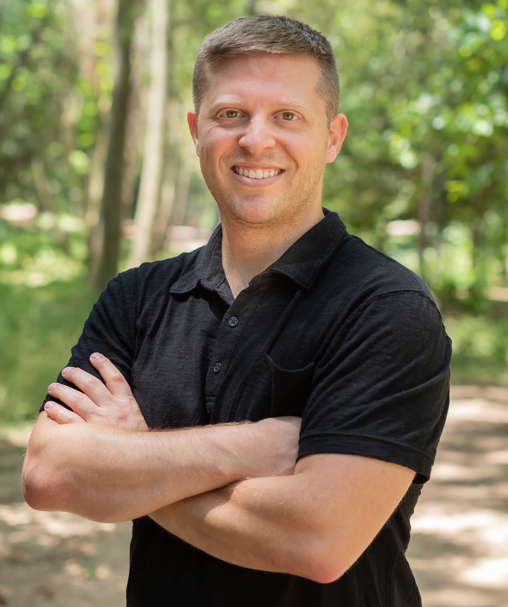

Guest
Dr. Linda Strause
Drug Development Expert, EI Ventures
Dr. Linda Strause is a drug development expert at EI Ventures who provides insider insights into psychedelic drug development and FDA approval processes. Her career was changed by personal tragedy, leading her to specialize in understanding how psychedelics navigate the traditional FDA pathway for therapeutic approval.
Key Takeaways
- 1The FDA drug approval pathway — pre-clinical animal studies, Phase I/II/III human trials, NDA submission — is the same rigorous process being applied to psychedelic medicines, which signals that these treatments are being evaluated with the same scientific seriousness as any other pharmaceutical.
- 2Psychedelics appear to produce their therapeutic effects partly by promoting neuroplasticity and enabling the formation of new neural connections, which is fundamentally different from SSRIs that require daily dosing to maintain a mood-altering effect.
- 3The side effect profile of psychedelics under clinical protocols is dramatically cleaner than most existing psychiatric medications — the therapeutic index (ratio of effective dose to harmful dose) is among the highest of any psychoactive substance studied.
- 4The "adult use" framing for legalized psychedelics is being deliberately distinguished from "recreational" to avoid the political and cultural baggage of the latter — language choice in emerging industries shapes regulation, funding, and public trust.
Key Terms Defined
New to some of the jargon in this episode? Here are plain-English definitions for the terms that came up.
- CRO (Contract Research Organization)
- Companies that provide clinical trial and research services to pharmaceutical and biotech companies, helping manage the complex FDA approval process.
- FDA Approval Pathway
- The multi-stage process for drug approval: preclinical research, Phase I-III clinical trials, then New Drug Application (NDA) review — typically taking 10-15 years and hundreds of millions in investment.
- Holding Company
- A parent company that owns controlling interests in other companies (subsidiaries) but doesn't produce goods or services itself. Often used for tax optimization and risk management.
- AR/VR (Augmented/Virtual Reality)
- AR overlays digital information on the real world (like phone apps); VR creates fully immersive digital environments. Both are expanding from gaming into enterprise training and remote work.
- Pivot
- A deliberate, structured change in product, target customer, or business model, made in response to what you've learned from the market.
Chapters
Full Transcript
Sean Weisbrot: Welcome back to another episode of the We Live To Build podcast.
Sean Weisbrot: Today's guest is Dr. Linda Strause. She's an adjunct professor at uc San Diego, where she teaches human nutrition.
Sean Weisbrot: She's also the president of EI ventures and silly.com. Those two companies are really interesting because they're working on two different angles of psychedelics.
Sean Weisbrot: One of them is an actual synthetic compound that people could be prescribed, and the other is psychedelic assisted therapy that would happen inside of virtual reality.
Sean Weisbrot: You may have recognized the name Strause. You may also recognize the name EI Ventures in silly.com because I interviewed Dr. Strause's son Tyler several episodes ago.
Sean Weisbrot: If you haven't listened to that episode yet, and you wanna learn more about psychedelics and his experience and why it's so difficult to understand what it is and what someone's experience with psychedelics is like, then go listen to that episode.
Sean Weisbrot: Tyler Strause with Dr. Linda Strause. I'm gonna be talking about the FDA.
Sean Weisbrot: And what they look for in trials, what different phases there are in drug trials, and just how crazy you have to be to start a trial.
Sean Weisbrot: How you know how much time it takes, how much money it takes, all of the things that could go wrong.
Sean Weisbrot: And then from there we get a little bit deeper into psychedelics as a whole, how society is changing and its attitude towards psychedelics are changing.
Sean Weisbrot: And what we think the future of psychedelics looks like in the United States and beyond.
Sean Weisbrot: So I really enjoyed this conversation with Dr. Strauss and I hope you do too.
Sean Weisbrot: You're the first scientist I would say I've spoken to on the podcast, so I'm fascinated to hear more about the clinical trial process.
Sean Weisbrot: Probably most people aren't thinking that, but I. I think every aspect of entrepreneurship is important and science is entrepreneurship.
Sean Weisbrot: So why don't you tell everyone a little bit about your career and what you're doing right now?
Dr. Linda Strause: I have a PhD in biochemistry and physiology, and I believe at one part of my lifetime I thought I would stay in academics forever.
Dr. Linda Strause: So I did the standard. You know, go get your PhD, go back to the university as a postdoc, I actually continued at the university for quite some time, became a research scientist, and eventually moved into doing clinical research into humans, which in an academic center with a PhD rather than an MD, forced me just to make decisions in my life.
Dr. Linda Strause: I pivoted, if you will, and went into drug development.
Dr. Linda Strause: I did retain a faculty appointment at the University of California in San Diego.
Dr. Linda Strause: I currently teach and have taught for quite a long time, a human nutrition course to undergraduates.
Dr. Linda Strause: Which is a lot of fun. It's a great little part of my life.
Dr. Linda Strause: The rest of my life has been in the life sciences and drug development, where I oversaw the conduct of very large scale clinical trials, which is what we're gonna focus on today.
Dr. Linda Strause: And as a result of a personal journey, my husband was diagnosed with glioblastoma, which is incurable brain cancer.
Dr. Linda Strause: In April of 2008, he died of that disease two years later.
Dr. Linda Strause: There's always impacts in our life that force those pivot points and change the path we're on.
Dr. Linda Strause: And so I pivoted and joined my two sons in the botanical space.
Dr. Linda Strause: We developed cannabidiol, CBD products made out of hemp and through that journey.
Dr. Linda Strause: Fell into the psychedelic space where we consulted for almost two years and am currently working with EI Ventures to develop a psychedelic molecule for FDA approval.
Sean Weisbrot: You were talking about your husband's experience with this cancer and how it brought you into CBD and all of that.
Sean Weisbrot: What was it specifically about that that got you interested?
Dr. Linda Strause: First of all, glioblastoma, I apologize to you and anybody listening, is incurable brain cancer.
Dr. Linda Strause: It's an intrinsic cancer, so it actually doesn't leave your brain.
Dr. Linda Strause: It sounds sort of like good news, but it's really not, and there are no cures.
Dr. Linda Strause: The survival is like 1% survival over five years, so it's the same disease.
Dr. Linda Strause: By the way, Ted Kennedy died of that, Bo Biden died of that, and most recently, John McCain.
Dr. Linda Strause: It's sort of gotten a little spotlight, if you will, based on the individuals.
Dr. Linda Strause: my husband and I, his name was Randy. You know, we grew up in the sixties and I can leave it just as that.
Dr. Linda Strause: So using marijuana at the time was recreational, as we like to say today.
Dr. Linda Strause: And I think what shifted was we began to see a benefit. So shifting that mentality.
Dr. Linda Strause: I actually tell this story a lot because when you grew up in the sixties, smoking a joint and going to a party or going to a movie was what we did.
Dr. Linda Strause: And when you change the focus to use that medicine as a medicinal product, you have to shift.
Dr. Linda Strause: And it used to be funny when our two sons did move home for the last six months of their dad's life and there were times that they would work with their dad and say, you know, this will help with sleep.
Dr. Linda Strause: Which it did nausea and appetite due to both the chemotherapy he was on as well as the disease itself.
Dr. Linda Strause: I will never tell anybody how detrimental that is to your overall wellness, especially when it's chronic lack of sleep.
Dr. Linda Strause: But it would be funny 'cause they'd go, Hey dad, you know, I rolled you a joint.
Dr. Linda Strause: Just take a couple hits off of it. Then we'll try to eat something or something.
Dr. Linda Strause: And he'll go, Hey Linda, do you wanna have a hit?
Dr. Linda Strause: And I go, no. I'm sort of still working today. You know?
Dr. Linda Strause: But it was that shift of getting him to understand that.
Dr. Linda Strause: This wasn't to get high, this was to help him sleep, to decrease his anxiety.
Dr. Linda Strause: And I can tell you it was a game changer, especially for symptom management, for sleep and anxiety, and all of us can take a pause in our life and sort of try to think of.
Dr. Linda Strause: What our brain and minds would be doing if you knew you were dying and how that would change every single aspect of your life.
Sean Weisbrot: I'm sorry you had to go through that.
Sean Weisbrot: I've spoken to other people before who their loved ones have had cancer while they're running a business, or some of their family members died while they were running businesses.
Sean Weisbrot: So I've never had to experience this myself, but. Hearing other people go through it, it never gets easier.
Sean Weisbrot: And I hope that I never have to deal with that myself, and I do too.
Sean Weisbrot: So through all of that, you guys got into the psychedelics.
Sean Weisbrot: What was it that got you from CBD to that?
Dr. Linda Strause: Sometimes, as they say. Things just happen.
Dr. Linda Strause: The co-founder and CEO of EI Ventures, the parent company to EI Ventures is a company called Orthogonal Thinker.
Dr. Linda Strause: It's really a holding company that acquires and grows by joint ventures, acquisitions, and so we have, actually met David, Nick said it.
Dr. Linda Strause: Long, long time ago after we started Randy's Club, so that was at least eight, nine years ago now, and he helped us as Randy's Club grew and we became a part of Orthogonal Holdings.
Dr. Linda Strause: So what caused us to shift at that moment in time was really their shift into the psychedelics.
Dr. Linda Strause: The psychedelic industry in many ways is mirroring the cannabis space. I'm sure it will diverge.
Dr. Linda Strause: I see a lot more activity on the regulated pathway, whereas cannabis has clearly taken the adult use pathway with very few products that have moved into that space.
Dr. Linda Strause: With Epidiolex being the exception to the rule, it is now an FDA approved drug for the treatment of rare pediatric epilepsies called Vets and lg, and it was developed and is marketed by GW Pharmaceuticals.
Dr. Linda Strause: It was created from the marijuana plant, but with the exception of that, we haven't seen this landslide of cannabis products.
Dr. Linda Strause: Cannabis drugs, going through the FDA regulated pathway. On the other hand, we have quite a lot of studies that are now opening up looking at psychedelics.
Dr. Linda Strause: We have maps with. Ketamine. We have MDMA that's going to end up in front of the FDA.
Dr. Linda Strause: And of course we have a number of psilocybin products. probably Compass Pathways is at the forefront right now.
Sean Weisbrot: I've been spending a lot of time researching psilocybin and trying it and, you know, helping my mom with her own issues.
Sean Weisbrot: And my dad and my brother also have their own issues. So we've all been kind of trying it.
Sean Weisbrot: And of course for me, it's not about getting high.
Sean Weisbrot: I think I look at it more as a scientist, and as a person who, with a background in psychology, I understand my own issues.
Sean Weisbrot: And so I feel like psilocybin is a fantastic thing to help people with anxiety, depression, whatever they have that's ailing them.
Sean Weisbrot: So I'm a huge proponent of this space and I wish I was in a situation where I could be investing in it.
Dr. Linda Strause: Well, investing in it is one thing.
Dr. Linda Strause: You ought to, you know, there are clinical trials going on.
Dr. Linda Strause: To our discussion point and bringing full circle. I think David approached me and my two sons as subject matter experts, but he came to me because I understand the FDA process.
Dr. Linda Strause: I have the connections. You know, nobody knows everything. As you grow up and work in whatever industry you work in, it's probably the most important thing for you to understand.
Dr. Linda Strause: You know, is what you do know and what you don't know and how to reach out to those people.
Dr. Linda Strause: So my network and drug development after over 35 years is pretty broad if I don't know anything, but if I, you know, need something, I can go and reach out and I have those connections to make it happen.
Dr. Linda Strause: In a press release, it's publicly announced that we, at EI Ventures, are working with a contract research organization to develop a transdermal psilocybin patch.
Dr. Linda Strause: And the process is long and arduous and you know you have to go through the testing and the animal testing and the pharmacokinetic and pharmacodynamic testing all before you even walk into clinical trials in humans.
Sean Weisbrot: It definitely sounds like something you'd have to be insane to try, but I think it's really important.
Sean Weisbrot: And what's interesting is that I believe most, if not all of the drugs on the market today have come from a plant or a fungi or something.
Sean Weisbrot: From nature.
Dr. Linda Strause: Yes. Biologics.
Sean Weisbrot: They figured out how to synthesize it in a way that we can take the benefits of something.
Sean Weisbrot: There's been things like, metformin, like they said, it's supposed to be for your heart, but then they realized like, actually it extends the life of mice.
Dr. Linda Strause: You can't test everything for everything, nor can you test everything forever.
Dr. Linda Strause: So when things move through the process and they get approved by the FDA, based on the studies that were conducted, that dictates the label.
Dr. Linda Strause: a fun thing for your listeners to do, I taught a course, clinical trials 101 for a master's program in regulatory affairs, you know, quite a few years ago.
Dr. Linda Strause: And we had to come up with a project, I was co-teaching it with a colleague of mine.
Dr. Linda Strause: And so the project we came up with was. To go into your proverbial medicine cabinet and pick anything that's there that came with a prescription and has what we call an insert in it.
Dr. Linda Strause: You know, you, you take it out. It's got, you need a magnifying glass today to read it, but it's got all that fine print there and you're supposed to read it all now.
Dr. Linda Strause: You can do it online. They're called package inserts. If you read that package insert, you could write an entire drug development pathway for that product because.
Dr. Linda Strause: Who it's indicated for were all the inclusion exclusion criteria that were there.
Dr. Linda Strause: All the side effects were all the adverse events that were collected during the conduct of that study.
Dr. Linda Strause: And you can go on and on. So if it says you have to be, you know, over 18, you know, what are your symptoms?
Dr. Linda Strause: This is for the treatment of, these are called claims.
Dr. Linda Strause: And unless you run a controlled clinical trial, that demonstrates safety and efficacy.
Dr. Linda Strause: You can't put a claim on your products, so there's one great thing that people can do.
Dr. Linda Strause: They can pick anything out, and when they read it, just take a little different approach to reading that.
Dr. Linda Strause: Just don't go, oh shit, look at all these side effects.
Dr. Linda Strause: Really think that it also tells me who I am, what my symptoms are.
Dr. Linda Strause: It says everything on that package insert. How often do you take it? That was the study design.
Dr. Linda Strause: The subject came in, they took the pill, you know, twice a day for five days and then off for two, whatever.
Dr. Linda Strause: That's exactly how that clinical trial was conducted. On the other hand, Go open your multivitamin.
Dr. Linda Strause: You're not gonna find a package insert in there. And if it's marketed correctly, it's not gonna say, take vitamin, you know, B12 and have more, you know, whatever, produce more energy or whatever.
Dr. Linda Strause: Vitamin C will not have a label that says it cures the common cold. 'cause it doesn't.
Sean Weisbrot: You were talking about the things that you have to do before you can do a clinical trial.
Sean Weisbrot: So in a preclinical situation. How do you get started? If you wanna do something like that.
Dr. Linda Strause: I like to take it down to something that's meaningful and, and in some ways easy to understand because it impacts us.
Dr. Linda Strause: So when you go to the doctor and they give you a prescription, you go fill your prescription Lipitor.
Dr. Linda Strause: I don't care what it is. Every time you get your refill, you never think, well, I wonder if it's the same as I got last time.
Dr. Linda Strause: It doesn't even enter your mind. And that is the essence of preclinical.
Dr. Linda Strause: The FDA wants to know that every time you make this product, whatever it is, biologic, new chemical entity, even a medical device, combination products, the list goes on and on.
Dr. Linda Strause: Every time you make that, it's gonna be the same, so you have to demonstrate.
Dr. Linda Strause: What's called chemistry manufacturing and controls that every time the chemistry is the same, that you can run it through good manufacturing practices.
Dr. Linda Strause: GMP and the end product based on your parameters will always be the same.
Dr. Linda Strause: They expect that as they should, right? Because we all just go, yeah, I'd hope so, but we don't really think about it.
Dr. Linda Strause: If I wanna come back to that, but I do wanna point out that we also have to do animal models and there's clear guidelines for animal models.
Dr. Linda Strause: You have to use, you know, rats and mice, and then slightly higher up dogs.
Dr. Linda Strause: Pigs, depending on, again, what you're looking at in the therapeutic area, and those are more for safety.
Dr. Linda Strause: Before you go into man, we wanna make sure we know where the products go.
Dr. Linda Strause: So we can't put radioactive, you know, labels on molecules and give 'em to humans.
Dr. Linda Strause: You can't do what are called LD fifties, which basically stand for a lethal dose where 50% of animals die.
Dr. Linda Strause: You can't do that in humans. So you do those early phase animal studies and look at.
Dr. Linda Strause: Just the movement of the molecule through a physiological system. Pharmacokinetics, pharmacodynamics.
Sean Weisbrot: Why is it even acceptable that you can kill animals?
Dr. Linda Strause: That is a problem, and my answer to you, just in general is, okay, are you willing to volunteer if it's never been tested by anything except a Petri dish?
Sean Weisbrot: No, but it's not acceptable to kill animals. They haven't done anything wrong.
Dr. Linda Strause: That is true. They don't deserve that.
Dr. Linda Strause: I mean, there are, you know, mice that are basically bred for clinical research. We have animal models of diseases.
Sean Weisbrot: I know most of the research has been done on mice and all of that, but that doesn't mean I have to like it.
Dr. Linda Strause: Nope. You don't have to like it. And I don't particularly like it either.
Dr. Linda Strause: And I will take strong stands over testing cosmetics on rabbits.
Dr. Linda Strause: But at some point we're, I mean, and we are developing new tools, but ultimately it comes down to do we want drugs to be approved that were never tested?
Sean Weisbrot: I mean, why not do it on humans that have terminal illnesses?
Dr. Linda Strause: Well, that's fine, but high blood pressure is not terminal.
Dr. Linda Strause: So how, you know, so how do you test a potential medication for high blood pressure using that argument?
Dr. Linda Strause: And truthfully, having been the director of research and education at one of the largest hospices and palliative care centers in the nation for a while, I'll tell you that, you know, there's no guarantee in life.
Dr. Linda Strause: Hospice is not a death sentence. We used to joke, people survive hospice and go home.
Dr. Linda Strause: You know, it's got criteria and there are definitely terminal illnesses.
Dr. Linda Strause: But truthfully, Sean, this is a conversation that is very personal. I do fundamentally agree with you. I love animals.
Dr. Linda Strause: I could not personally work on dogs or monkeys and things like that, but I also understand that we don't have an answer and I don't believe the world is ready to give up on finding new cures for diseases like glioblastoma or for psychological illnesses.
Sean Weisbrot: So then with what you guys are working on, how are you planning on handling that?
Dr. Linda Strause: We are doing transdermal development, which will be tested on skin, obviously for irritation and things like that.
Dr. Linda Strause: The advantage with some of the plant medicine is that.
Dr. Linda Strause: We do have a long history of safety. We're hoping we'll be able to utilize some of the chemistry manufacturing controls that have been developed by other companies, but we will have to do it, we'll go in, we'll probably partner with UCSD.
Dr. Linda Strause: Here in town, we've met with quite a few people.
Dr. Linda Strause: They have a large psychedelic research center now and are beginning to run clinical trials on psilocybin and treatment resistant depression.
Dr. Linda Strause: There's a really fascinating study, at least for me, because the, I can't say disease 'cause it isn't, it's actually phantom limb pain, which is just when you think about that, it's just so horrible.
Dr. Linda Strause: In so many ways that psilocybin could actually help. Really amazing.
Sean Weisbrot: You just have to put the patch where the nerve endings are?
Sean Weisbrot: It would maybe stimulate growth in a way.
Dr. Linda Strause: I don't actually know how it works.
Dr. Linda Strause: The way I like to explain it is they work on our neural connections in our brain and our neural connections are fluid.
Dr. Linda Strause: Some call it plasticity, where you know, they can change.
Dr. Linda Strause: And you know, the best example to think about is if you know somebody who's ever had a stroke.
Dr. Linda Strause: So a mild stroke means you have killed some brain cells.
Dr. Linda Strause: Once your brain cells are killed, by the way, they don't come back.
Dr. Linda Strause: But we all know that stroke patients can recover. Say they were paralyzed on their left side, they can get some of that movement back.
Dr. Linda Strause: Why? Because they remap, if you will, and make new neural connections.
Dr. Linda Strause: There's talk therapies, psychotherapies, such as EMDR, that's based on reconnecting new neural pathways to deal with childhood trauma and things like that.
Dr. Linda Strause: So if you think about a psychedelic trip, you can imagine that the psilocybin breaks apart those neural connections.
Dr. Linda Strause: Then follow on psychotherapy, we'll reconnect them in an air quote, healthier way.
Sean Weisbrot: I think there's a lot of potential with neurogenesis and, and all of that.
Sean Weisbrot: I think it's a very fascinating place and my family is in a place that's kind of crappy because my mother had hepatitis C. She went through the Harvoni study and she was cured, but it was in her body for like 30 something years before it left her body.
Sean Weisbrot: There is now research coming out which says they're highly confident that long-term exposure to Hepatitis C can cause brain damage and personality changes, which is what we've noticed.
Sean Weisbrot: It's not a good change, let me put it that way.
Dr. Linda Strause: I'm sorry to hear that.
Sean Weisbrot: And it's hard for her because she doesn't like it.
Sean Weisbrot: She knows that something's different and she hates it 'cause she doesn't feel whole and it affects her on a daily basis In many ways.
Sean Weisbrot: A lot of her executive functioning has been compromised. It's hardest for us because we love her and you know, she used to be a superwoman, she used to take us for granted, she didn't work.
Sean Weisbrot: You know, she didn't have her own career. She sacrificed, you know, the best parts of her life for us too, to raise my brother and I, taking us to school, to karate, you know, here and there.
Sean Weisbrot: Always making every meal and still having time to go and volunteer at our school and grade papers that the teachers and I like.
Sean Weisbrot: You name it, she was there for everything. Never complained, always full of energy, always on top of everything, even paying all the bills and helping my dad with taxes and sometimes in his business.
Sean Weisbrot: And she can't do pretty much anything now.
Dr. Linda Strause: Yeah. And she knows it yet, doesn't understand it and can't fix it.
Sean Weisbrot: I think those are really frustrating. I feel like psilocybin or ketamine are potentially very helpful for her, but unfortunately she's stuck on this antidepressant and traditional psychiatrist and psychologist and I think that it's detrimental.
Sean Weisbrot: I think it's hurting her, not helping her. And I would, I would love for her to be in some sort of a trial where she could take ketamine or, or psilocybin on a long-term basis.
Dr. Linda Strause: You know, it's interesting 'cause being on an antidepressant so far is an exclusionary criteria in probably all the clinical trials right now.
Sean Weisbrot: Because you could have serotonin overload if you take both at the same time. Yep.
Sean Weisbrot: Which is really interesting because when you look at the chemical formula of the psilocybin, it basically mirrors that of serotonin, so it's like an antidepressant with no ramp up, no withdrawals, no addictiveness, and no side effects.
Dr. Linda Strause: Yeah. Now there are some side effects.
Dr. Linda Strause: Serious side effects that have emerged with psilocybin due to its binding to the five HT two B receptors.
Dr. Linda Strause: It's either the two A receptors or the two B receptors.
Dr. Linda Strause: And I've got a couple publications that I can share with you later, or Tyler can.
Dr. Linda Strause: And so we were on the phone with a researcher from the Back East who was talking about it, so it's not going to be without side effects.
Dr. Linda Strause: Unfortunately, nothing is. But when you compare the side effects of any of these psychedelics with the current treatment we have for mental illnesses, there's no comparison.
Dr. Linda Strause: Unfortunately, long-term we don't have, but we also do know that long-term treatment of schizophrenia.
Dr. Linda Strause: I mean, anybody who's been on a long-term SSRI or anything.
Dr. Linda Strause: We'll start to tell you that they just, the side effects are numbness. I don't feel engaged.
Dr. Linda Strause: You know, it's, yes, you don't have the lows, but you also don't have the highs.
Dr. Linda Strause: And that's what I hear people say.
Sean Weisbrot: One of the biggest things I notice is lack of empathy from her and I can't tell if it's the personality change or if it's a side effect of the antidepressant
Dr. Linda Strause: And unfortunately taking people off antidepressants, it's really tough sometimes.
Dr. Linda Strause: I'd love to see. These, some of these individuals who are on multiple therapeutics, you know, you just keep adding them.
Dr. Linda Strause: And then we don't have any studies, right? We don't have any studies with all these combinations.
Dr. Linda Strause: You just look at the elderly in general who are now on heart medication, high blood pressure medication, cholesterol lowering medication, and then they're depressed, so they put 'em on an antidepressant.
Dr. Linda Strause: We have no idea how those are all interacting. None whatsoever.
Sean Weisbrot: Oh yeah. If you look at my grandma's pill box, she's got three pill boxes.
Sean Weisbrot: Some are in the morning, some are in the evening. She doesn't even know what half of them are.
Sean Weisbrot: And there's like 30 different pills.
Dr. Linda Strause: Yeah. And that's crazy. And I would love to say, God, can't you just wean 'em off 'em all and then start clean?
Dr. Linda Strause: And maybe there's one thing that would help, there's a great study. I wanna say it's outta uc Davis.
Dr. Linda Strause: That's literally shown. Slightly different crisis, but the opioid overuse, you know, substance abuse diseases, an opioid use that's shown that in areas where there's cannabis dispensaries, there's a lower incident of opioid use disorder.
Dr. Linda Strause: And it was just published. I mean, it's a great article.
Dr. Linda Strause: So there are other options and people are looking at botanical plant medicine for their medicine. Potential benefits.
Dr. Linda Strause: And the reason I added all those words in it is because right now plant medicine is over the counter, which means you can't label it.
Dr. Linda Strause: So we're in that conundrif you will. And I think that if I can tread lightly here, I think there are benefits too.
Dr. Linda Strause: Seen some of these products go through Yes. The very long and costly FDA approval process and get approved.
Dr. Linda Strause: And I'm gonna, I'm gonna go back to cannabis as an example.
Dr. Linda Strause: The fact that we have Epidiolex approved for epilepsy gives all those people that have the legal right to grow marijuana, to smoke marijuana, to have a certain amount of cannabis in their possession, gives them the right to do that.
Dr. Linda Strause: And now they have scientific evidence. That if their child has epilepsy, there could be a clear benefit and they, a child, doesn't have to go into a clinical trial.
Dr. Linda Strause: They don't have to pay the money and get a prescription.
Dr. Linda Strause: They can grow their own plants and do it themselves. Mushrooms are actually easier than cannabis to grow.
Dr. Linda Strause: So you could have your humid room and grow your fungi, but right now what we're seeing is states and cities.
Dr. Linda Strause: Decriminalizing it. It's similar to how cannabis started, where you know you're not gonna be thrown in jail.
Dr. Linda Strause: That's the first thing. Second, you can grow your own mushrooms and use them.
Sean Weisbrot: What I am seeing is that even though mushrooms are being decriminalized, I don't think there's going to be much recreational use in America.
Sean Weisbrot: So, like for example, Oregon just passed a bill that makes it possible for someone to walk into a clinic, get psilocybin.
Sean Weisbrot: Mm-hmm. And have talk therapy.
Dr. Linda Strause: Correct.
Sean Weisbrot: I think that's how Psilocybins gonna go.
Dr. Linda Strause: I do too. I mean, I do know that those clinics are not open and they're, you know, looking at 2023. Of course by the time they get it, you know, so, but I agree and I don't see the FDA, by the way, Sean, a hundred percent.
Dr. Linda Strause: I don't see the FDA approving any of this that isnt in combination with some form of talk therapy.
Dr. Linda Strause: Because again, if you think about what these molecules are doing, if they're breaking away these neural connections, then if they just go back to the same place.
Dr. Linda Strause: What benefit is that?
Sean Weisbrot: I'm curious to try therapy myself with it.
Sean Weisbrot: I've been a psychologist to myself for as long as I've been able to, and I think being an entrepreneur and going through the pandemic and going through a divorce and dealing with my mom has put me in a spot where I, I think I kind of want to talk to someone.
Sean Weisbrot: I don't know. Yeah, maybe it will be helpful and I'm already microdosing, so it could be interesting.
Sean Weisbrot: Things to try out for myself.
Dr. Linda Strause: So do you find a benefit from microdosing?
Sean Weisbrot: Oh yeah, definitely. Yeah. In general they help with, you know, anxiety, and I think that's the biggest thing that I experience on a daily basis.
Dr. Linda Strause: I agree. And when you're not taking psilocybin at a macro dose, where let's just say you have the hallucinogenic experience, then it's really mild.
Dr. Linda Strause: And sometimes if you do it and then stop and think about it. Am I feeling anxious again?
Dr. Linda Strause: You know, give yourself those two weeks or so without, that's when people realize, oh, they were beneficial again, that you'll see the same scenario when you look at cannabis high THC versus CB, D alone.
Dr. Linda Strause: And one of the issues is that people wanna feel something.
Dr. Linda Strause: A lot of times when you take CB, D, you don't feel anything until you step back and go, oh, I dealt with that pretty well because nothing.
Dr. Linda Strause: Sorry, but nothing is going to take away the fact that life can be stressful and cause anxiety.
Dr. Linda Strause: You have to deal with your mother. My mom will be 92 and in spite of it, she's probably gonna live for another five, 10 years.
Dr. Linda Strause: But all the frustration, you know, I want her here, so I just have to deal with it.
Dr. Linda Strause: Does it cause me anxiety? Yes. Does it frustrate the hell outta me sometimes? Yes. And so the question is.
Dr. Linda Strause: I can't make that go away. Can I benefit from CBD or microdosing and realize, oh, you know, it's just not, you know, pushing me over the edge anymore.
Dr. Linda Strause: You know, I can stand up there and do it. And I think, again, the same thing.
Dr. Linda Strause: You can go all the way back to vitamins. If you ask anybody in your family or your friends, you say.
Dr. Linda Strause: Hey, Sean, you take a multivitamin. Sean says, yes, I do.
Dr. Linda Strause: And I say, and how does it make you feel? And you pause and go, I don't know.
Sean Weisbrot: No change.
Dr. Linda Strause: Yeah. Now, if you stop and say, you know, when I teach my nutrition class, I, I actually go through this walk, and if you stop it.
Dr. Linda Strause: Then go, God, you know, I, I went out for a run today and I just feel like shit.
Dr. Linda Strause: Then, you know, you go into the, your physician, you get a blood test done and you find, lo and behold, I'm low on iron or I'm low on B12.
Dr. Linda Strause: Well, that vitamin supplement did help you. You didn't feel anything on a daily basis, but when you pushed yourself.
Dr. Linda Strause: You felt fine, but you didn't have that perspective of what it would've felt like when you weren't taking it.
Dr. Linda Strause: So it's those types of exercises that let us realize that we can benefit by, you know, making sure that our body is commiserated with wellness.
Dr. Linda Strause: That homeostasis is managed throughout our entire system and supplementing with, you know, vitamins, minerals, botanicals, over the counters.
Dr. Linda Strause: A lot of that helps. Us with our everyday wellness, and I'm only emphasizing that because I don't wanna give your listeners the impression that if they have a serious illness, they shouldn't go to a doctor, get diagnosed, and hopefully have that physician lay out all the options.
Sean Weisbrot: Not just, you know, the prescription drug that they, you know, oh, you're depressed. Here's some opioids.
Sean Weisbrot: Right, exactly. I think that humans and even chimpanzees and orangutans, all these others will have picked these leaves that they found and kind of played around and figured out what does what?
Sean Weisbrot: And I think that's why we have this collective unconscious, understanding of these different plans.
Sean Weisbrot: And that's why our brains have the receptors that they do. I mean, people go, oh, this stuff is illegal.
Sean Weisbrot: It's for a reason, but why does our brain have the ability to handle it?
Sean Weisbrot: It's because we've been doing it for millions of years.
Dr. Linda Strause: Well, and you know, the discovery of the endocannabinoid system basically came out of Israel because a scientist said, I'm gonna learn how THC does what it does.
Dr. Linda Strause: Great scientific question, right? THC is a phytocannabinoid. It's from the cannabis plant.
Dr. Linda Strause: So he goes about it, his lab does work, and they start testing it and they go, well, why do vertebrate animals have receptors for THC?
Dr. Linda Strause: I mean, THC is a plant molecule. What are humans? Doing with a receptor.
Dr. Linda Strause: And from there we learned about the endocannabinoid system. In fact, we have an endo, meaning endogenous, an endocannabinoid called ide, that THC mimics.
Dr. Linda Strause: Okay? So the molecule in the plant mimics a cannabinoid that we produce endogenously.
Dr. Linda Strause: And what's really even more strange is enam in Sanskrit. Means bliss.
Dr. Linda Strause: So that wonderful high that people got that felt wonderful and relaxed actually is a result of mine, which we produce and have receptors in our central nervous system that binds and it means bliss.
Sean Weisbrot: I always love that story.
Sean Weisbrot: From what I remember, the first known account of marijuana use was by a Chinese doctor like six or 7,000 years ago.
Dr. Linda Strause: There's a few books out there that trace it back forever and you know, peyote and all.
Dr. Linda Strause: Mushrooms and psychedelics. I mean, those have been around for, you know,
Sean Weisbrot: eons. Exactly. So I just, I'm talking about this more and I'm going to continue to sound the alarms and scream from the rooftops.
Sean Weisbrot: For people like this stuff is not bad for us and we shouldn't be ashamed about it.
Sean Weisbrot: Our ancestors used it for eons. There's no reason for us not to understand ourselves better and explore these things, especially when it could possibly make being an entrepreneur a much more enjoyable experience.
Sean Weisbrot: That's right.
Dr. Linda Strause: smoking like a true entrepreneur. No, you know, you're absolutely right. And I agree with you.
Dr. Linda Strause: I don't actually like the word recreational. I always say, you know, we don't have recreational alcohol.
Sean Weisbrot: I think alcohol should be illegal.
Dr. Linda Strause: I would rather see alcohol illegal than, you know, psychedelics and stuff like that and cannabis.
Dr. Linda Strause: But I do believe in adult use. That you should be over 21 or whatever, whatever, whatever parameters there are at a point where you can make an autonomous and knowledgeable decision.
Dr. Linda Strause: But all that said, I agree with you. I don't see adult use psychedelics quite yet,
Sean Weisbrot: Which is a shame.
Dr. Linda Strause: Which is a shame.
Dr. Linda Strause: But I do see. The same pattern we had with cannabis, the cart getting before the horse.
Dr. Linda Strause: So again, we're gonna be faced with the fact, especially microdosing.
Dr. Linda Strause: I'm old, I know a ton of people that microdose, I mean, I really do.
Dr. Linda Strause: And you know, sometimes I go, so who's making these gummies? How are they doing that when it is.
Dr. Linda Strause: So illegal. There's gummies for psilocybin. People are making them. They're out and about.
Dr. Linda Strause: And when it comes to cannabis, you know, we know that the black market is still alive and well.
Sean Weisbrot: There's a thriving market where people are getting a medical marijuana card legally.
Sean Weisbrot: And then going and buying it and then selling it to people who don't have the card.
Sean Weisbrot: Black market's alive in all. You know those people either don't wanna get the card, they don't want to pay for the card, they don't want their name on some sort of list.
Sean Weisbrot: Who knows?
Dr. Linda Strause: I'm not an advocate of governing based on potential abuse.
Dr. Linda Strause: I'm convinced that people will find a way around. A lot of people will find a way to abuse.
Dr. Linda Strause: Yes, they will. You know, like it or not, we just don't want it to become, you know,
Sean Weisbrot: the standard. I've never macro-dosed, I'm curious, but I don't feel psychologically that I'm strong enough for it.
Sean Weisbrot: Right. I feel like I might fight back when it becomes challenging and I, I don't wanna put myself in that situation.
Sean Weisbrot: So I feel like macro doses are what I'm comfortable with and I want to be able to take them and work.
Dr. Linda Strause: And macro dosing you would have to do in the presence of, right now, it's in the presence of a therapist, a physician.
Dr. Linda Strause: You know, somebody that's overseeing that, that trip. Now you wanna go back to the sixties.
Dr. Linda Strause: That's a whole different time.
Sean Weisbrot: My parents tell me about it all the time.
Dr. Linda Strause: Then they didn't live it. No. You have heard that expression.
Dr. Linda Strause: You know, if you remember the sixties, you didn't live in the sixties.
Sean Weisbrot: Fair enough. So unfortunately, we didn't actually talk about clinical stuff much, but I think we touched on some higher level mm-hmm.
Sean Weisbrot: Topics and I think that it's still a pretty good outcome.
Sean Weisbrot: So maybe I'll have you come back another time to actually talk about the clinical side.
Dr. Linda Strause: Yeah. I mean, we talked a little bit. You're, we talked around it all.
Dr. Linda Strause: You know, but I think we made some good points about the role of clinical trials and the questions that the FDA is looking for in terms of, of their requirements.


