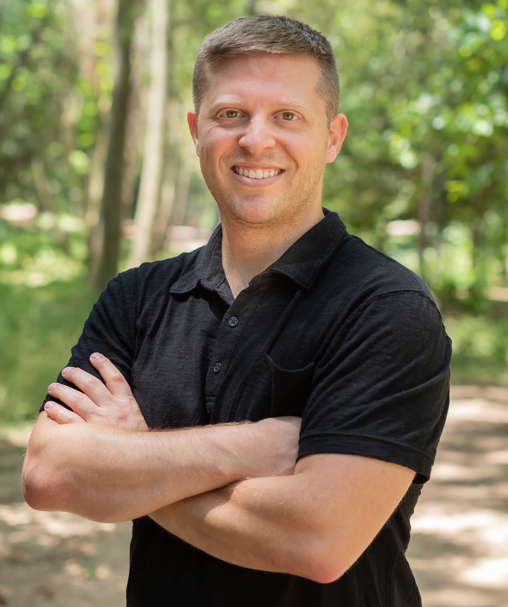
My First Project for Elon Musk: Making a Music Video for SpaceX
What was it like to work at SpaceX during the early days? This video shares a rare, behind-the-scenes story: My First Project for Elon Musk: Making a Music Video for SpaceX. Jeremy Lasman, one of SpaceX's first ~100 employees, reveals how after the critical launch that saved the company from bankruptcy, his first assignment was making a "rad music video" to make rockets cool again.
Guest
Jeremy Lasman
Former Early Employee, SpaceX
Chapters
Full Transcript
Jeremy Lasman: Demanding the best, um, demanding it fast and, you know, not a lot of room for, for bullshit and, uh, and wasting time and, um, so yeah, I'm hugely inspired. I learned so much from working there and when observing that, um, yeah. Yeah, and, and just. People talk about like the, uh, the Steve Jobs reality distortion field, you know, when he was speaking on stage and all that. Um. Um, you know, he elon's different because he's not perfectly crafted like a Steve Jobs, right. Where it's like the perfect words and the perfect cadence. You know, you get a lot of ums and ahs and, and you know, uh, that sort of thing with Elon, but it's like it makes him human. Exactly. Uh. But yeah, those team, you know, gatherings, company meetings where he's speaking about the vision and, and, and you know, where we're going and multi-planetary like that just made me so excited. it's the way he speaks about that and Conspires like.
Sean Weisbrot: yeah. Welcome back to another episode of the We Love To Build Podcast. I'm here today with Jeremy Las Smith. He is a former SpaceX technologist and now the co-founder of Quantum Star Systems, which aims to employ cutting edge quantum computing cloud services. He is also the founder of the Passion Company, a multidimensional research and development organization focused on accelerating the world's conscious evolution to superhuman. Thank you for taking the time to talk with me. Uh, Jeremy, why don't you tell everyone a little bit more about how you, uh, got yourself involved in SpaceX and these other two companies and we'll go from there.
Jeremy Lasman: I actually got involved with SpaceX, um, literally like right after high school or like my, uh, last year of high school. Uh, 'cause it was, uh, about 2006 and it was a startup, a relative startup back then. I think I was employee number one 10 or one 11 or something like that. Um, and, uh, basically my passion sold me. I didn't have a lot of, uh, business or company experience at that point. Uh, but the CIO at the time, uh, really saw the potential in me. He gave me the opportunity. He saw that. I was a quick learner and that got my foot in the door. And then it was just proving myself along the way, getting more and more responsibilities along the way. Um, and it was, it was a blast. I mean, I, I don't think you could have a better first, first company to work for, uh, than, than SpaceX, especially in that like startup phase. Um, and, uh, so that's, that's kind of how I got involved with SpaceX. Um, and then, uh, yeah. Getting involved with, uh, the quantum computing, uh, founding that company is, uh, sort of, uh, the, uh. The Steve Jobs to, to Wozniak kind of relationship where my partner, the CTO and co-founder is, is very, the much the engineer, the technical guy, soft spoken. And he really loved me coming in because I kind of provided that visionary like, uh, uh, way of kind of putting it out there and, and uh, and talking about it. Um, and along the way helping to, to, um, to start up the company. Um. And, uh, yeah, so I, I come in from more of a, a big picture, uh, angle on, on quantum research, quantum technology. Um, and it really is a, a broad stroke across a lot of my work in terms of the many. Different definitions that you can kind of, uh, define for what quantum means to a human and to a machine, to technology. Um, and, and the, the play there. So that, that's kind of where I come at, uh, in, in this.
Sean Weisbrot: And what about the passion company?
Jeremy Lasman: It's, it's my soul's work, uh, in, in that it's the closest to where I. Am both the scientists and the artist here in, in like really bringing about like, uh, something new and pioneering and, um. Uh, and all the ways in which I, I play in that vein, um, and, uh, it's a big vision. Uh, it's, um, doesn't exist on the earth yet, uh, which makes it very fun to land something, um, and to take the big ideas and put 'em into something and, and let that kind of grow. Uh, and basically we are, I, I see a, a vision for a whole new industry, the passion industry to support humanity, especially as technology advances. Um. I see passion as the focus that will help humanity stay current with evolution, uh, and to, uh, still have purpose as technology really starts to change our life, change many industries. Um, and, and that's kind of where the idea starts on on all this, all, all the work that I do, uh, in the r and d.
Sean Weisbrot: How can you. Combine passion and technology in a way that inspires other humans to care about protecting their future through learning to get better as a human.
Jeremy Lasman: The best way that I can answer that through our discovery and through how we treat passion is we look at passion as the fuel of human energy. Uh, not just a volatile emotion, the fuel. So in, in the, uh, automotive metaphor or the battery metaphor, passion is the thing that kind of is the, the battery of our life force and the fuel that either drains or is powered, uh, on all levels of body, mind, spirit, soul. It's the fuel that runs through the whole system. And uh, that's, that's kind of what I coined and as my imagination. Technology, uh, uh, intellectual property is, is the way to look at the body, mind, and spirit as this bi-directional, energetic system in which passion is the fuel. Because passion kind of spans that gap, if that makes sense, where it's not necessarily a physical thing. We can't. See it with our senses and it's, it's not only an energetic thing, it kind of, or a better way for me to express this is you can be passionate in excitement or you can be passionate in anger. So it kind of is beyond the polarities there. It, it is encompasses both as a fuel of, of our life. Um, and, and that's precisely why it should be. And why I've been studying it as a new field here because this is what I believe humanity will need to, again, stay current. Uh, as we both, uh, technology and humanity is send up, uh, this evolution together.
Sean Weisbrot: Recently, we've seen things like chat, GPT and Mid Journey and Dolly and. And these other generative ais come in and very quickly make it seem like artists aren't necessary. Content writers aren't necessary. Obviously, you know, there's more nuance to that because they haven't stolen the show. They've made it so that we can do our jobs better and faster. Um, how many years do you think until Quantum just comes and absolutely destroys everything?
Jeremy Lasman: I, I believe we're on that, like, on the timescale of, of whoa, one to two years and five years at the max. But we're, we're probably going to see something in the one to two year scale, especially in terms of, of what we're building. Um, it, so that might be a little bit of an accelerated pace, but it's it's years. It it, it's years. Which kind of to connect to the question before that again, which is why. Passion and, and soul is, is so imperative here because that's the difference between quantity, uh, and, and actual like, quality. Uh, and, and that's really again what makes us individual what's makes originality, um, and, and allows that collaboration between AI and, and humans to be, um, productive And, uh. Um, flourishing.
Sean Weisbrot: I remember as a kid, my grandfather was in his sixties and he had never worked with a computer in his life. He never needed one. But all of a sudden his company started pushing him to use a computer and he said, no thanks, and he retired. He never used a computer in his life. He refused to. I believe that what happened back then in the nineties is a is going to repeat in this decade where if you don't learn how to use Theis that are coming out, you'll lose your job to someone who's willing to learn.
Jeremy Lasman: It's, it's definitely, uh, a very potent theory, uh, very possible theory. Um. And I, I, I, I would, I would agree with that because in, not, not necessarily like in a replacement sense, but in an augmented sense, these things are going to help whatever your, uh, profession or career or skill, it's gonna, it's gonna augment it. If you, like you said, are on the bend, are on with it, you know, um, and, but then, so I, I, I would agree like 80%, but then there is the, uh, other side that I can kind of see where no, you, it's not imperative if your, your passion, your craft. And soul are, are up to speed because then it is about that quality and the originality that can only come from you regardless of the tools that you're using, um, to be faster or, or, um, to augment the performance in some sense, to come down to that, like if we're talking artist level or whatever that profession is, um, it's that other side where. No, it's not. You don't necessarily need it. Uh, just like people can do math in their head and, and they don't need a calculator, right? Uh, it is sort of that, but it really goes down to that signature. What, what makes it original individual? Uh, only the, the signature that only you can do. That's really what it comes down to, to me, uh, in, in the other side of that coin.
Sean Weisbrot: Uh, yeah, there's definitely some examples of that. I watched a documentary a long time ago about this, uh, craft of making swords in Japan where they will spend months or if not years, making a single sword, and when it comes out their masterpieces and they'll sell for tens or hundreds of thousands of dollars because they're like the only person in the world that can make the sword like that. Right. Um, and there's people that will study for 10 or 15, 20 years as an apprentice under these masters. And like by the time they're 50 or 60, they're starting their career almost like they spend their entire youth just trying to figure out how to not screw it up. And, um, so, you know, I, I think some of those things may last, but I think anything that could be digitized is probably a different situation.
Jeremy Lasman: Right. And, and in in that vein you're talking about like the augmentation, the performance, uh, efficiencies and, and things like that that speed up the process or, uh, yeah, exactly.
Sean Weisbrot: There was a story earlier this year about a team of researchers that had used math, uh, and Google's quantum computer to simulate a wormhole. Have you heard of this? And what do you think of it? If you have,
Jeremy Lasman: everything is possible. So I, I definitely see it, uh, um, because the capability is there. You're, you're just talking about, uh, the focusing and the precision of how you are programming that photon or that, that q the qubits that, that you're, um. Uh, manipulating. Uh, so I see, I see the potential of it. Um, but I would kind of, what I would want to know is what the term means. Like what is, what does the wormhole mean in, in the, in that, in the context,
Sean Weisbrot: I guess it was trying to prove that you could use quantum computing to simulate the fact that black holes or wormholes are potentially, uh, a way to get to another universe
Jeremy Lasman: that's actually a core, uh, um. Part of the, the innovations that our company, the Quantum Star systems is, is innovating. Um, is that, uh, that multiverse or the multidimensional parallel, uh, programming techniques, like what, what has to happen to be able to program using parallel universes? Does that actually mean. In layman's terms for business owners. Classical computing means that you're computing in a and writing software in a, a, linear A, B, C, D, E sort of, uh, thinking. Uh, with quantum computing, you are not, and you're you using the qubits to access parallel universes, um, to get the solution. Uh, instantly is, is the kind of the promise of quantum. Yep, yep, yep.
Sean Weisbrot: Hmm. Let me see if I can try to, if I can try to regurgitate this for you, or not for you, but for myself and for. In a classical thinking, there's an order of operations. You're forced to use those order of operations typically because you're constrained by an XY or Z axis. With quantum computing, you are no longer constrained by anything. And therefore you can skip all, you can skip all of the order of operations and go to the fastest way possible through all of the nonsense and all of the noise to the destination you're trying to go to. Exactly. Let's try it like this. I'm an investor and I have no idea what quantum computing is, and you want me to give you money? Pitch me
Jeremy Lasman: right now with classical computing, it's like parallel. You add, you add computers. Right to to scale, right? So you're, you, you're in parallel adding a bunch of computing nodes to, to scale performance. And then when you give it a very, very complex problem, it's gonna chug, chug, chug over, distributed over all those computers. And the faster you want that to go, the more money you have to throw at it. Correct. And. Then you think about, okay, what are the most complex problems, big data, uh, ai, ml, all these things that you want to be able to compute, structure, structured data, unstructured data, and complex algorithms. Well, at a certain point, it's not feasible to go horizontal like that, where you're just adding computers and adding, and adding and adding to scale. But with quantum computing, you can do that same amount of work faster. On a, a quantum computing, uh, platform because you're no longer distributing computing power over many computers, but it's inside of one.
Sean Weisbrot: What is an example of a current problem that the world faces That a quantum computer can compute the answer to that a classical computer can never, in our lifetimes,
Jeremy Lasman: there are certain like financial algorithms that. Are super complex, that would take a classical computer years, years to chug, that can start to be done, uh, closer to, uh, fast, like instant almost. Um, that's the kind of order of magnitude that you're think that you're, that you're thinking there.
Sean Weisbrot: Why is financial the first thing you think of?
Jeremy Lasman: Because we were speaking investor, investor language there for a second, right? Um, the, I mean. Go to automotive and, uh, neural networks and training and all, all of that. Like right now, Tesla is doing it with their dojo supercomputer, which is the scale, uh, parallel, um, approach. Right. Um, and how many gigabytes, terabytes of video are they chugging with that? Every single minute, hour. Days, and then what's that doing to the whole training of the neural network and how long that takes to get better. You're talk like, and then the more cars added, that all can be done a lot faster in quantum.
Sean Weisbrot: So it seems like we're heading inevitably into a realm in which. The only way AI becomes valuable for us is if it's com if it's tied to a quantum computer.
Jeremy Lasman: I believe that that's where technology is, is, is heading and, and in the, uh, the language of abundance as well where, what the technology is going to provide us. Uh, because of that. I mean, just go to Star Trek, right? Uh, I'm sure you've watched or are a fan of Star Trek fellow, uh, um, where. If you, if you can go to a place in your imagination and with Star Trek where you can replicate any material from nothing, right? And what it takes, uh, compute and, uh, technologically to be able to do that, to print, uh, their holographic, their, you know, Earl Gray Tea Hot from, uh, materialized, right? Uh, I mean that's the Star Trek vision right there, right of abundance where. Uh, if, if that's the case, we're really challenging a lot of scarcity, uh, I ideas and, and concepts that currently on Earth right now, right? Because in that future there, there really is no need for, for money at that point because you can materialize any resource that you want. Uh.
Sean Weisbrot: In, in theory. Right. Do you think then that quantum AI and 3D printing are going to come together? Of course. How long do you think until that happens? Ooh,
Jeremy Lasman: that's probably what, like the five to 10 year scale of things, uh, if not more, but that's what my gut says. It's gonna, if you see how fast AI is moving in the last. Year. I mean, uh, chat, GTP just came out what, November of last year? Or publicly? I mean, where there It was October, some like of last year. Right. And, and all the, uh, as you mentioned, the image genera, uh, generative ai, uh, Dolly and all. Look at how fast that has just, and then you got Microsoft the other day. Talking about, we're integrating it into bing, into uh, teams, into edge browser, and now Google has their bar like it's fast, it's happening fast, and it's only going to get faster. We're accelerating here.
Sean Weisbrot: So for reference, we recorded this episode on February 10th, 2023, although you're probably watching it around May or June. Of 2023. So by the time this actually airs, this conversation will probably be invalid.
Jeremy Lasman: That's a good point. It is gonna be interesting to reference, uh, listen to it when it releases and see how much has changed. Just in what March, April, may, two, three months. Right.
Sean Weisbrot: In the eyes of Star Trek, this idea of the replicator, do you think it really uses a sort of 3D printer? Like, how, how do you think that technology would actually work
Jeremy Lasman: in terms of materialization? What I see is, because you gotta look at how 3D printers currently operate, right? They're laying down pieces of plastic, right? Layer by layer for ex like, or metal or, and it's uh, 3D printing, right? Instead of going line by line on a piece of paper. Line by line and building it up from a material that is like injecting into it, right? Uh, but I think how this could work is you're getting to a light level, the light, the light level here where you're instructing, and I've never thought about it this deeply. So bear with me here. Uh. You are instructing a printer to basically lay down layers of light at a certain frequency. So everything has a frequency. A a a a rock is a very dense frequency. Um, a light, uh, in, uh, a light bulb has a frequency. So you're able to manipulate and print basically layers of light at a certain frequency that are the material that you are wanting to materialize, uh, would be my guess here.
Sean Weisbrot: I'm curious why you went the light route, because it seems to me like, like let's say for example, this bottle, this bottle somehow is holding. Water probably because of the way that the plastic is designed. Although if you were to go down to the atomic level, there's probably holes in between the, the plastic molecules or whatever chemical formulas used to create the plastic. But for some reason, it's holding the water just like the table that my computer is sitting on and the table. It presents as solid, but really it's just a bunch of atoms that are really tightly packed together, in which case, they're just atoms. So wouldn't we be laying down different atoms based on a chemical formula of how that thing should present rather than light? I don't know. I've also never thought about it. Quantum is
Jeremy Lasman: subatomic. That's where the. Programming, uh, layer is right is you're subatomic and you're programming, uh, a photon to, uh, output something to do something to get somewhere. And from that subatomic, you're giving it instructions for what atomic to become to. To become, uh, in a sense, so the instructions are starting from light, and then I, I, I think you're, you're on, I think you're on something there, right? Where it's like at a, at a certain point it does translate into a chemistry, right? An a, an atomic chemistry From there, where that comes from, a frequency that that comes from, uh. Vibrating, vibrating the, um, vibrating the atoms, the light at a certain frequency, which then becomes something either dense or or light. You're, you're, you're vibrating. It's, I've, I've legit, I've not thought about it this deeply, so I really appreciate it, but it's fun.
Sean Weisbrot: Well, there's probably a lot of people that like Star Trek, I dunno. Uh, so it's, it's interesting to think about because like I've, I've watched every single Star Trek episode and every single Star Trek movie and all of the animations and all like, hard, hardcore fan. And it wasn't until recently when Quantum started to become a thing in our world where I was like, pretty sure we need quantum for that to happen. Probably need ai. You probably need some sort of database that understands the recipes of the things that it needs to materialize and dematerialize. Then you need a way to manipulate how things are created and destroyed. Um, but then you also need to understand the chemistry of it all. But then you need to possibly have a way to store those chemicals en mass in order to be able to create those things. Unless Quantum plus AI unlocks for us the understanding of how to manipulate light in a way that it can create chemistry. At which point you don't need to store the actual atoms in tanks anywhere. You can just create them out of thin air and destroy them. Although classical physics tells us that you can't destroy. Or create matter. So quantum is the only way to do it. So why aren't you guys creating a replicator?
Jeremy Lasman: But, uh, yeah, I mean, if anyone's listening to this that wants to, uh, be involved in that and wants to collaborate and, and. Be involved, uh, in sub capacity. 'cause as you could tell, I'm more of a big picture guy here, uh, in, in terms of how I see things. Um, not necessarily a technical guy. Uh, so yeah, if someone's inspired, please reach out and, and let's, let's, uh, brainstorm. I'm always open to that.
Sean Weisbrot: You would think it's completely unrelated to entrepreneurship, but in fact, there's a massive opportunity because we do live in a scarce, uh, in a scarcity, you know? Uh. Global economy. And so if there's a way to destroy scarcity, then you can sell that. And at some point you run out of units to sell, and at which point you can then make a version two, version three. So there there is, uh, an entrepreneurial angle to it. There is business opportunity. Um, and that's, that's really my angle to, to make this relevant to this conversation.
Jeremy Lasman: But you can also see how disruptive to. To the species. That is 'cause a lot of purpose is derived from scarcity right now in the species. And it will be defended, it will be defended. Um, as evolution will try to defend something old. Uh, as it falls out of favor, there will always be that defense. Um, because it changes everything. It changes value, it changes. Whew. A whole host of things. Um, if, if that problem or, or concept is, is solved, um, right.
Sean Weisbrot: Even if we don't solve scarcity in our century, AI is already disrupting our world and it's going to move a lot faster, and it's going to be really hard hitting for a lot of industries. And no matter how hard people wanna kick and scream and fight about it, their industries are going to be disrupted massively. And there's no, no way around it, you know? And I think Quantum's going to make that happen much faster. You worked for SpaceX for how many years?
Jeremy Lasman: Six, seven years, something like that.
Sean Weisbrot: Did you ever. Share a space with Elon, like, did you ever talk to Elon directly?
Jeremy Lasman: Yes, I did. Uh, not as much as like the, uh, engineers and rocket scientists and things like that. Uh, my most notable, uh, kind of project involvement and, and uh, experience with Elon was after the first successful Falcon One launch. I believe it was flight. Four, three or four. He
Sean Weisbrot: was about to go bankrupt. And if the fourth one didn't work, he, he was personally done,
Jeremy Lasman: done right. And I didn't know that at the time. Um, but that fourth one happened success. Uh, and, uh, basically I worked with him. Uh, to create a music video. Um, he chose the song, uh, crystal Method High Roller, uh, the song High Roller by Crystal Method. Um, and he said, go, go make a music video of our launch. Um, and I, I don't know if people realized at the time, uh, I think this was 2008 or something like that. The only player players in space launches are nasa. And governments. Okay. And that's a pretty dry, uh, uh, landscape if you want, if you wanna say it like that, right? So the idea back then, the idea of doing a music video to make rockets look cool and, and like to reinvigorate the excitement for space travel and going to Mars and all the things and the vision, right? Multi-planetary, uh. So there was some confines I had of like, it had to still be kind of like, um, professional, I guess, or, or, or kind of rigid in the, the editing of it. Like, it, it couldn't be too, too crazy. Uh, but yeah, I worked with him to create a really rad music video to celebrate that launch. Um, and he. Revisions and we worked on it together and, uh, it was my most exciting kind of project there.
Sean Weisbrot: What was your impression of Elon working with him?
Jeremy Lasman: Efficient, intense, um, demanding, um. Yeah, no, no frills, like, uh, demanding the best, um, demanding it fast and, you know, not a lot of room for, for bullshit and, uh, and wasting time. And, um, so yeah, I'm hugely inspired. I learned so much from working there and, and observing that. Um, yeah. Yeah, and, and just. People talk about like the, the, the Steve Jobs reality distortion field, you know, when he was speaking on stage and all that. Um, you know, he, he elon's different because he's not perfectly crafted like a Steve Jobs, right? Where it's like the perfect words and the perfect cadence. You know, you get a lot of ums and ahs and, and. You know, uh, that sort of thing with Elon, but it's like, it makes him human. Exactly. Uh, but yeah, those team, you know, gatherings, company meetings where he's speaking about the vision and, and, and you know, where we're going and multi-planetary like that just made me so excited. It, it's, it's, it's, uh, yeah, the way he speaks about that and, and inspires like, yeah.
Sean Weisbrot: Do you think we're gonna make Mars happen?
Jeremy Lasman: I've watched the pattern enough of deniers and doubters and disbelievers at every step of the way. Oh, you can't launch a rocket. Oh, you can't launch a rocket with nine engines. Oh, you can't land a rocket back on. Oh, you can't dock with a space. Oh, you can't. You can't drive cars autonomously. You can't. Every step of the way. He's proven them wrong and everyone that they like, you can't do that. It's, that's impossible. And after watching that pattern, it's like, yes, we're going to Mars. A hundred percent.
Sean Weisbrot: Do you see there's actually a reason to go to Mars, to boldly go where no man is gone before. He doesn't want go himself. He's happy on Earth. It's a lot to lay down first. Uh, it's quite obvious that the first 50 or a hundred years are gonna be extremely dangerous. There's a high chance of death. Running out of oxygen, running out of food, uh, you know, having your shelters destroyed or covered in dust so that your satellites don't work anymore. There's all potential. Like what, what kind of people would have to wanna go and live there to make it happen that they can't come back?
Jeremy Lasman: It draws upon, um, the adventurous spirit, um, and the same, uh, uh, the same motivation that. People join the military, the army, the, the service, uh, of, of a, of a country, right? They're jazzed by that purpose and that risk, uh, to put their bodies on the line, uh, for something bigger than themselves. So I do think that that DNA, that adventurous spirit, that um, uh. Courage and that alignment to the bigger mission, uh, something greater than themselves for humanity. Uh, and, and actually like thriving on the risk. Uh, and, and that ser and the service, uh, to something, um, like people want to go. Serve in the military, there'll be people that want that. Uh, might maybe not a lot at first. Right. But that I do believe that DNA exists in, in people, uh, that are, that are jazzed up about that.
Sean Weisbrot: Do you think we'll have to learn to genetically modify those people before they go so that they can survive? Or do you think they will evolve naturally in a way over time while living there? That they can't come back and their children can't come back? And that eventually they'll become a different species.
Jeremy Lasman: It depends on how far down you're talking about, because in the vision of a multi-planetary species, you can, you, it's plane, flights, go to Mars, come back. Like that's the vision of like when it's sustainable. When there's, uh, the infrastructure and the. Rocket hardware to be able to, in, in, um, in bulk right? To like a plane flight. That, that was his vision upfront was like, rockets were disposable and you'd launch one every year. Right. But he saw, no, it's inefficient to throw them away. Every time you gotta, you do it like an airplane where you, you redo 'em, relaunch, relaunch, relaunch, and then you're launching every day. Right, every hour. So once that's in place, if we're going that far, I, I do believe it. It'll be like a, like a cruise, right? You can go to Mars and you come back. Um, but on an evolutionary level, uh, I do believe that, um, and this is what connects to the passion and conscious evolution, uh, there will need to be some training. Um. Some different, uh, understanding about time relativity, um, and mind. Um, because that, that will, it will shift dramatically. It's, so, it's gonna be a whole different mindset. It's gonna be a whole different set of. Conditions to adapt to. Um, but adaptation is key to evolution in here. So as long as you're, uh, on the edge of it, you, you can stay with it.
Sean Weisbrot: By the time it's outta startup phase, you'd probably be dead.
Jeremy Lasman: I would want the freedom to come back if that's a possibility, in, in whatever the timescales that we're talking about. Um. That would make me, I, I would go if it, if there was a return flight,
Sean Weisbrot: how much is that return flight worth to you in dollars? Assuming we haven't beaten scarcity. Uh, like the price of a house. A million dollars. Great. Then how can people follow up with you?
Jeremy Lasman: You can find me on all, uh, social channels. Just search Jeremy Lastman. Uh, my face should pop up. Um. Uh, I'm sure I can give you a, a link that has all my links in it for the show notes or something like that. Um, my bus digital business card thing. Um, and then you can, uh, see what I termed as my soul's work@universalimagination.org, where you can see more about the r and d and, and the passion company, um, and, uh, get some, get some cool, uh, experiences and, and, uh. A demo if you're interested. Um, and, uh, subscribe to the newsletter for some great content, uh, that doesn't disappoint. Um, and yeah, connect up if you, if you want to brainstorm.
Sean Weisbrot: So, uh, thank you for taking this wild ride with us. If you're still here, this is very different from any kind of content I've ever done before, but, uh, sometimes you just have to nerd out. And it, I, I actually ended up taking like a six or seven week hiatus from recording. So, uh, that's why things are off to a crazy start, um, for fun in 2023, even though you're hearing this in the middle part of 2023. So don't forget that entrepreneurship is a marathon, not a sprint. So take care of yourself every day and understand that as we approach the. Future of our humanity and our society, whether it's now in the 2020s, or whether it's in the 24th century or beyond, that entrepreneurship appears in many different forms and everything has the potential to make money. Unless you're watching this 500 years from now and you've beaten scarcity, then congratulations. But in the case that you haven't, there's money to be made. So get out there and go make it. So that you can make your dreams come true. Thank you.