A Man's Guide to Being an Effective Ally at Work
Many men want to support their female and marginalized colleagues but are afraid of saying or doing the wrong thing. This interview with Ray Arata is A Man's Guide to Being an Effective Ally at Work. With over 15,000 hours of experience in men's work, Ray provides a clear playbook on how to listen with empathy, speak up against injustice, and use your privilege for good.
Guest
Ray Arata
Founder & Inclusion Consultant, Better Man Conference
Chapters
Full Transcript
Sean Weisbrot: Welcome back to another episode of the We Live To Build Podcast. My guest today is Ray Arata, the co-founder of the Better Man movement based in San Francisco. His company helps organizations focus on going beyond establishing equity and equality between the men and women they employ by pursuing partnership that creates powerful synergies by leveraging the differing competencies of men and women.
Sean Weisbrot: He's recently written and published the book Showing Up. How men can become effective allies in the workplace. I was originally hesitant to take on this guest because I know that this is a very hot topic and I try to avoid hot topics. However, I know that it's something extremely important and I believe in his message wholeheartedly. Because what I experienced working in Asia was far worse than what a lot of people experience in America, where he's from and where he focuses on. However, he is also aware that this is a global problem, so I felt like it was something I needed to do to start a conversation with a more global audience to understand what's happening in workplaces all over the world. Is not okay and it's time that men are more open about it. Including women in conversations, giving them opportunities. And while I've definitely seen female entrepreneurs and female leaders in larger organizations in Asia, I'm very happy about that. A lot of Asian societies are male dominated, and so it's definitely a problem that warrants discussing.
Sean Weisbrot: In this episode, you'll hear things like how did you discover that there's problems in your organization? How can you handle people being hesitant to report problems? How to handle people being unwilling to acknowledge that there's problems and much more?
Sean Weisbrot: What made you want to get into this and what is it that you do?
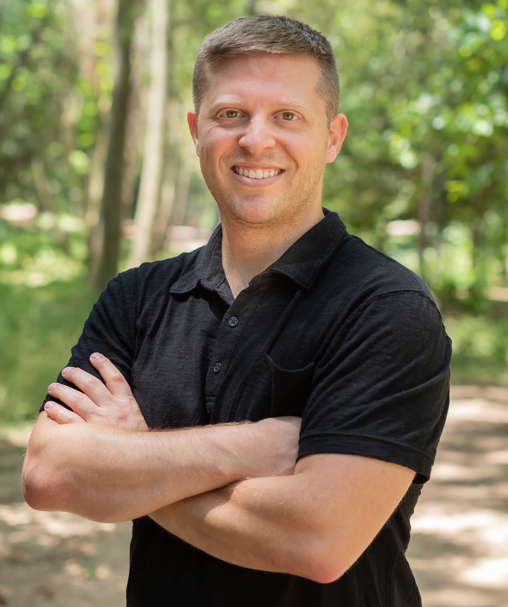
Ray Arata: I am a white, cisgender, heterosexual man who has a big heart, who considers myself forever an ally in training because in the work that I do, we don't get to call ourselves an ally. Somebody who represents or comes from a historically marginalized group will bestow that upon us. I'm a father. I'm a cyclist. I'm an activist. I'm all about gender equality, equity, and inclusion, and I'm the founder of the Betterman Conference and most recently. My second book showing Up How Men Could Become Effective Allies in the Workplace is a labor of love. And it's, I was just published, in January, so that's the short version I Herald from an Unusual Place, which is a place of men's work.
Ray Arata: I have amassed probably 15,000 hours of working with men on how to live and lead from the heart, mainly from the mankind project in so far as leading experiential healthy initiations into manhood around healthy masculinity. And all that work that I did, including going into maximum security prisons.
Ray Arata: I took all that, which I learned and brought it into the ally and inclusionary leadership space, and men have been hungry. Hungry for it.
Sean Weisbrot: Why do you think men are hungry for it?
Ray Arata: Because they tell me because after all those hours of working with them, men are coming out to me all the time. Now, in the context of corporate leadership. The corporate world, when we look at Time's Up, me Too, the pandemic, the Black Lives Matter movement, they've all come together to form a perfect storm. And so currently present day, there's a tremendous amount of attention on the majority of men because there's been a minority of men, what I call the bad apples, to the ones we see in the news, et cetera, the the ones that have fallen from grace, that have historically been controlling the narrative.
Ray Arata: And so right now, more than ever. Men and organizations are like, how do we engage the men in our diversity, equity, inclusion efforts? Men are asking, what do I do? And then there's a whole group of men that we can talk about inside orgs that are still and and, and sitting in a lot of questions. And then finally, anybody that doesn't identify as a man. Women, people of color, people you know, from the L-G-B-T-Q-I, community, binary, non-binary, they're all curious and they've been at the effect of some of this behavior, so they want to support and be supported.
Sean Weisbrot: Why do you think men felt it was okay to do what these bad apples do? Of course not everyone's like that, but why do you think this subset of men felt it was okay?
Ray Arata: A lot of answers to that. if you think about it. What I call, and I want to give credit to Paul KL and Tony Porter, the man box, those set of unwritten rules on what it means to be a man that drive our behavior. A lot of men just were doing it because other men were doing it because their father, their grandfathers were doing it and we all had blind on. We are unaware of the impact on how it was landing on other people. We weren't feeling the pain outta sight outta mind. So when women galvanized and other groups started to galvanize. I'm 59 years old this coming Saturday. So, and you start looking at younger men, and I don't know how old you are, Sean, but you know, younger men look at guys my age and they're like, I don't wanna be like those guys. So there's a growing constituency that isn't okay with that behavior. And so we all got a pass for a long time. Those times are over.
Sean Weisbrot: The TV show Mad Men is probably a good example of those things, and I spent a lot of time with my grandfather growing up. He died a year ago. He was 88 when he died, and I think he was a living example of things that don't work today. He was hilarious and very outgoing. He was someone that I think a lot of young men would look up to because of his confidence and because of how he lived his life. But when you went deeper into it, there were elements of racism and misogyny and things that. I don't think he did it because he wanted to hurt people.
Sean Weisbrot: I think that's just the way society was. And so you were talking about men's identity and how they see themselves in society and I think that that's just how society was at the time. Even though the interesting thing is if you look at society, at that time, women were working post World War ii. They were already seeking freedom. I think that was really the start of. Or maybe the start of the second wave of feminism where maybe the first wave was the early 1920s before suffrage was granted to him. Exactly. So I think it was interesting because he was coming into his twenties in the early fifties during that time when women were becoming stronger and all that, but society was still trying to put women back into the home. After World War II was over and the men came home. So I think he struggled with that, and I think a lot of men probably struggled with that. and so when I talked to a lot of men in their seventies and eighties, it's very interesting the way they think and talk and act.
Ray Arata: Mad Men is a glimpse into the past if you want to see toxic masculinity displays watch succession because you have the patriarch, the character's name is Logan and his kids, his sons, and, and everything in between in the current day. And so that's another show of how. They step into model, perform, act, the way they think they're supposed to act according to men starting with the patriarchal figure. You know, it's, it's pervasive. Pervasive, and it's just, it's not working for anybody anymore. A lot of men aren't into it either, you know, except the ones in power and that growing group of men that have power. You know, the light's shining upon them and there's a different way. And they just aren't aware of it yet.
Sean Weisbrot: I think Trump's a really good example of toxic masculinity as well. And when he was running for president in 2016, I looked at his election campaign and I was like, how does anyone, I mean, this was before any of the other revelations and all the things we've learned about him in the ensuing years, just from the campaign alone. It was baffling to me how anyone could like him as a human being or support him.
Ray Arata: Well, he gave voice to a vocal minority. We're afraid we didn't feel included. Right? And he heard them. And that is what, that's just my personal opinion. I'm not condoning what he did, but being that as a mess is my 2 cents on that.
Sean Weisbrot: What's the first thing you do when you work with a new group of people?
Ray Arata: It really depends on the situation. So like when companies reach out to me, one of the questions I ask them is, where's the pain? And I just had two calls this morning. Is there a recognizable pain by senior leadership that, and that pain could be, we're losing a lot of people we're not able to retain our talent. Or two executives screwed up and they stepped down and there's a black cloud. Hanging over us right now. Right? Or is your company at the place of seeing the possibility, meaning they don't have big pain. But if they chose to look under the hood and find out how women were experiencing the men at the company and how people who herald from historically marginalized groups were experiencing, they chose to hear that. They wanted to be able to attract, retain, recruit people, and they saw the possibility of being a leader in space. Those are two various different scenarios of how I and my company can be engaged. I'll give you one example. The Hearst Company Magazine, one of their leaders stepped down due to allegations of sexual misconduct, and this was a wake up call for the company and they chose to answer it in a good way as opposed to. Sweeping it under the rug. They sponsored the Betterman conference. They asked us to put together a training for 70 individuals so that they could nip this in the bud and change the course of how people were inside that culture. Right? So that's one example. Another example is a large company, like Pricewaterhouse, where they signed the CEO, signed a pledge. To be part of the HE for SHE Initiative. And as part of that for the Foresee Initiative, they asked us to put together a healthy masculinity webinar series. Some content to support the men in their org, and then they sponsored the conference and things along those lines. And there's, you know, and then I understand that a lot of your companies are smaller. So a company like Fandom, a much smaller company, they're in the fan gaming space. Their CEO is a cycling buddy. He's a white, cisgender guy. Who has a kid in transition who has spoken at our conference, bought my books, sent people to the conference. So he's walking the talk and he's gotten, and he has a big constituency in Poland. So this is beyond us. This notion of men isn't just a US-centric thing. There's some cultural differences, but it's still at the end of the day. Known men are still in charge.
Sean Weisbrot: Two questions just kind of came to my mind and they kind of go in different directions. So I'm gonna go on a tangent real fast and say, I know that there have been a lot more allegations in the past of misconduct, mis dudes, what have you. Surely there's a percentage of them. That the allegations are fake, that someone maybe just wants attention. I have to say it. I know that there's real problems, but I also know that there's a subset of people that want attention. What happens to the career of someone when these allegations are false? Not the person making the allegation, but the person who's being accused. And how do you handle that or how do you rehab that person's career?
Ray Arata: One of the things I've learned to do when someone speaks to an experience that they've had at the hands, not literally, but a, as a result of an experience of a man, is the one thing you don't want to do initially is defend, invalidate, make light of their experience. And most people, you know when men are accused, okay, the first thing we wanna do is defend whether we're guilty or not. And if an individual man is at the effect of an allegation, there's a way he can conduct himself, I. Now per your example, if it's untrue, like if this was me, if I put myself in those shoes, I would still, without admitting any fault, I would seek to understand, like, please tell me, what did I say? What did I do? Acknowledge if I did that, that it landed on you. Maybe make an empathic statement that, you know, I'm sorry that this happened to you, but under no circumstances, you know, if, if it didn't happen, I mean, it could have been something I said, but if it was like a sexual allegation that I, I touched someone inappropriately. I give counsel to guys, you know, like when they're in this situation, like, you gotta tell me the truth. What happened if this happened on your watch? From an accountability perspective, what did you have to do with it? So there's no easy answer to your question and your question was like, if somebody was falsely accused. Right. I have yet to see one of those that is more of a fear, and then even with, even with the fear of that potentially happening, what I say to women and men and companies, I said, we're in this weird space where understandably, women and marginalized folks are upset. They're tired, they haven't been listened to, and they've galvanized and they've come together. That's why when you look at time's Up me between in the Black Lives Movement, the pendulum has swung the other way. And in this period of time, some men are going to get their heads chopped off metaphorically for misdeeds, regardless of the largeness or the might newness of the infraction. And so that's an unnecessary thing that happens, but it's also necessary for attention. On the majority, men start to understand the way we've been doing things isn't okay anymore. So let's personalize each of us and start thinking about how we can speak and act differently. So what we don't wanna do is lose sight of the bigger picture. Right. I could go off on a tangent on that, but hopefully that correlates to your tangent and maybe answers part of your question.
Sean Weisbrot: Yeah, it does. Now, I know your focus is on helping men to understand, but I think there's also a part that I feel obligated to mention, which is that it's not always that women are the ones who are being hurt. There are men who are hurt as well, and I think yes. There are examples of them, even in Hollywood, male actors who've been abused by other men.
Ray Arata: Yes.
Sean Weisbrot: There's also instances in which women were the aggressors. They were the person on top. I. And they took advantage of another woman or another man. So, you know, I, I think it's only fair for the audience to understand that this isn't just a man on woman problem. This is men to men and women to women, and you know, women to men as well.
Ray Arata: It's every situation. It happens in all instances. If we pop outside of corporate context, and you and I are just talking about human beings and healthy masculinity in my 55 plus weekends and my prison work. Most people would be surprised how often men are victims of sexual abuse. It's very real. It's very real. And when we look at the man box and all the rules of how we have historically and socially subscribed to what it means to be a man, not only does that nakedly impact others, it doesn't work for men either. So when you look at, you know, depression, suicide rates, the shootings. A lot of this happens at the hands of young men, because they haven't had any training or outlet to experience their emotions. So they stuff it and stuff it, and stuff it until there's an explosion. So I'm with you completely that, you know, men are suffering. But in the corporate context, if we look at companies and who's historically in charge, and we look at the, the, the numbers, what we're really trying to do is to get this majority of men to galvanize together, to stop the minority of men from controlling the narrative. And each ban, if you fall into that majority. Need to ask yourself, do I wanna be a better man? How do I want to be experienced by other people? The people I work with, the people I'm in relationship with, what kind of model do I want to be? And maybe there's this rewrite of what it means to be a man for each of us healthy masculinity, which is kind of, if we take and we look, put a positive spin on that. That's what I wanna ultimately shine the light on and encourage as many men as possible the reason why we haven't seen the changes we need to see in gender equity and gender equality. And. The amount of victims from sexual abuse and verbal abuse and emotional abuse at the hands of men is because so many men have. Looked the other way or said, this is not my problem, or I'm not one of those guys, and we tacitly allow it, by our silence. So the same thing's true right now in the workplace.
Sean Weisbrot: You've just mentioned something very important from the other point of view. The silence is what the problem was, is that people who have faced abuse, whether it's physical or sexual or psychological, they're afraid to say something for fear of it ruining their career. Or for being judged or whatever reason they have. When you allow those things to happen to you without feeling it necessary to tell someone, maybe you're embarrassed that it happened, that you allowed it to happen or whatever, you're enabling that person to continue their pattern and you're enabling the culture to not change. By not stepping forward and saying, this is what happened. And I think it's really important that for change to happen, the people who've been abused have to be willing to talk about it, and it's hard for them to do. I'm very fortunate, I have never been abused before. I've had one. Very great parents and great family life as a kid growing up and great mentors who'd never touched me in any untoward way. And so, you know, I don't have a lot of, I think, issues that other people might have if they had grown up with those issues. And after leaving America and, and living in other countries and talking to people, realized that sexual abuse or psychological abuse is. Very, very common. It's almost as if I'm an alien because I didn't experience it.
Ray Arata: Well, in that case, Sean, one of the things I've learned facilitating men around this work is psychological safety is hugely important. What people like you and I don't ever want to do is to put the spotlight back on them and that event, and when a man is. Willing to, I mean, we're getting outside of the, the, the corporate scope here, but this is the work that I have done for years and a man who, or even a woman who's had that happen to them, they make decisions about themselves at a very young age, and they create survival strategies to keep themselves safe until such time when they're, and they're an adult, those don't work anymore. And so it's very complex. Web of issues that if you're not trained or understand, then it's, it's not a place that for you and I to go. I mean, I've done a lot of it, so you know, I know enough to know how much I don't know
Sean Weisbrot: For sure. So the second question that I had to go kind of back towards the corporate side is being the leader of a company, how can you become aware that there might be a problem? Internally. So for example, my company is remote. If someone's threatening another employee badly, it's hard to hear about it. You can't walk through the halls of an office and see, see it happen, or, or hear whispers of it. How do you build a culture where it's not acceptable and monitor that? Or even if you don't monitor it, kind of. Make sure that people are treating each other correctly.
Ray Arata: So for you or any of your listeners, you have to be the change you wanna see. You have to be that safe model. So far. To your listeners who present as white male, it's about taking your head outta the sand and looking at what's going on in the world and asking yourself the hard questions. Are you doing everything you can to create a true sense of belonging for everybody in your org? Are you willing to ask the questions of women and marginalized folks of what it's like to be in this company? And when you ask that question and they share their lived experience, can you hold it? You might feel some emotions. And if what comes through you is, I had no idea. What can I do? You're headed in the right direction. If you defend, deflect, and give them the Heisman, then you're heading in the wrong direction. You have to decide to get interested and to ask the questions, and then to hear the answers, and then, okay, what am I gonna do? I call that ownership driven accountability. Is this happening on my watch? And am I willing to commit to do something to affect a different result? So a lot of this is kind of coming to a head right now in a lot of companies. I mean, I had two calls this morning with two different women. Actually, no, the last couple days. Both women, both in the midst of large organizations being betrayed, bullied, not listened to at the effect of command and control. And even as they learn it, they need me to come in 'cause I look like those guys. I sound like those guys and I, I know how to compassionately meet with them where they are and to ask the very questions I'm putting to you right now so I can raise their awareness so they can decide for themselves, is this how I wanna lead in this company? What's at stake? What if word got out that it's not safe to be at this company and people start leaving? Whatever your thoughts are of running a successful company, guess what? You're in jeopardy.
Sean Weisbrot: I was thinking of hiring a. Psychologist to be full-time on staff, for anyone in the team to be able to communicate with if the person on staff recognizes there's something going on that they should tell us so that we can do something about it. Or is that. Going beyond what is sensitive and fair.
Ray Arata: Have you seen the show Billions?
Sean Weisbrot: Yes. And I know who you're talking about. She's a performance coach.
Ray Arata: This is where you as a leader can make a conscious decision on the environment that you want to create. So if you are vulnerable enough and take the risk to say, this is important to me. You can either be part of this company and work with a little bit of awareness and understand the impact you caused by your behaviors and make some changes. Or maybe this company isn't a fit for you, right? Because this is happening on your watch, Sean. So if you look the other way, then your silence is complicity. As Jimmy Carter said, silence is violence. And so to look the other way, when women are at the effect of toxic bro culture in companies, that has to change. It's not, these guys may not be aware of it. Maybe they are, but give them the opportunity to change their tune. No easy answers.
Sean Weisbrot: You talked a little bit about when you first start talking to people, if you come across hesitancy from one of these groups you're talking to, to change, what do you do to handle that?
Ray Arata: Usually what you're referring to occurs in a training setting. Unless they have willingly come to learn and they've been encouraged to voice what they're struggling with or whatever the case may be. That's one thing, and I'll speak to that in a second. It's another, if it's a conversation series and people you know are hesitant regardless, I seek to understand what's the story you're making up about this? What's your fear? What do you think might happen? And I don't go too far down that path and I can tell a quick story. I was working with a CPA firm for high net worth individuals and the women were gonna be doing a women's retreat and they thought it would be a good idea for the men to do a men's retreat. They asked me if I'd come in and talk to the men. So I go in there and I'm like, if I'm not careful, I'm walking into a trap. So I walked in, sat down with a couple of the male decision makers, and I very wisely said, so what do you think of this idea of a mentor's chief? And they just went, blah, this is stupid. I mean, all of the answers, why would we do this? You know? So I just let 'em barf it out. And I said, okay, great. I'm glad you got it out. So now if you were to do something. Just together as a group, why would you do it and what would you do? Got some resisting answers, and guess what? We had a men's retreat according to them, and so the whole resistance thing, you have to meet the men where they are and get them in the room, per se, and give them a chance to be heard. So what were some of the things that they had said? Everything's fine. We don't have any issues. What are they complaining about? Why do we have to do this? Or this is not my cup of tea, you know, I'm not into this. Some guys would be, would be silent. Things are fine the way they are. They didn't have a clue.
Sean Weisbrot: So just like putting up a wall because it's not manly to talk about your feelings kind of a thing.
Ray Arata: When we've gone into corporate and we've done a couple of interviews prior to training as an example, and we had calls set up with men and women, one hour calls. After 20 minutes, the men were hanging up and they were like, this is a meritocracy. Everything's fine. Gotta go. When you ask the women, you know, they'd say men are, are, are promoted based on potential. We're told we need training. There's a whole bunch of things, and it's not meritocracy, it's a boys club. We put together a slide that said the tale of two companies and we put it in front of. The room of men, but before that, the CEO of a large news agency, and you saw four or five bullet points for the men, and then this long list of women. And when we showed this to the men in the room, we heard, oh my God, I had no idea. What should I do? Right? So it's about educating them. without shame or blame as to what's going on as a result of them near them because of them. And once they come into contact with that empathy, muscles start to get exercised, that's when they say, I wanna do something. What can I do? Which is what we're looking for.
Sean Weisbrot: I'm glad you said muscle. I did a podcast many years ago and in that episode I talked about how your brain is like a muscle. And if you are someone who is fearful and you wanna not be fearful about a certain thing. You have to find a way to kind of dip your toe into that thing that makes you fearful and just get used to it and get comfortable with it. And the more you do it, the more you feel comfortable. The more confident you are. And now this thing, which was a fear, is now a strength. And it's because your brain is a muscle. And the more you use it in that regard, the more you strengthen its ability to handle that. Things specifically. So I very much love your, your mention of it being a muscle 'cause it absolutely is. And a lot of people don't seem to realize that your brain is very powerful and you are very powerful and you are capable of changing your brain very, very easily if you want to at any age.
Ray Arata: It's not just the brain muscle, it's this muscle of connecting to your emotions. I talk about a conscious partnership of the head and the heart. So if men were never taught that feelings are in your body. If I asked a man, if I asked you and you felt afraid, where do you feel fear in your body? Most men will put a hand on their stomach or their throat, or if they're angry in their hands or if they're sad, they're gonna feel it here. Just answering that question and going through and answering that and using that muscle of your head, being aware and your heart acknowledging the feeling, that's a good thing. So there's a number of muscles that we're really trying that have always been there that men just weren't taught. It's totally possible. I present masculine. I'm six four tall, but when I start talking about my emotions, they're like, what's he doing? And it's easy for me. It's actually my vulnerability that is one of my superpowers. Because I will go, I'm not afraid to do it, and I know that when I do it, it makes it possible for other men to do the same.
Sean Weisbrot: I recently published episode number 86 with guest Sarah Raymond, and she runs a YouTube channel with over 600,000 followers, and they talk about mindfulness and meditation, yoga, and things like that. Our episode was about connecting emotion with logic. Because oftentimes, particularly, you know, male entrepreneurs, they think, they don't feel, I believe that women are better leaders than men because they intuitively feel through their work and therefore the companies they build, the products, they build, the the things they do are better, which was actually proven. There was a study done looking at public companies on the Australian Stock Exchange. Where, female led companies, female CEOs generated 50% more profit than their male counterparts. You know, I feel very confident about having women in our leadership team and all that.
Ray Arata: Well, it's good to have a different perspective, you know, of them.
Sean Weisbrot: So. What Sarah was saying was that she tries to help people learn to live, be below the neck basically. 'cause people are stuck living above the neck.
Ray Arata: I bet you didn't know this vast arena of real estate below your chin. Your body is where your feelings are and it's uncharted territory. So I often refer to that.
Sean Weisbrot: Did you go on the retreat with those men?
Ray Arata: I led the retreat.
Sean Weisbrot: So what was the result after that retreat and during it?
Ray Arata: one of the results was that I am now coaching all of the partners, men included around accountability, around what drives their behaviors and the importance of them to know thyself so that they can have effective communication and relationships and be effective leaders inside their organization. That was four or five years ago, and I'm still working with them. And so what's happening is. All of these wonderful human beings are becoming more emotionally literate and more powerful and impactful as leaders, and that's starting to trickle downhill to the staff and the managers.
Sean Weisbrot: Yeah, I really wish schools would be empowered to teach these things. Because I feel like I didn't learn anything in school other than how to be social. But you know, the things that my parents taught me were like financial literacy, emotional intelligence, how to pack your luggage so you can go on vacation properly and not waste resources. Like my parents taught me some really valuable things, but my school didn't really teach me anything and, and I feel like a lot of. The problems we have start when we're young. They start with our families. And if the school was there to kind of balance it out and be like, Hey, actually, like, you know, you should probably do it like this. Or like, you know, if kids were taught how to meditate in school, imagine that. Hey kids, let's, let's take 20 minutes before the start of the day and let's meditate together. Funny enough, actually, in ninth grade I had a drama class as an elective and our drama teacher would make us do meditation once in a while and he would turn off the lights and he'd turn on some music and he would have us meditate together and it was fantastic. So I think everybody should be doing that. That's kind of my own tangent there.
Ray Arata: I couldn't agree with you more.
Sean Weisbrot: So is there anything we haven't mentioned that you wanna bring up?
Ray Arata: There's been a lot of attention on white men and. There's a faction of white men that feel like all this attention on white men over the last 12 to 18 months is a distraction. And what I would say to those men is, is to be open to the possibility that what you have said is a combination of your unexamined privilege. And by the way, privilege is not. A demonized word. It just means that you have advantages and to be open to the possibility that if you think about it, if you think about the question, how do I want to be experienced by other people, and how do I want to contribute to everyone feeling, having a true sense of belonging and inclusion at companies, then maybe you can start to make some choices. and rather than feeling threatened, you can make a shift to taking something that you uniquely have that others don't, and shifting the experiences of a lot of other people in your company. And the other thing I would say is to men in general, it's our time. It's our turn to come together for the sake of our families. Our friends, whether they're women or marginalized folk, and to use this power, to use this privilege, to use our platforms to shift things so that the majority can start to control the narrative instead of the minority. So it's an invitation On my part and a call, 'cause I can't do this by myself.