Stop Chasing Shiny Objects. Just Nail The Basics.
The secret to massive growth isn't a crazy new idea. The real advice is to Stop Chasing Shiny Objects. Just Nail The Basics. In this interview, Freddie Laker, whose firm does over $2 million a month helping VC and PE-backed companies grow, reveals his core playbook.
Guest
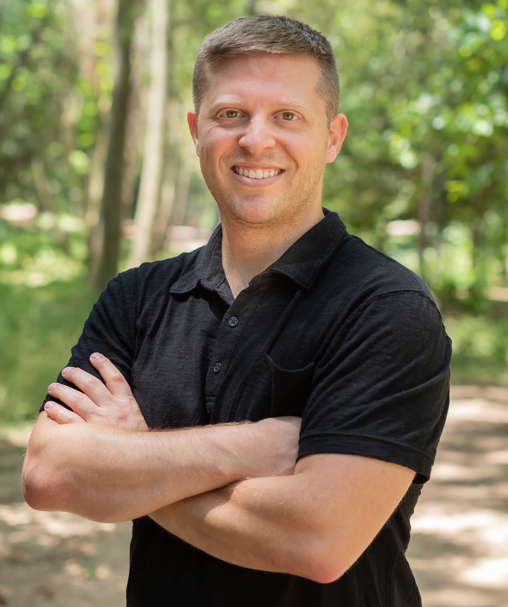
Freddie Laker
CEO, Chameleon Collective
Chapters
Full Transcript
Sean Weisbrot: Welcome back to another episode of the We Live to Build podcast. I'm here today with Freddie Laker, the founding partner of Chameleon Collective, which helps VC firms and PE firms to either turn around companies that they've invested in or help them to take the companies they've invested in and accelerate their growth.
Sean Weisbrot: I really loved my conversation with Freddy because. He's a very charming, humble guy who happens to actually live about 10 minutes drive from where my parents are, which is where I'm staying right now in South Florida, and he was born and raised in Britain, has been living in America for a long time, and he has this accent that's sometimes distinctly British and sometimes distinctly American.
Sean Weisbrot: We talked about how he helps companies, what kind of a playbook he might use, you know, how he looks at the problems they face and how he charges clients for the services they provide. And we also get a little bit deeper into his past talking about his father, who is a famous figure in Britain, and I won't spoil it.
Sean Weisbrot: Freddie, why don't you tell everyone a little bit about yourself and what you're doing now, and then we'll go from there.
Freddie: I'm a lifelong serial entrepreneur. I've been starting companies since I was, uh, 19 years old.
Freddie: I've done everything from starting one of the oldest internet service providers in Florida to being on one of the first 24 hour internet radio stations in the world to starting digital agencies. One that I sold to sap, uh, and frankly a bunch of other entrepreneurial ventures, I probably won't even mention because I'm such a serial entrepreneur that I'm always trying to get my little g grubby fingers into something.
Freddie: About five years ago, I started a company called Chameleon Collective, uh, which is really my main focus now. What we do is, uh, we spend the majority of our time basically working for private equity firms and VCs, and we work as almost like a transformation crew or a turnaround squad. For some of these acquisitions that they make.
Freddie: Uh, so the company effectively has about 45 interim leaders that think the heads of marketing, heads of sales, heads of digital, basically people that are very focused on commercial growth that we deploy into these PE and VC backed companies. Uh, we also have about 60 something odd, let's call 'em executionally focused subject matter experts.
Freddie: The experts that make it happen. Everything from designers to CRM marketing automation people, and then we also have seven recruiters. The reason this is unusual is most agencies and consulting types of businesses are, their whole business model is predicated on getting into a client, getting the client addicted to them, pretty much making long-term agreements and trying never to leave.
Freddie: That's how those businesses thrive. Our business is basically built around this concept of getting into a relationship with an investor, helping them turn around some of these portfolio companies. Solving big, meaningful challenges, making sure that the things that we've created and established for them are sustainable, so they're successful without us and effectively firing ourselves, um, and leaving and moving on.
Freddie: Um, this is a terrible business model if you're an agency or a consulting firm in the traditional sense. But the reality is we don't really see the portfolio companies as our clients. We see the investors as our clients, and for that reason, they just keep moving us from portfolio company to portfolio company to portfolio company.
Freddie: It's worked out really great. Started five years ago without any, any investment, and it's over a hundred of us now, and we're just actually crossed the 2 million, uh, dollar a month mark in revenue. So it's turned out to be a pretty healthy business.
Sean Weisbrot: Definitely. I appreciate you sharing how much you make. It gives you a lot of credibility.
Freddie: For us, it's a milestone. We just crossed. We've been aiming for it for a while, so we feel really excited about it and it just gives me, I, me a sense that we're running a good business that, you know, this thing is, is, is running really well. It's continuing to grow. Uh, we're up almost 50% last year.
Freddie: We're trending over 60% this year. So it's a, really, really healthy business, and frankly, I'm having a lot of fun running it right now.
Sean Weisbrot: And it also goes to show just how horrible the bulk of startups are that VCs need to invest in fixing them.
Freddie: Sometimes it's early stage businesses, and with the earlier stage, you know, startups, I don't mean.
Freddie: Seed fund type stuff. I mean, you know, series A, series B, series C, and those kind of cases, we act more as like an accelerant. So let's say someone just wrote, uh, them a 40, $50 million check, $20 million check, whatever it is. And then all the investors have huge expectations. You know, a lot of people think it's so great when you read on TechCrunch or whatever, all this money that people are raising, but the reality is.
Freddie: There's an enormous amount of pressure that these founders and co-founders have when they get these big checks from these venture firms. And a lot of times they're told, look, we just gave you $40 million or whatever the number is. You need to spend all of that money in the next 18 months and you know, and then we're gonna go raise another big round because we need you to get from, you know, whatever, 15 million a year in, in revenue to.
Freddie: You know, 80 million a year in revenue in 18 months. And so, you know, in those kind of cases we're brought in to make them go really, really fast because it's hard to put together teams.
Freddie: With the private equity firms, it's a bit different. I like to call it teaching dinosaurs how to dance. And so we might find that they bought a company that's 20, 30 years old, they've got an incredible product and whatever that category that they're in, but maybe there's something fundamentally wrong with them.
Freddie: They didn't have very good digital chops. They missed the boat on e-commerce or. You know, they're great product people, but don't understand how to do sales and marketing and adopt modern techniques, you know? So in those kind of cases, we are there to effectively, I'm gonna use PE guy speak here, and I'm air quoting, unlock value, like a fixer up house.
Freddie: So looking at the house again, this house has got good bones. If we just redo the kitchen and the bathrooms, this thing could be worth a lot of money. And in some way, if you think about private equity, like house flipping, well then we're the guys redoing the kitchens and the bathrooms for them.
Sean Weisbrot: Mention a little bit of your family background.
Freddie: I share a name with my father, sir Freddy Laker. My, my, my father was actually, uh, knighted by the Queen of England for his, I think the exact phrasing was, uh, for allowing the common man to travel and his kind of contribution to society, uh, was that he was the founder of the very first low cost airline.
Freddie: So when you think about air travel today, whether it's, you know, Southwest Easy, jet. You know, any of these kind, Ryanair, any of these kind of, you know, low cost, realized that business model is very easy to take for granted, didn't always exist. There was a time that all air travel was regulated by the government, uh, especially on international travel.
Freddie: If you flew between two cities. So transatlantic, the government said, Hey, look, you've gotta sell a ticket, an economy, let's say between New York and, and London at this range. You gotta also remember back then a lot of airlines were owned by the government. So what did that mean? Not to be horrible about it, but they were kind of bloated, inefficient messes, so they couldn't run things really inefficiently.
Freddie: So the prices were really high. And what does that mean? If you were a plumber or a student or. In a band, you know, you want to travel to America and, you know, pre 1982 or something, you couldn't afford it. It was too expensive. The father basically came out and completely flipped the aviation industry on its head, um, by fighting for years to deregulate the air travel industry so that he could.
Freddie: Basically introduced, the first low cost carrier came out with $99 from New York to London. Uh, and I think it was around 1982. Everyone else was almost four times that came out of nowhere and took over. I think at one point 11% of all travel from New York to London was on a Lake Railways flight.
Freddie: Unfortunately, there was a second thing that my father was well known for. He disrupted the aviation world so badly that 16 of the world's biggest airlines, uh, effectively. Ganged up on him and adjusted their pricing, fixed pricing effectively to put him outta business. And he always used to tell me the story when he, when he was still alive, that of how he said he came to work one day and his assistant kind of ran up to all before cell phones and said, uh, Freddy, we've got a problem.
Freddie: Every major airline is, you know, has matched our price. Even though it was obvious they were losing insane amounts of money to do that. Um, he told me that he lasted about three months. It happened right around the time of the oil crisis of that year. So he got double whacked. He said that, uh, you know, the day he shut down without exaggeration.
Freddie: Within 24 hours, they, everyone had doubled their prices and with another seven to 14 days, they quadrupled them back to the original rates. So they weren't even really subtle about it. Um, so he also had, to the best of my knowledge, the biggest antitrust case in aviation history. I think he would've much rather had his airline.
Freddie: But, you know, he, he really went to go fight to get his airline back in business. You're gonna understand that back then, especially in England, that uh. You know, a lot of these, these kind of, the common man, if you will, you know, who, who had never had a chance to travel before, kind of saw my dad as a folk hero.
Freddie: And so there was all these, uh, press pictures, you know, where dad was in there with his two lawyers. 'cause he was just a little guy. And then you'd see the courtroom. He was suing all 16 at the same time as their two main lawyers. And when exaggerating, the next two or three rows of the courtroom, all the other lawyers.
Freddie: From there. See, 40 50 lawyers showed up first. First a couple of his in some instances, and, you know, and he was fighting to keep prices low. And so a lot of people really rallied around him. You know, when he got shut down, uh, you know, the ban, the police would like sting and things like that. They, uh, they ran a, they threw benefit concert to try and raise money for him.
Freddie: Raised a million dollars to try and keep life in business. Uh, Richard Branson was someone that I knew growing up, uh, because. He was also someone that admired my father. And when Richard started Virgin Atlantic, British Airways tried to start doing the same dirty tricks that they did to my father, to him and, and, uh, took the liberty of, of kind of calling him up over the blue and said, you don't know me personally and but I, I've read about your new airline and I see some of the things they're doing and let me tell you what to do.
Freddie: You know, so they don't do the same thing they did to you. That they did to me. Uh, funny enough, on a fun note that actually resulted in Richard, uh, apparently in, in his several of his books, it declared my, my father as his, uh, his kind of business idol, which I thought was pretty cool because I had to be honest, I, I really admire Richard.
Freddie: He's someone I think is remarkable and he's kind of wild for me to think about him feeling about my father as I probably feel about Richard. In fact, actually, the, the second, uh. For its Atlantic plane was actually called the Spirit of Surf Freddy, which I always thought was, uh, was pretty cool.
Sean Weisbrot: Awesome. Thank you for sharing that. I feel like watching your father be an entrepreneur inspired you to be an entrepreneur. Am I right? Uh,
Freddie: frankly, I think it was Herf inspiration, herf pressure. I mean, I think, you know, it's, it was quite an entrepreneurial shadow to live in. My mom always loves to tell this story around when I was five or six years old, and, uh.
Freddie: They said, uh, Freddy, what do you want to be when you grow up? And I, I didn't know what this meant, but I told, apparently, I told everyone I wanted to be a business man with a nice, big space between the two words. I don't think I knew what business I wanted to be in back then, and I'm not necessarily sure I know what business I want to be in now.
Freddie: I just think I really enjoy any kind of, uh, entrepreneurial venture.
Sean Weisbrot: Do you feel like your father's attempt to change the way aviation worked sparked in you this desire to fix companies?
Freddie: That's a great question. I can tell you that the things that it did inspire in me, he was very good about kind of taking things he was passionate about and going and running with them no matter what.
Freddie: The odds against him were, and I think he had an, an innate desire to want to fix things, so something was broken. That could be as simple as one of the planes are dirty and he'd be perfectly happy to, you know. Stroll his sleeves up, you know, pick trash up off the plane to seeing big fundamental problems and how an industry might work and willing to take them on.
Freddie: And he wasn't willing to leave those things alone. And, uh, maybe that's a twi uh, twinge of OCD and I think I have that same disorder. What I do think is also interesting about the way that he, maybe his career influenced mine. I pretty much spent my entire childhood being groomed to be an airline, CEO initially.
Freddie: I thought that was something I was really excited about. And then as I got older, I, I didn't really have an interest in it anymore, which great much to his disappointment worth noting. Uh, when I was 18, after dropping outta, uh, college, uh, he completely cut me off. Remember him saying to me, not in a, any kind of emotional way or anything like that with incredible relationship.
Freddie: Uh, but I remember him coming to me one day and saying, son, I love you very much, but I'm gonna do something to you today. He goes, you're gonna hate me for it, but one day you're gonna thank me. And he was right. I did hate him for a couple years, but I did go back and thank him, and he completely cut me off.
Freddie: Gave me a, a job working at, at Lake Railways for about 18,000 a year, you know, which was for, for me, was a pretty big reality check. Told me I had to pay rent in the existing house and move out. That, you know, really kind of shook me because I, in fairness, I'd had a, I'd had a pretty spoiled childhood, I think.
Freddie: Not 'cause I was a bad kid or something. I think my father tried to give me all the things that he didn't have. Um, and I think having all those things taken away, lit, a lit, a certain fire in me, what was not expected. Going back to drawing the parallel to my father, you know, he was very successful in aviation because he loved it.
Freddie: It was his passion. There was nothing that he loved more. I. Then airplanes accept maybe boats, but that's a, that was more of a heartbeat than a business for me. I'm a lifelong technology guy. I got involved in, you know, making building computers when I was six, seven years old. I've been on the internet since I think 92 or 93, which is obviously really the very beginning.
Freddie: Uh, it started to become interesting, um, and I was very lucky. The internet turned out to be my passion, the thing that I wanted to be involved in, and I got very lucky. That turned out to be the thing that maybe you wanted to be involved in the last couple of decades.
Sean Weisbrot: So, let's go a little bit further into the creation of Chameleon.
Sean Weisbrot: Sure. What happened in your mind that got you to this idea that like you wanted to do this thing?
Freddie: Yeah, fair question. Camil Collective is a company unlike anything I've ever built. Before, but it was born from a very, I'm gonna call it a strange place actually. So the first main companies I had that kind of defined the earlier parts of my career was I had a internet service provider called Lake Net.
Freddie: Um, that was, uh, rolled up into a larger hosting company called Web United. I had, um, a digital agency called Ilion that got sold SPN in 2008. And in all honesty, I'd had a lot of luck. I, you know, I was a young guy, really passionate about what I was doing, and I stumbled. From kind of good thing to good thing in, in all honesty.
Freddie: After that, I started a company called Guide and it was a, a very, very ambitious company that took text-based online news and converted it to video on the fly. And I've always kind of said it was the most ambitious thing I've ever tried to do. Maybe too ambitious, because that was the company I had that failed and I could never just quite get it where I wanted it to be.
Freddie: And then when God didn't make it, which was a big blow. For me, painful financially, very painful emotionally, and, and I was exhausted. I took A-A-C-M-O role of a decent sized media company up in New York. I was burned out. I thought, you know what? I'm gonna go get a big paying job up in New York. I'm gonna kind of lick my wounds from this startup, and I'm just gonna pick myself up and start over again.
Freddie: That was a really bad experience for me. The CEO and I were like, oil and water. It just was not a good experience. I had a kind of a, a really bad spot there. I took another CMO role after that that I was very interesting company, but I, I just kind of, after about a year of that, I don't wanna say I didn't like it, but I just, I wasn't feeling it.
Freddie: I couldn't imagine myself investing more time in it. And my point anyway is that I was in a place that I've never been before. You know, where I'd had so much good luck at earlier parts of my career. And for the first time I was feeling really reflective. I was, you know, kind of going, I really, I really want to find a win.
Freddie: And I thought to myself, you know what I really love doing, I'm a great fix it guy. And I thought, you know, there's a whole, there's a whole career around this. And I swore to my wife and best friends and anyone else who'd listened to me for more than five minutes, then I was never ever. Ever gonna start another company again, and I was gonna go be this kind of mercenary CMO slash chief digital officer gun for hire for the private equity and VC world.
Freddie: And I thought this would be great. I, I'm never gonna have an office again. I'm gonna, you know, keep my house in Florida and, and live down here and be comfortable and, and kind of build the job I wanted around the life I wanted. Versus finding the job I wanted and build my life around that, if that makes sense.
Freddie: Uh, the only part of this that didn't end up really coming true was this concept of never starting another company again. When I told my friends that back in the day, they all had enough kindness to not directly laugh in my face when I told them, but apparently no one believed it. Everyone was kind of laughing behind my back that I was, you know, swearing on the Bibles.
Freddie: I was never gonna start a business again. Um, the only reason I mention this is, you know, I'm not aware of any company. Ever being founded, and you've heard some of the numbers we're at now and so on, where the founder has absolutely sworn they will never start another company again. And by the way, I think I kept swearing that for about the first two years.
Freddie: Uh, so that actually led to a very unusual way that this company works. Uh, we effectively are a decentralized organization. Uh, we have a, you know, unique way that we all work together that's allowed us to scale. You know, for example, we have no hierarchy. We use a derivative of management style called holacracy, and we reorg our leadership structure depending on who owns the client relationship.
Freddie: So it's not a classic hierarchy like a standard business would have. You know, certain things like that I would've never considered doing years ago in all my kind of classic hierarchical businesses. But because I was bluntly in kind of a weird place when I started the business, I just didn't want to be the boss anymore.
Freddie: 'cause I hate authority and I don't like working for other people. I didn't want anyone else to be the boss either. So no one was gonna be the bloody CEO. We were able to turn that into a really unusual, and I used to think it was crazy, but now I'm cra maybe crazy like a fox, you know, way of working. Some of the ways that this business started were all based on this kind of unusual headspace I was in and frankly, I'd found some other people that were kind of burnout and over corporate and so on, and, and we tried some really unorthodox things.
Freddie: You know, that turned out to be huge. One of those, actually, another one being that we swore in the beginning we'd never have an office ever. We've been, since 2015, we've said we'd never have an office. People used to think we were nuts, but now people think we were precise. We had metered remote working years before this crazy COVID stuff started impacting all of us.
Sean Weisbrot: That's been a hell of a ride, to put it mildly. I also love fixing things, but I noticed in starting my own company that it gets to a point where I stop being good. I guess what I'm good at is generating ideas. And filling out the details of those ideas and starting it. But when you want it to be good, like my ability to create processes and standards and get, like, I'm, I'm not that good at them.
Sean Weisbrot: Mm. So I create and then I give it to my team and they execute because I'm really not good at those things.
Freddie: Understanding those kind of different roles is really important. So. Using as an example and some of the ways that we support these PE firms. You know, I frequently tell them when they're looking at the teams that they're trying to build.
Freddie: The person that they may need to hire for the next six months may not be the same person they need to hire in the next 36 months. And what I mean by that is sometimes when you get inside these businesses, especially if they're again going through these kind of periods of intense transformation or ma, massive sea changes need to happen. Getting someone that. Is a big visionary that can see the big picture and understand all the pieces that need to be put together and is frankly good at starting things. It can be really valuable. And then in many cases it's possible to bring in someone who's a, frankly, a far more, less expensive resource who is really great at executing the plan.
Freddie: Would love to execute the plan for the next two to three years. And maybe there's mild iterations on it, but you need those people that are really detail oriented and are like, Hey, put me in a swim lane, coach. I'll hammer that plan out all day long. So yeah, I don't think it's a bad thing, and I think being self aware of that.
Freddie: And understanding who you are and each of us are as entrepreneurs and leaders is, is really important.
Sean Weisbrot: I'm extremely detail oriented. For example, when I'm working with my marketing director and website developer right now to make our new website, I'll see 40 problems with it that they would've never even thought would be a problem.
Sean Weisbrot: I mean, like the spacing between this button and the top of this one is not the same as the one from the section above it. I catch all of that stuff.
Freddie: I'm with you. I feel you on that. I'll catch it. If it's a pixel off, I can, I'll notice and it drives people insane, but I'll catch it every time.
Sean Weisbrot: It doesn't bother me from the point of view of like, I can't exist, like my soul hurts until you fix it.
Sean Weisbrot: It bothers me from the point of view of we're trying to be a professional company. Don't let shit like that happen
Freddie: because people will see it. I totally agree, and, and, and look, especially if you're in a professional services business when you're doing this kind of stuff, even your emails, your sales materials, your decks, if you're not really detail oriented, in my opinion, that sends a signal to your customer that says.
Freddie: These guys can't even be detail oriented enough with their own stuff. Why should I trust 'em to be de oriented with mine?
Sean Weisbrot: Yeah. In the last few months I've taken over the design work from our outsourced design firm. They've given us a design system and elements, so like there's no reason to keep paying them.
Sean Weisbrot: When I. We're gonna just keep expanding. So like I can do it, it's not that big of a deal, but I will spend a significant amount of time making sure that the size of this box matches the boxes on the other screen. I will go through every screen on Figma and make sure that it's correct, so that if you click from one screen to another, there's no difference.
Sean Weisbrot: You're not gonna see like, oh, it's up here now, but now it's right here. Like it's actually the same. I, I think in order to be a good designer, you have to have that kind of. Mentality of like, it has to be right. Because inevitably I'm gonna notice it when I'm using it, and if I notice it, I have to create a bug ticket.
Sean Weisbrot: They'll have to fix it, and it's just wasted time. So if I do it right the first time with my design, chances are we won't have to go back and fix it again.
Freddie: Yeah. Another way of also looking at this is when you think about. People and, and your audience would, you know, regardless of what stage of their kind of career evolution, they're in this kind of attention, it details what separates juniors and the mid-level from the senior people because it says, I take my craft really seriously.
Freddie: And people put a value on this. People out there are selling their services to other people on an hourly basis or a project basis. You wanna know the difference between someone who's, uh. $10,000 a month and 30,000 a month. It's that the 30,000 a month people are diehard detailed people and you know, the clients know that they can go to them, or team members that hire them could just say, you got this.
Freddie: And they go, I got this. And you go, I'm gonna go to bed now or watch some tv. You know what? Or do my tasks, or whatever it is. And that's value, that's trust. You know, what's the price of knowing? Your team member is going to do that. Those are good things, man. That's what makes you a leader.
Sean Weisbrot: I think this is the perfect time to then ask you, you decided you wanted to not build a company while actually building a company.
Sean Weisbrot: How did you position yourself so that VCs realized that you were someone they could trust to handle taking over these companies?
Freddie: Great question. You know, in the beginning. We didn't really understand the business that we were building. We, you know, we didn't know a ton about this space. We hadn't spent a bunch of time in private equity or VC before.
Freddie: It just seemed like a cool concept, you know, because it seemed like, you know, I'd certainly pitched and raised money from I. From this community before, but I'd never worked for them, uh, in this capacity. And, you know, the fir the beginning of the business actually really happened while we were on our first client.
Freddie: We were in a specific port code company for our first private equity client. I was in there as the interim head of digital eCommerce. And you know, I remember actually presenting this.
Freddie: Strategy and them going, this is amazing, this, this is the future of the company, but dot, dot, we have no ability to execute this whatsoever.
Freddie: Can you help? I had all the resources, um, in my relationships, in my networks I've built over the years. I also simultaneously don't believe in the agency model anymore, which is a ironic for, again, a guy who spent a lot of his career in the agency world. I don't believe that companies should be outsourcing a lot of these digital muscles.
Freddie: Into agencies. It made sense 10 years ago when, uh, campaigns or digital type, you know, engagements, people would say, Hey, look, I'm gonna do my one this once or twice a year. Well, once we hit a place where companies needed to have these acquisition machines running 24 7, 365 days a year, it just doesn't make sense to outsource that anymore.
Freddie: I told them that and I said, look, you should build these capabilities. And I will help you. And that went over so well, you know, I befriended the, the P firm during the process and I actually pulled their, one of their co-founders aside and said, look, I think there could be an entire business doing this.
Freddie: You know, what do you think? And they agreed. But it's worth noting that seeing agencies and consulting firms kind of want to encroach in our business, but I just don't think most of them are, are staffed or designed for it. So we feel pretty. Strong and capable in our position that it's not easy to to step in.
Freddie: At this point, what most PE firms are looking for is a track history. So we're up to 23 private equity firms or VC firms that we work with now that's growing all the time. You know, they form the foundation of our business and ddo. When you look at investors, they're very binary, and what I mean by that is.
Freddie: Success for them. Obviously they wanna like working with you, you need to be easy to work with and all that kind of stuff. But I have to be honest, you could be not that easy to work with and if you make them lots of money, they'll get over the other stuff. Uh, you know, and so, you know, for us, I found that like if you, let's say you're an agency or your marketing person who may be out there and you're used to working with CMOs and or VPs of e-commerce or things, or basically working one tier down from the C-suite, they have.
Freddie: Their requirements and their agendas and, and their goals that you need to meet. And frequently they know your job and so they're gonna micromanage you a little bit and they're gonna judge you in another way. And my experience with the, uh, investors is they don't really know what we do, nor do they care to on any specific level.
Freddie: They're very, very, very good at their craft around finance and, you know, operationalizing the business. They just want to know that they can bring in a trusted partner, kinda like we were talking a second ago. By the way, when it comes to design, they want to trust me. People and they wanna know that they can just tell you to get the job done and that you're gonna get it done.
Freddie: They don't care about the little roadblocks you get into, they don't care about the interpersonal issues, the politics and the company, the technical issues. They just don't care about that stuff. They're gonna come to you and go, Hey, you told me that you can increase the revenue of the company in two quarters by, you know, X percent.
Freddie: Did you do that? Yes, good. Nice chat. You know, maybe to update me a little bit. Great help do a handoff to the next person. But it's, it's really, it's really that binary. And if you don't do that and you missed what you promised them, then you're gonna get a big boot up the earth. And yes, they're gonna probably ask you a thousand questions, but if you deliver, they let you do your job.
Freddie: And luckily we deliver, which means we don't have a bunch of people micromanaging us, and we just get to do our craft. And it's, it's very liberating, honestly. I love it.
Sean Weisbrot: Once you figured out from that first client that there was a business model in this, how did you get new firms to hire you? Did you go through people that you raised through before from your previous ventures and just like, Hey, I'm doing this new thing.
Sean Weisbrot: Like, let's work together. You know, you, you know who I am. Or like how did you manage that in order to, to grow your client base?
Freddie: Great question. I can't get into all the secrets of this 'cause this has got some of our secret sauce in it. Uh, but I can say that, you know, we have used a. Very, very, very sophisticated combination of sales automations, data that mines the industry, data science, and then connected that with social relationships to basically build introductions into different companies.
Freddie: The key thing is that we use all those other parts of it to make sure that when we do those introductions that they're very specific. And very relevant and communicate that we have a very specific and relevant knowledge to any of those investments.
Sean Weisbrot: I've been in consulting before, so I know how I've pitched and, and the way that I've charged and the way that I looked at it was, what is the financial value that I'm providing to you?
Sean Weisbrot: Mm-hmm. What's a percentage of that that I think is a fair amount to ask?
Freddie: So you do value, value based pricing versus time and materials or project based pricing.
Sean Weisbrot: Oh yeah. So I'd be like, I know that within the year you'll have minimum a million dollars worth of value. My fee is 50,000.
Freddie: Good business all day long.
Freddie: You'll get that check every, every, uh, every day. Yeah.
Sean Weisbrot: So I'm curious, how do you guys handle that? Do you do time-based? Do you do like you need a CMO, you need a product manager? Like how, how do you figure out what the cost is to you and what the value is to them, and then how do you charge them? It really depends.
Freddie: The problems that we deal with are not even clear. Like the PE firms will call us and say, look, we just had to fire somebody on the team, or they got poached, you know, by someone else. We have this huge gap. We, you, we need a new chief revenue officer, whatever it may be. We're kind of freaking out, you know, like we, you know, we've got a a hundred million dollars target for this quarter and we need someone in here tomorrow.
Freddie: And so we get thrown in the deep end a lot. And in that scenario we normally charge via just time. It's like, hey, it's a, you know, flat, either flat monthly retainer or something like that. But we try and do something that it's easy to understand because we don't really know what we're getting into, and that's the only fair way to do it in some cases.
Freddie: If we really, really understand the problem we're getting into, we will do value-based pricing like you're talking about. Uh, that is, you know, for any advice out there for other consultants, that that is the best way to do it. And if you can do that and you're not convinced, you'll get upside down, that's a great way to do it.
Freddie: One of the things we're exploring now is, earlier I described how. If private equity, and you know, specifically even more so than VC, is kind of like flipping houses and if, and they're like flipping houses, we're like the contractors to help them create the value in these houses they're about to flip is we've realized that we, we really wanna do is we wanna participate in the upside of the flipping of the companies, if you will, and the exits of the companies.
Freddie: One of the things we've started doing recently is now tying ourselves into that, where we'll build some kind of mechanism in place. So there's a performance component. Those have long-term horizons. Where we're not gonna really get to capitalize on them in some cases for 2, 3, 4, 5, maybe even six or seven years in some scenarios, but we think that's a great way of building value for all the people on our team.
Sean Weisbrot: Once you agree to work with a company, how do you determine what you need to do to feel satisfied about the point in which you can walk away from them?
Freddie: We would measure success as when we feel like everything that we're doing is sustainable. If one of us is inside a company and they're. Quote, unquote killing it and doing really well.
Freddie: We think we're doing such an incredible job with them, and then we leave and everything falls apart. The moment we leave respectfully, we didn't do a good job. The real measure of success is when we can go in there and say, we fundamentally changed the DNA of the company. We broke down and removed any obstructions that they had to working efficiently and smoothly.
Freddie: We fixed cultural issues. We found great people. That we put and placed permanently on the team. We trained them. We did a really, really good handoff so that that person was set up for success. And then the reality is you can't really even see how good a job you did. Until six months or maybe even a year later when all those team members you put in place, like everyone stayed.
Freddie: You called the CEO, you called the private equity firm. How's it going? Oh, everything's running smooth. It's great. Complete turnaround from last year. That's when you know you've done a good job. So, it's not always as obvious in the moment. Again, you can think you're doing awesome, but the the real, the real success is when you left.
Sean Weisbrot: Are there any things you do with every client no matter what their specific situation is when you join them? Like instituting employee reviews or having them use Clickup as a tool? Like is there anything specific that, like this is on your list for everybody? So basically like is there a playbook, you know, so to speak?
Freddie: I would say that the way that we solve the problem isn't standardized, but the way that we figure out the problem is standardized. So we actually created a process that we call Clear. That stands for CXO LED evaluation and recommendations. Clear. And so what we do is we use that interim leadership bench that I described to you earlier, to come in and do sales and marketing assessments for companies.
Freddie: So what I think is so interesting about this is when a company is brought to us and they're saying, look, we think there's a little issue here and maybe a little bit issue here. We're not really sure though, and we'd appreciate your guys' opinion on it. What do you think, instead of sending in some kind of career consultant, we'll say, oh, so it's a financial services company.
Freddie: Got it. Well, why don't we send in the former CMO of Wells Fargo advisor and the former CMO of Scottrade and the former head of media for Visas Digital and we'll have them come take a look worth noting. Those are all real people on our roster, and so we can go in there and give them this very specific.
Freddie: Point of view that comes from the, the lens of someone that's lived yet, like real operators, you know, the people that understand what it means to actually do the job, not just pontificate on 600 page PowerPoint slides. When we do get in there though, I would say that the problems do tend to fall into very comparable areas.
Freddie: Uh, the biggest one of those I can summarize really simply nail the basics. And what I mean by that is. So many companies have these aspirations of, oh God, well we can go in and implement like that really crazy, you know, sales process I talked about a minute ago.
Freddie: Oh, oh, we're gonna put in augmented reality, mobile shopping app, and you know, all this crazy stuff that they read about on adage or cmo.com or whatever and they think is so cool.
Freddie: And you know, most of the time we come in and we go, look guys, those are great ideas. But your execution of really standardized things, really good marketing automation, really good CRM, really well implemented e-commerce, if that's relevant. Um, understanding really clear processes so that all your team members work together efficiently and aren't stumbling over each other like a bunch of idiots.
Freddie: Just stuff that just feels really fundamental. Most people just don't do it very well. And so, you know, earlier I talked about how the investors, they had, their expectation is very clear. They're like, we, we want you to grow the business. It needs to be measurable. And what I love about this, when you talk about nailing the basics, is we're not trying to sell them time, travel as the solution or you know, some crazy, innovative stuff.
Freddie: A lot of it's like, you know, and actually we alluded to this. It could be the theme of the whole episode was like about the detail work. It's like, just go and do the stuff that you know works. Every single time and execute it flawlessly. That is so much more valuable than adding more and more and more and more tactics and approaches and things to manage and, and so on.
Freddie: Like get in there and just crush the basics. And once you've nailed those things, then you can go out there and start thinking about all the new innovative approaches and, and new things to add to people's, uh, sales and marketing mix.