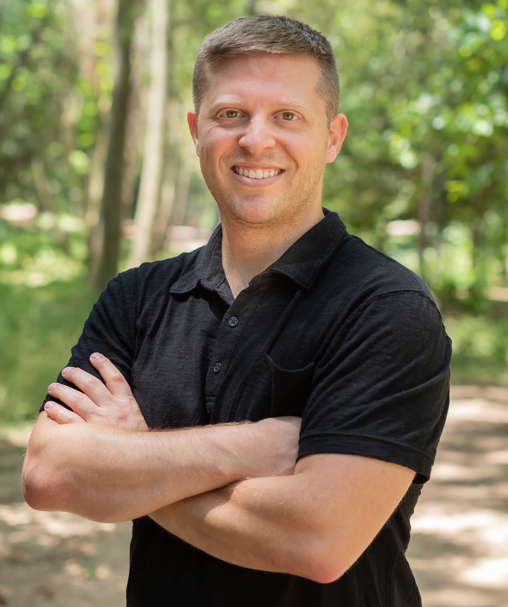
My $850,000 Mistake Nearly Killed My Business
My $850,000 Mistake Nearly Killed My Business. In this interview, 8-figure supplement brand CEO Cody Bramlett reveals the single credit card processing error that froze his assets and nearly destroyed his company. He breaks down the painful lessons learned and the "bulletproof" systems he was forced to implement afterward. From his humble beginnings with duct-taped shoes to building a thriving business based on 100% affiliate marketing, Cody shares the inside story of his remarkable journey. He discusses the challenges of building a supply chain that can't fail, the power of storytelling in selling supplements, and his battle with imposter syndrome during the crisis. Cody also offers practical advice on hiring top-down to create a resilient team and candidly admits the one thing he still struggles to delegate. This conversation is a masterclass in entrepreneurial resilience and the transition from founder to CEO.
Guest
Cody Bramlett
Chapters
Full Transcript
Sean Weisbrot: Alright, so this is an interview with Cody Bramlett about his psychology. So before we go any further, why don't you just tell everyone what your business is and if you don't mind the, uh, revenue per year.
Cody Bramlett: Definitely. Um, so, like, like Sean said, my name is Cody Bramlett. I'm the owner of a company called Science Natural Supplements, that's become another company called Waddle Bear Media, which just houses that in all my brands. Um, I then have a coaching business where I teach people to what I teach people to do what I do, um, and that's called Supplement Millionaire. And we're in the direct marketing, um, affiliate space. So we, we basically create products, supplements, health related items, and we sell them through long 10,000 word stories, whether it be video or a text page explaining the. Benefits, the pros, the cons, the science behind what they're actually getting and teaching people in massive detail. And also through some creative fun stories that get them to know, like, and trust us and make a purchase the first time. It's very different from a lot of, um, e-commerce people who may take 7, 8, 9 touches on somebody. We can get about a two to 4% conversion rate on the first touch with people, which is quite cool. Um, so that's what we do. Our revenue has bounced from uh, two and a half million to highest to 18, and we've consistently been in that, uh, eight figure range since 2020. Um, and the business has grown and grown and grown.
Sean Weisbrot: All right, great. Thank you. I appreciate the intro. So I'm curious what made you want to be an entrepreneur?
Cody Bramlett: Yeah. Oh my gosh. My parents asked this question recently. My brother's the same as me. He has a, a, another digital business online. And they're like, I don't know what it is. We didn't tell you to do it, but they always, we were kids, said, you can be anything. You can do anything. And I think they were just being stereotypical positive, you know, Americans and they weren't realizing that they really, truly were instilling that ability for us to build and, and develop and, and grow, um, something that could be kind of big. I've always been a leader. I remember back in, uh, seventh grade, eighth grade, I think, and I remember being the, you know, you do this group school projects and I decided I didn't wanna do anything. So I picked the smartest kids in the class who were the least popular and, um, they all did their parts and I just compiled it all together. 'cause my dad had the fancy print, uh, computer with a color printer and I spent like one day's worth of work and we had got an a plus and I didn't even know what the project was about. Right. So I, I'm pretty, I've been pretty good at trying to amalgamate. Others work and, and their strengths to mind of being able to complete something, create that vision of something that has continuity and, and put it together. Uh, you know, the, the guy that loves selling magazines and chocolate, I won those contests. And I, I was driven by that concept. Uh, it probably comes back to the fact that my parents were, you know, we weren't not well off. We were not, um, you know, very rich people by any means. And, uh, my parents saved and saved and saved. We shopped at Kmart. I got a pair of jeans, a couple pairs of jeans once a year. You know, if I got a pair of shoes at the beginning of the year and they got destroyed, we glued them and duct taped them together. You know, it was kind of family lifestyle we had. So it just is what it is. And that kind of, I think, drove me to want to build something where I wasn't reliant on others. For a paycheck where I could depend on myself. 'cause I have more confidence in me than I do in someone else. Um, seeing my actual potential.
Sean Weisbrot: So it's interesting, you, you mentioned the, uh, financial side of your family growing up. I interviewed another guy recently, his name is Glen Bimani, and he said that he realized when he was young, that his family was like in poverty. And so our conversation was about how growing up poor has the potential to drive entrepreneurship, um, for whatever reason, I guess dependent on the individual. So it's really cool that, uh, I mean, it's not cool that you grew up poor, but it's it's cool that, um, you have a similar kind of a story.
Cody Bramlett: Yeah, and I wouldn't say I was necessarily poor, just my parents were not spending constantly, you know, they, they were incredible savers, right? They are taken care of forever with their retirement. You know, they, the, okay, we grew up in ca, middle of California, so housing and life is just, you know, 10 times more expensive than it is everywhere else. But it's just, there was, um. You know, all, all, all my friends would have fancy stuff and I just wouldn't. Right. Mm. I remember, I remember a handful of friends in, in our, our church group who just always had nice stuff and their parents always had new cars and all these other things like that. And my parents just, you know, the car's good enough, right? Why do you need a new one? And it's kind of funny, you know, I, at, at first I was chasing money 'cause I wanted the shiny stuff. I wanted the fancy things. But then I realized in life those things are kind of worthless and pointless. And, you know, it's a car, who cares? It's good enough. I drive a Chevy, uh, I dunno, it's called the, the electric one, the volt or bolts. Hmm. Right. It, it is a, it's $20,000 car. Like who cares? Like, it is just a thing. Um, so yeah, the, the money thing was interesting growing up. I just, I definitely, I think, drove me to find and want more, but I don't think it was the end all be all. I think it has to do, I think more with control and confidence in myself. I.
Sean Weisbrot: So then what made you excited for doing this business?
Cody Bramlett: Ah, so health. So I told my parents, it's your genetics. That's why you're overweight. You can't change it. What do we know you wanna talk about for dinner? So like, that was, uh, also an upbringing. Now, parents were not aware of that. And if you think back in the, you know, eighties and early nineties, there was just a low fat craze that was the idea of health in, in the world, jazzercise, right? We didn't understand exercise, nutrition the way we do. You know, I love the episode of South Park when they flipped the pyramid and they talk about how steak and butter's the key and this whole crazy, you know, gluten, oh, it's just hilarious video mo episode. Um, but they didn't know and they, they really couldn't have known about being a health professional and. I, uh, really wanted to become healthier, change my life, and so I sought education in that. I seek knowledge in it. I found exercise and fell in love with that. I started, um, uh, learning how to become a, after college I found a kettlebell gym. I became a certified instructor there. Did that after work every day. And, uh, eventually opened my own kettlebell gym in San Diego. And from there I was just learning more about health, nutrition and exercise. And I actually had, um, people coming into my gym and be like, Hey, tell me about the supplements I have. Which one should I take? Are these any good? And I'd look at the supplements they have and they'd be buying 'em from, you know, HerbalLife and these big multilevel marketing companies. And, uh, the products were absolute crap. They had very limited, uh, uh, you know what they need. The protein powder had like eight grams of protein per serving. I'm like, this is worthless. Um, and, and they just were. Not, they were overpaying for junk. And that led me to realize that I don't actually want to have a gym. I don't want to try and just work hard to, to please 200 clients to, you know, work 40 hours a week teaching classes and exhausting myself. I wanted to reach more on, on a bigger audience. I love the Walmart approach, right? Being able to just hit as many people as humanly possible. Um, you can't do that with brick and mortars, without, uh, tons of financing. And so the online world became the next key. And, um, around that time, my brother and I were in Mexico and he's like, oh, I think Turmeric's gonna be the next big thing. And I looked into it and did research and from there created my company. And, and that was our first major product. And we probably did three half, 4 million the first year of just turmeric sales. Um, the manufacturer, he joked to me, he is like, oh. You, you, I've never had someone sell more than I had in, in, in stock. And I blew through his stuff in like three months and he was like, oh, you know, I just caught him off guard. So, um, it, it, it, that idea of health not having a lot kind of led me down the path through multiple steps to eventually realize what I wanted was to be able to influence and help the masses on a more basic nutritional level than versus where I started out in this very niche training of exercise and, and, and diet modalities.
Sean Weisbrot: So did you source your turmeric from Mexico? And I, I understand turmeric, I eat turmeric, but maybe you just want to very briefly explain why you felt like turmeric was a good thing to, to go with and like what's the benefit of it?
Cody Bramlett: Yeah, so the idea of anti-inflammatories in terms of food was brand new. It had not been thought of, it had not been brought to the masses yet. And a a lot of health craze are, are very much recycled. But the idea of reducing inflammation hadn't really been. I, I can't think of something that's really been brought up before. And so my brother mentioned that and I was just like, oh, interesting. And so I went home and started researching it. Um, and in the supplement world, unless you're crazy, and I have a few crazy friends who've done this, you don't manufacture yourself. I. That'd be, that'd be like being like, Hey, I wanna sell, I don't know, keyboards, right? You don't go to figure out how to build your own keyboard. You sell keyboards online and then eventually when you understand the market better, you can start to manufacture your own in-house brand or get a white labeled version and then make a custom one and kind of, you know, get better at the business. So I found a manufacturer in Atlanta. I have no clue what the product was. It wasn't even turmeric, it was raw curcumin, which is distilled turmeric. And it was like so intense little ladies were having like stomach problems because it was like. Too intent of a product. So I ended up switching to a different manufacturer and using their white labeled turmeric, which was a, a mix of turmeric, root curcumin and biopreme. And it was the perfect blend that I've been looking for for a long time. And they did an on, uh, a quasi on demand thing where they would keep a, in, I would basically prepay inventory for me, so that way I always had a supply going. And that eventually evolved in their business and other ones to be an on-demand style. And I particularly don't have any inventory in any of my businesses. We do everything with an on-demand supply, um, in the, in terms of the products themselves. Um, it could come from Mexico, could come, Hawaii couldn't come from, from China, from India. Um, the supplement markets are very, um, like buying grain, right? You know, there was on the international markets very, uh, uh, could be from anywhere. And so a lot of these products are bought from these large, um, traders. And there's a few huge, um, uh. Supplement ingredient traders that are from India and China and who knows where they could have sourced it from. Everything is though check scientifically to make sure it's clear of metals and LEDs and all that junk like that. But you know, at our scale, we can't go to a particular farm in a particular forest in Hawaii and say, can you be our supplier? Because we could blow through its entire crop very fast and not having not have supply afterwards.
Sean Weisbrot: You were talking about on demand supply, and I'm curious about it. I've heard that a lot of companies like Pride themselves on, you know, just in time manufacturing and things like that. Globalization and the pandemic kind of may have blown a hole in that. I could be wrong, but did did the pandemic affect that for you or did you, I guess. Why did you choose that method and does it still work, and why?
Cody Bramlett: So it comes down to the actual manufac supplier you're using. So there's three in, in the industry that I work closely with, and these companies all keep massive amounts of ingredients for their main products. You know, we have conversations about how, how many products I'm gonna be using and need in the next 90 days, and they keep and make sure that everything's taken care of. But among them, you know, I, I probably do 50 to 80,000 units of product between all my lines, uh, uh, in a month. But there's people who easily do 200, um, to 500,000 units a month. So I'm not even the biggest people out there in the direct marketing world. The idea of on demand is it protects you from running outta inventory and running outta capital to fund that inventory because it beforehand you had to buy product. So say you needed a $50,000 purchase order to get your inventory for the next 60 days, you would had to put down $25,000 cash. Now. Then when they finish it, the remaining $25,000 and then wait seven to 10 days for it to arrive to your fulfillment house to then start shipping. And all the people I work with now, they do the manufacturing, the storage of inventory, and the fulfillment all from one location. So they're able to keep a much better eye on the product to keep it going. I have custom products that we do on demand with, and we have white labels like that, turmeric and Omega-3, and things that are more generic that don't need to be special, they just need to be great. Um, and uh, those ones that, you know, 10, 20, 30 other vendors will sell the same product I have. Just kinda like Amazon, you go on there and type in turmeric, I guarantee you about a third of what's on there comes from one manufacturer.
Sean Weisbrot: So what was the hardest thing about starting this business
Cody Bramlett: in the direct marketing world? It's all about that story to get it to convert. So we're, we don't teach how to. Buy ads. It's not something I've really been, uh, greatly successful at in any large scale. It's about telling a story. So a customer knows, likes, and trusts you. So the original story was about my dad. His doctor actually said, go eat turmeric 'cause it's an anti-inflammatory. He had some health problems and they're like, you should do that. So I worked with a, a copywriter with my dad's story and my story and we wrote an embellished story about my dad. And, um, that story, you know, helped. Sell the story of what turmeric is, to teach people what it is and how it can help. And so in the direct marketing world, people do this for supplements. They do this for finance, they do this for beauty, they do this for clothing, they do this for anything you can imagine. I've seen pillows before, right? Um, and the idea is you're telling a story of someone's struggle and what they did to overcome it and how they, they discovered that information. Um, you know, I've, I've worked with experts to help us make the formulations and then use part of their stories in, in, in, in the, uh, the copy. But creating that story has been the most complicated piece. My second sales page was really basic, and I've had friends in the, in the industry tell me, oh, I saw that and I thought it was nothing. Not realizing I was doing like $6 million a year on that page. Um, and, uh, it just hit a note. And so once you have that page that works well with traffic, the next step is to find the traffic. And a lot of people today are like, oh, I'm gonna just. It's all gonna be me, right? I'm gonna go to Facebook and put some ads up and go, but letting all your, putting all your eggs in one basket is dangerous 'cause Facebook can shut you down. They've shut down my accounts before where I can't run ads and are my name anymore. You gotta have, uh, my staff members do it. Um, and uh, so we prefer to use what's called affiliate marketing. And the affiliates, there's 400, 500 affiliates with these giant email lists and they've sold products to collect their email lists and, and build their customer lists, and they promote other people's products. So you make friends with them, you say, Hey, I'll promote you if you promote me. Hey, I'm gonna pay you a large commission if you ever got every sale you get. And then we just starts going and we've had, you know, uh, multi multimillion dollar months before just from emails going out saying, Hey, do you like turmeric? Check out this great deal. Hey, do you like meringue? Check out this. Hey, are you interested in an apple cider vinegar gummy? That's awesome. Check out this. And it's crazy what, um, influence a lot of these people with their email list, have over their audience. Um, and it's amazing to see what growth comes from it. And you can go from an offer doing $0 to doing half a million to million dollars in 30 days.
Sean Weisbrot: So I like that you brought that up. I do wanna leave it there because our other interview will be about affiliates.
Cody Bramlett: Yes. We can go a lot more detail about that.
Sean Weisbrot: Yes. And I would love to, especially because you're operating with them at that level. Level. It's very interesting, um, because I have talked to other e-commerce brand owners and they've had their own ad issues. They've had the affiliate issues on it. But, but yeah, I don't wanna go deeper into that here. So have you ever regretted starting this company?
Cody Bramlett: Uh, regret? Yeah, there is. So there's regrets in how I went about it. At in the, um, direct marketing world, people tend to be like, it's all me. So I start, you know, quit my job. I had my gym, I sold my gym to a friend for whatever I can get to get out of it, right? And get outta a lease really. And, um, I was like, I'm, and making this business on my own. And I was literally me with a dev person who was a, an agency and he had like eight clients. And I was doing everything to the point of, I was, you know, the goal of starting own business is to work less, make more money, have freedom to do and what whenever you want. And then all of a sudden I was working 24 hours a day, not sleeping, stressing my mind, panicking because I don't know everything. So I regret not building a team and hiring a fractional CFO, uh, operations manager or COO and a salesperson within the first year. I regret not doing that. I should have. Um, I ran for three years alone. Which was incredibly exhausting and tiring. Um, I regret not hiring a coach sooner. In 2020, I was going through massive stress with a financial issue in the business that was not fun. And I was looking online for like a therapist until I realized that all I needed was a business coach. And when I found one, it was like life and just turn the lights on and suddenly seen everything. 'cause I had someone who's like, don't do that. And I'm like, what? And they're like, don't do this. Instead. I'm like, okay. And then everything just worked. So I regret not having that sooner. Um, I think the another regret too would probably be that the direct marketing world to some people's eyes can seem very scammy. And where my business is at now in terms of trying to position more towards the e-commerce hybrid kind of concept, where we're selling things more on the quality of the product and less on that story. I wish it would've made that transition sooner. You know, I started that transition in late 2018, um, but it would've felt, I would've felt more. Confidence about, you know, I own a supplement brand, versus saying, Hey, I own a 10,000 word sales page that, you know, people become so invested, they at the end just purchase.
Sean Weisbrot: So in your regrets, you said something about being extremely stressed and having a financial issue. And I think we touched on that before we started this. Am I right? Is it that story? It is, yes. Okay, good. So, uh, can you tell me about this story? I was originally gonna say what's your most expensive at stake, but basically you've already kind of pinpointed it. Um, why don't you go into the detail of what that is?
Cody Bramlett: Yeah, definitely. Yeah, definitely. So, biggest mistake, $850,000 mistake. Now, uh, a lot of this did happen to iron itself out over the next year. Um, and I do have other mistakes we can always talk about later, but I. In the massive growth of the business during the pan, during lock, the beginning of lockdown, basically everyone wanted to buy supplements 'cause they were wanting to be healthier or afraid or whatever it was. Our sales went through the roof, you know, from having a good month of a million dollars to suddenly averaging 1.5 to 2 million. Um, we had a particular issue, kind two issues. The first was we didn't have enough protection on our credit card processor to keep, um, scammers out. So if you use Stripe, which you can't really use in the supplement space, especially at scale or PayPal, they will close your accounts. If you are right now, look for alternatives please. Um, but our credit card Proser had one of like four different, um, protective tools on there and it was the weakest, least expensive on my half version. And as we scaled, I didn't remember that, didn't remember to tell 'em to turn the other ones on and pay the extra few grand a month to cover it. And we had about $300,000 of. Basically stolen credit cards with fake purchases on our products and people were stealing the products, shipping them to this couple warehouses in New York and then selling it on Amazon and eBay at a discount. And this is at a moment when our ads were just going crazy on Facebook. We were all over the place. Again, we did like $18 million and that wasn't within a a six month span 'cause the business just rocket shit and shipped up. Um, and we had that first issue. So we had the issue of that happening and then our chargebacks and refunds just suddenly exploding because. It was fraudulent and our system wasn't able to catch the fraudulent transactions. By the way, if you are doing your own business and you're not using Stripe or PayPal, you need to install count 3D, secure, uh, verify, and, uh, RDR. Those are the four things that you should have on your, on your system because they'll help you protect your credit card processing and protect your cons, secure customers. Um, and so that happened and then what immediately preceded that, because we had too many chargebacks and refunds is our credit card processors all closed, shut down and held all the money that was in the account. So we had about $850,000 held. Now, luckily we had another credit card processor that, that I had really good relationship with, but we weren't using that much that he let us just keep going and he understood the circumstance. So it was fine, and we've kept that relationship alive. It's been wonderful. But basically I lost 300 grand. Refunds and chargebacks. And then I had $850,000 frozen that I could not touch. And it took about a year for the money to start getting released. And it wasn't until end of last year, before it finally all trickled back in what was remaining, um, to us. So, you know, $800 million, some odd mistake, it was painful. I had to get a short term 400,000 loan to keep the business alive, which was not cheap and complicated to get, and it was incredibly scary. So, you know, being prepared is key and I've learned a lot from that mistake. And anybody I coach, I tell them, do not run your own credit card processing, at least for three to four years of your business. You know, use systems like Stripe, click bank, buy goods, PayPal if you can, because they'll protect you from these massive disasters of things just imploding.
Sean Weisbrot: So you said that you found a business coach. During this time, what was it that they taught you?
Cody Bramlett: Well, at first it seemed like a therapy session, right? I just basically freaked out and told 'em everything that was going wrong and how I don't sleep at night. And a lot of it is when you want an entrepreneur, at first, you don't realize that you have the choice of being an entrepreneur, which is kind of a chasing, shiny object person forever or becoming a CEO. And I was afraid to take that step to become a CEO. It was like, I'm not good enough. You know, I don't have the right mindset. I don't have the education or training. I'm not there. I don't deserve this. How could this be real? Very much the, uh, uh, imposter syndrome playing over and over every night kind of thing. Um, and uh, that is the first thing that was kind of reinforced and broken outta me, was the ability that you are doing something great. You have something that works. You just have to fix it. You have to fix what's working. And it came down, um, you know, a lot of what he was teaching me was just, you know, SOPs, making sure people are in the right position in the company, understanding the company, and having expectations of the company. And I think one of the most important things is realizing that you are not the company, you're just an employee of it, right? If you, if your true goal is to be, you know, successful, it's that I want to just walk away, replace myself and get paid because I own the company, right? Like a board member, like a, a heavy investor owns a massive amount of, of, of stock of the business. You don't want to have to be in the day in, day out. You wanna show up for the quarterly meeting and be like, cool. And then have the CFO be like, here's your check. And you're like, sweet. And you go back to doing what you want to do. Like that. That's the dream, right? Um, right. So, so, uh, you know, that, that, that idea was all kind of instilled in me so that way I could focus on making the business right, focus on the team, focus on the systems, and, and creating the, the business that builds, you know, machines that print money.
Sean Weisbrot: What. Would it take for you to walk away, to hire someone to replace you?
Cody Bramlett: Oh, um, great question. And I can't wait for the, the day when we're financially able to do so. I, I wanna make sure I can empower my team and incentivize them greatly for taking that control. Uh, for me, you know, it's, it's, I'm not, I don't need a lot, right? I've learned that a Lamborghini is fun to rent for a, for a, an hour on a racetrack in Las Vegas, but to own one would be dumb. Everyone I know that's owned supercars never drives them because it's scary, unless, of course they're a car lunatic and they don't care about destroying those things. I, I think for me it's, you know, having, you know, 300,000, $400,000 a year as passive income would be kind of that massive dream. You know, that 20, $30,000 a month check 'cause that just at that point you can fly first class, you can have a nice house, potentially a vacation home car or two and free cash to do whatever you want every, every month. And why do you need more? It's absolutely insane to think you need more cash than that to survive. She had 12 kids or something.
Sean Weisbrot: So if your business already does over 10 figures a year, surely you already are able to take three, $400,000 a year. So then what's stopping you from walking away if your dream is to have that
Cody Bramlett: correct? Uh, in my opinion, it should be more of from my financials, um, my personal financials. Because if you're walking away and taking three or $4,000, who's paying the CEO? Who's getting the bonus for running the company? I'm an employee of the company, and that is my salary, which is about that amount. Um, it's, I'm not, I'm not gonna take that away from the next person. So that, so I have to be able to, to put together a savings account that can then, you know, fade me out, that kind of cash and be able to subsidize the majority of it so the business can take care of the rest. Plus, maybe the business may not last forever, right? So we gotta make sure we cover all these bases as well. I think right now in my career, I'm excited to continue to grow. I saw a quote a few days ago. It was, uh, in a gold rush to make money in a gold rush. You don't dig for gold, you sell the shovels. And that idea, that idea of creating that, how can I help someone else make this business, or how can I help a consumer in all these different ways is the thought process. That's still excited to me and still going through my mind. So I'm still trying to come up with ways to help people. You know, I said earlier I have a coaching business to help people create this. Right. I also have a, um, uh, design and dev company to help do that. I'm building a data company. Based on our company. So that way you, when you do all your stuff, you can have a dashboard that actually gives you information in a way that makes sense, both for a financial person and for a company to operate and make it easy to set up and run. Um, I'm, I'm building lots of different things because I want to be able to diversify the streams of income for the business. But also empower more people to have more success.
Sean Weisbrot: I have something I wanna mention to you about e-commerce. I'll do it off air. Um, so it sounds like you're still excited about your business, so you don't really wanna walk away from it yet, is what it sounds like.
Cody Bramlett: Yeah, I'm in, I'm, I would say I'm in a transition phase where I'm learning to finally be that CEO, the visionary of the company and not micromanage and having, learning to not reply to emails where I'm CC'd on them. And I do not need to, I just need to look, look, observe, keep going. Um, learning how to run the quarterly meetings for the company, learning how to pick the right people and learning number. Biggest thing of all, how to make sure the business has the finances, finances, it needs to grow at the scale we want so we can meet our budgets and our targets and our, and our company expectations. So I'm, I'm still in excited learning phase right now. Um, and I, I, I really wanna. Conquer that before I decide that I need to just go sail a boat or something like that and do something different or fly a plane. I've always wanted to fly a plane. So.
Sean Weisbrot: So how many people do you have on your team right now?
Cody Bramlett: So in, uh, north America? No. Us, us and Canada, we have, with myself included nine. And, um, then in the Philippines, I think we have 22. And I'll, I'll tell you right now, Philippines is amazing. Sorry. Best staff on earth, best attitude, education, knowledge. Just phenomenal. If you could start to build a team in the Philippines.
Sean Weisbrot: Mm. Yeah. Most of my team is from the Philippines. Nice. And they're, they're developers and testers. Yeah. Um, and my CTO as well is from the Philippines. So what has been your biggest fear?
Cody Bramlett: Uh, fear imposter syndrome peaks in all the time, right? And if you don't know what that is, you're not an entrepreneur, right? You, you get, you gotta question yourself every day. Like, am I, is this real? Am I okay to do this? Or should I be doing this? If that thought's are going through your mind you, I don't think you have that fire to build something, um, that fear that kind of chimes in me all the time is, is this gonna last? Is it gonna break down tomorrow? What happens if X breaks or the staff member leaves? Those kind of fears run through my mind. And with that, you, you've gotta listen to your fears 'cause they're legitimate. Then learn how to build systems, procedures, staff teams, processes, other verticals for the business to bring in more revenue around those fears. You worry about this person leaving, build a team around that person. If they do leave, you have a replacement. 'cause the entire team's there, right? If you're worried about this revenue source failing, okay, is that revenue source truly where your profit's coming from? That's just not sometimes. And uh, is that revenue source replicatable in a different niche? Can you just sell turmeric as joint relief and turmeric as, I don't know, pain relief in two different markets? Can you just spin it like that? Um, can you, there's lots of different ways to take what you're already doing and and replicate it. So I'm always trying to, I guess, use those fears to try and create something new that will mitigate those fears. So I can move on to the next one, I guess.
Sean Weisbrot: Fair enough. At what point did you decide, 'cause you, you said that imposter system is, is important, is, um, active, in your mind, very prevalent. What made you think that you were ready to coach people on how to do what you do, even though you were probably dealing with your own imposter syndrome? Probably throughout the, at least the beginning of it, and maybe still.
Cody Bramlett: Yeah. So this direct marketing world, people, they, they're, they come and they go. 'cause making an offer that's successful is, I wouldn't say it's easy, but it doesn't require a lot of skillset. You just need a video guy, you need a webpage guy and a great copywriter. And then from there you can really make something that works so well. When you put it on a platform like ClickBank or buy goods. These platforms have affiliates that are lined up, right, to promote offers all day long. And if you get in front of one or two important ones, it just goes. I, I, I have coaching client does $80 million a year. It's crazy huge. Um, the. Sorry, I'm trying to blank now. Ask the question again. I drifted too far the imposter syndrome, right? That's okay.
Sean Weisbrot: Yeah. Basically, at what point in your journey did you decide you were ready to be a coach? Yes. The coaching part. And how, how was that despite going through imposter syndrome and probably experiencing imposter syndrome, when you had the thought of, I want to be a coach, but wait, am I ready? Especially 'cause now you're just talking about a guy who's doing five, five times more than you or something, four or five times more than you, which is another question I want to ask with, uh, as well. Um, yeah. But we can go into that after.
Cody Bramlett: So the imposter system, the imposter syndrome, it happened last night. It happens all the time. Um, so basically people churn and burn the space, what they're trying to say. And I, I've been around since 2016 when I started this.
Sean Weisbrot: Hey, just gimme 10 seconds of your time. I really appreciate you listening to the episode so far and I hope you're loving it. And if you are, I would love to ask you to subscribe to the channel because what we do is a lot of work. And every week we bring you a new guest and a new story. And what we do requires so much love so that we can bring you something amazing. And every week we're trying really hard to get better guests that have better stories and improve our ability to tell their stories. So your subscription lets the algorithm know that what we're doing is fantastic and no commitment. It's free to do. And if you don't like what we're doing later on, you can always unsubscribe. And either way, we would love alike if you don't feel like subscribing at this time. Thank you very much and we'll take you back to the show now. And
Cody Bramlett: I wanted people to not make his mistakes. I had a really close friend who went from being copyright to business owner. I tried to mentor him and I then watched him continue to make the same mistakes that I was trying to tell him not to do. And at that point, another friend who was a coaching business for, for writers. Basically had mentioned to me when we were golfing, Hey, you should do a coaching business on how to do an operations. 'cause you do a pretty good job at it. Um, at that point I pretty much know nothing compared to what I know now, but I was like, you're right. And so I started formulating over months, uh, a a a course that has interviews and I teach people, um, you know, all the different aspects of the entire direct marketing, affiliate marketing world. And I go through all the different steps with about 50 interviews of all the people and companies who have, who have succeeded, helped me succeed. You know, the right customer service, the right credit card process, the right CRM, uh, the right designer, the right copywriters, helping people find the right people the first time because. If you type in, I need a copywriter, there is so many options and, uh, 99% of them are worthless. So I, I wanted to help solve that problem and plug it. And then what happened was I actually realized people consumed the videos and didn't do anything. So I turned it into an actual coaching program and we now have my entire staff coaching and teaching, um, operations, sales, um, marketing copywriting on, on weekly, um, group calls. And, uh, we teach those things and then of course we record it all and put it into our, our digital catalog. And we probably have a hundred plus, you know, hours of content right now teaching people basically from whether you have a million dollar company and how to build a team like I have, or if you're starting out how to actually structure your funnel, your company, and what to look for and how not to chase shiny objects until you've succeeded certain amounts. And so it was just. You know, you're, you're, you're the smartest guy in the room if you know the most, am I the best in this, this space? No. But I am. I, um, am I one of the better ones that survived through this, all these ups and downs and kept going? Yes. Um, do I wanna continue to be better? Yes. And do I think the coaching helps me immensely? I think it does, because if I can say, see someone doing something and say, you need to do that more, I always look at myself and go, am I doing that as much as I want him to do it? And a lot of times the answer is no. And I get to go work on the business some more.
Sean Weisbrot: That's one of the reasons why I do the podcast, is because I get to talk to cool people like you, and inevitably learn something that helps me make better decisions as a leader. So I'm curious how you got this client who's doing nearly nine figures a year. How did you convince him that you can help him or she, I, I don't know if it's a guy or a girl.
Cody Bramlett: I said, I, you probably don't need my help. So I said, and they said, no, let's, let's work something out. Um, it comes down to, you know, the loneliest job in the world as an entrepreneur. That concept, right? You have no one to share and communicate and bounce ideas off of. And I think that's why they, we enjoy working together and why they en enjoy, um, our, our monthly calls to go over ideas and concepts and, and, uh, just to see what's working in a different space. So for them, it's similar to what I do with the coaching, what you do with the podcast. It's a way to, uh, understand what's going on and see how similar businesses are functioning and, and work with them. Um, so yeah, it's just, uh, not, not being alone and trying to gather as much information as you can is probably why they, they wanted to jump on board and, you know, in, in the direct marketing space, there's probably a dozen guys like them and the rest are all on the, you know, multi seven figure space. There's very few eight figure guys out there. It's really easy to make one to $6 million in revenue. It's hard to get to that next level in the direct marketing world. Um, and so very few have, uh, achieved that.
Sean Weisbrot: Hmm. Yeah. Random side note, I met a guy who does drop shipping and a lot of people I met that do drop shipping, they're like. They were in Chang Mai and they're like, yeah, I'm making $2,000 a month and life is good, but I, this guy came to me asking for help with a connection for something and I was like, how much are you doing? Like a year? And he is like, I do 5 million a month. Beautiful. I was like, okay, how do you do 5 million a month? He's like, well, I spend one and a half million on ads.
Cody Bramlett: That's a great return.
Sean Weisbrot: Like, okay man. I'm like, that would probably make it hard for me to sleep at night to like spend that much money a month on ads.
Cody Bramlett: A lot of the ad guys in the affiliate space basically have told me it's, it's gambling and it's an addiction and they don't want to do it anymore,
Sean Weisbrot: but they can't stop. Right. I was like trying to think of ways to help him diversify and he is like, the money is so good. I just don't, I. I don't know what to do. He is like, I don't feel anything making this money anymore, but like, I just don't know where else to go. It's called build a savings account. Understand
Cody Bramlett: what your exit is and why. That's the thing too, my coach did kind of go over is like, what do I want? What is Cody's end goal? Like I said, that, that having that amount of money come to me monthly without having any business existing is, is the, the goal. Nest egg. That works.
Sean Weisbrot: I've been talking for many years about passive income and how passive income is a great way to, to do things well, and the reality is I have struggled to, to create passive income streams for myself. And I think one of the reasons is because the way that I, I have seen it is like the easiest route is real estate, but it's not really easy because you have to find the right property at the right time in the right country with the right interest rate that has the potential to have people paying you all the time. And, you know, you need to have the cash to, to put it down payment and you know you're lonely, limited by how much cash you have to put down payments on it. Like it's, it's like, it sounds easy, but actually, like it doesn't generate that much in revenue unless you do it at scale and Right. It's like it could take you years to build up that scale. So it's like, how much time are you willing to put into that? Because I, there was this like 25-year-old guy I heard of. He started out with like a loan from his parents and two years later he had like a thousand units doing millions of dollars a year in, in revenue from rent. But like, not everyone has that mindset. I think
Cody Bramlett: I would say there's a few little bits of that story missing to actually tell that guy's full story. You know, just being able to buy something and go is there's a, he had an in, he had a connection, he had a uncle that did X, Y, and Z. There was something that allowed for, uh, ability to scale. 'cause everyone, everyone's connection, I mean, this is a terrible thing to say and I hate the fact that I say it. I'm six two and blonde. People look at me differently. It, it's stupid. The world should not function this way, but it does and that's been an upside for me. 'cause I've gotten jobs and interviews and things like that because I'm six two and blonde and. They wanted to talk to me again, nothing special. So, um, everyone has a little piece that's successful for them, whether it be a family member, a friend, an opportunity, a loan from a parents kind of thing. There's, there's something that everyone has an opportunity. It's a matter of understanding what it's, mm-hmm.
Sean Weisbrot: Yeah. I mean, I, I was in China for years and I used that being a white guy, opportunity. Being blonde helped a lot and speaking Chinese was like the thing that did it for most people. Um,
Cody Bramlett: your novelty, they're like, wow, amazing. So I definitely
Sean Weisbrot: took advantage. Yeah. There's like, I could count on my hand the number of white guys in China that could speak Chinese at a business level. There's like not many. Um, so yeah, I took advantage of that.
Cody Bramlett: I'm jealous of that. When I was in community college, I went to China with my best friend for a month. 'cause he's, uh, first generation in the United States. We visited all his family. Mm-hmm. And I was like, I want to. Learn Chinese and do business in China. And my parents were like, we're not gonna pay for you to go, you know, continue going to college. You get your four years and that's it. And I was like, ah, bummer. I would've loved to do international studies and understand that in the business world, that would've been fun.
Sean Weisbrot: Well, I, I did my four years in America. I got a degree in psychology and then I, I took myself to China. Nice. Yeah. And I learned Chinese while I was an English teacher in the day, and then learning Chinese when I wasn't working. And then after a few years I got into business once I could speak Chinese. Ah, amazing. Yeah. I've talked about it with other people on other podcasts. But yeah, it, it's, uh, been an incredible life so far. For sure. Um, so how do you
Cody Bramlett: celebrate wins? That's something I've been having to teach myself. Right. You know, it was always like, you know, worry about the losses. Worry about the failures, but, oops, I didn't realize it just did a million dollars in sales last month. Right. Um, for me it's becoming. I'm trying to celebrate when I create the ability for me not to have to work. So I just did a road trip. I have a little r little 23 foot rv and my wife and I just did a three and a half week cross country road trip. Got to see all the sites, national parks, camp in great places, meet interesting people. It was really fun. And you know, being able to set myself up for that where I don't have to do anything, respond to an email, look at my calendar, care about anything, look at a report, just know that it's done. You know, that's my celebration because I'm able to free myself of the business for real. As an owner or a high C level, uh, employee, you tend to just live your job. And so for me it's been kind of learning how not to live my career. 'cause it's just a thing that may not last long. You may leave it and then what are you if you don't have something else? So it's kind of rediscovering everything I used to have when I was younger and poor and broke and I guess happier because I was, uh, you know, I'm having to understand what those hobbies are and. Enjoyments are in life for now. It's definitely RV and I think it's fun.
Sean Weisbrot: I remember before I got involved in business, I, I would work a job, I would save some money and then I would go backpack around Asia for a month and I didn't have to work. And it was amazing. And I can definitely understand how there's a benefit in, in unplugging and not wanting to do that. I, I'm curious if at the end of that trip you were kind of like, do I have to go back to work? Like, they're fine. I'm, I'm sure they don't need me anymore.
Cody Bramlett: Yeah, it definitely, it's two sides. So it was the, it was the, i, I care about my clients for the coaching program, so I really wanted to get in there and see where they were and then kick someone in the back the butt and be like, get to work. You said you'd have this done, you know, I want to be that like, you know, coach to really smack people in shape in, in terms of my team, you know, I, I, I didn't have no worries. I literally was nervous to come back in feeling like I'm gonna get in the way. Like, should I even be here kind of thing. Like that's the kind, the, the imposter syndrome happening again. Right? Um, but that's kind of what's been going, going through my mind after coming back for sure. And I think it's just, again, repositioning my thought process, right? I am not in the operations, the sales, the dev design. I am the CEO. I'm in charge of the vision of the company, and I'm in charge of making sure the company has the funds to keep growing. That's it. And I'm there to help my help, help my COO, my CFO, uh, uh, uh, answer questions and, and take care of what they need to do. But that's what I'm supposed to do. And, and a company needs that, you know, just as every country needs a president or, you know, prime Minister, we all need kind of a, a figurehead at top to just kind of go, this is the direction we're going for the next year. And we'll course correct as needed. Every, every, every organization needs it. And I have, it's just learning how to be that. It's tough. It's, uh, much different than the entrepreneur world where you're just like, I'll do everything and never sleep and drink coffee 24 7. It's, um. It's a different mindset, which is, I think, good lesson to kind of learn in life too.
Sean Weisbrot: Yeah. It's, it's something that, like, there's no handbook for being a CEO because every CEO has their own strengths and they have to learn to play to that. And it's, when I first realized that my team basically didn't need me, like, I felt like, what the hell am I doing every day? I felt lost because I was like, I, I don't know what to do. Like, I don't feel like there's anything that I can do on an individual daily basis that I can contribute back to my company. Like, what the hell am I doing? Maybe I should go start another company. So, uh, so yeah, being a CEO is difficult, but I, I agree completely that, uh. Those are two of maybe three or four things that are like extremely important. You, I I, sometimes I'll do one-on-ones with my team, uh, because there, there's 12 of us. And, um, the last time I did the, well, I did one on ones with them this past week, but I did it like, uh, back in at the end of April. And I said to them, you know, do you know what it is my job? Like, do you know what I'm, what my responsibility is as a CEO? 'cause like, I, I know what, what your responsibilities are, but like, do you know what mine are? And they're like, no, not really. And I was like, well, I see myself as having four responsibilities. One is setting the vision. Two is making sure there's the best people that could possibly be doing those jobs. The third is making sure that you understand what that vision is. And the fourth is making sure that you have the money to be able to do what you need to do and that you can be fed. If at any point you feel like I'm missing any of those things, please you need to tell me because I may not see it everyone. And if I don't see it, everyone else probably knows it.
Cody Bramlett: Everyone listening needs to write those four things down and just stick it on the wall like that. That is so truthful right there. And if you're a company owner, that is where you're gonna go. So in my coaching program, when I have the one-on-one clients, the first assignment we give them is to make an org chart. 'cause most people don't have one. Or if they do, it's old and archaic and broken and kind of just has one spot for each person. And if you ever read the e math, you have to understand that at the beginning, you know, people wear 10 different positions at in 10 different hats at once. And you have to build that org chart of where you actually are and where you actually want to go and ha start creating that decision of where people are in the company. Like you said, it's hugely, it's incredibly important. Um, but yeah, those four things you said are phenomenal. Like that's the direction you have to start. From when you start your company as an entrepreneur, doing everything yourself, that is the goal. That is where you have to achieve yourself to be, and you have to find everyone else to take care of all the other tasks. And if you're not that person, like the owner, owner of Craigslist, right? He's not a CEO, he just works as like an engineer in the company or did until he retired. Um, like if that's the case, cool, but, um, otherwise you're gonna be in charge in setting the, setting the pace for the company.
Sean Weisbrot: Yeah. One thing, another thing that I, I learned that was quite interesting is like, we all have our own strengths. So for example, uh, I know CEOs whose strength is tech, so they're a technical founder where they might really be doing the job of like A CTO, but with the CEO's hat until later on where they have to make that distinction of like, am I the CEO or the CTO? Um, there's someone that might be finance focused and they may be doing the job of the CFO until they have to decide, am I gonna be the CFO or the C, um, or am I gonna do both? Um, which could be dangerous for the company as a whole to have them re rely on, on one person for both. Um, and so I recently had a conversation with my COO where he's like, look, to be fair, there's some things that you do that I think I'm supposed to be doing, and there's things that I do that probably you should be doing. So I think like we really need to figure out what the hell it is that like we're gonna be doing in the future so that everyone else knows where they fall in the accountability chart from there. Because you know, like right now you're working on product stuff and so you've got this product manager, I. But as the COO, I also need to be involved in products so that I can make sure that the, the marketing team knows what's going on. So like, they don't really know who they're supposed to be talking to at times because, well, are they supposed to talk to me about this? Are they supposed to talk to you about this? And it's not really like clear. And so it's also really, really important to make sure that not just have an organization chart, but also make sure that everyone knows who the hell it is that they're supposed to be dealing with. Um, because there were times where it's possible some of the developers thought that they were reporting to the, the product manager, but like, no, they report to the CTO and the lead developer, you know, but like, they work alongside of the product manager who helps feed them with, you know, what's going on from the product and the project side. So, um, I think these things operationally could, can cause a big mess. And they have for us for sure. It,
Cody Bramlett: it, it's,
Sean Weisbrot: that's the,
Cody Bramlett: the idea of growing pains. If you, again, if you. If you or any of the listeners haven't read the, the, the book, the e Myth, it kind of talks about having, setting that stage and setting that expectation of who people are and the roles and everything along those lines. 'cause if you don't have it figured out, then you're gonna have butt heads. Um, you're gonna want to have this initial feeling of just, you know, destroying it and taking it back to the way it was. And it never will be the way it was 'cause it was growing. A growing company is not the same as a dying company. Um, and having that idea of, of where everyone belongs in the tree is, is key. It doesn't have anything to do with salaries or bonuses or anything else. It's just how information and expectations move up because of the company has a goal of a million dollars. How does each department. Ref, uh, reflect that goal of achieving a million dollars. Sales, operations, customer service, whatever, whatever it may be, uh, technical, uh, teams, everyone should align back to that. And it's, it's crucial for a entity and a business to survive, thrive, and grow. And if you're a CEO and boss like me, you want to share the wealth and the, the success with your team when it does, um, succeed. And that's the goal. 'cause I wanna do well for myself and do well for all my staff.
Sean Weisbrot: What's something, you know, you need to change but you've avoided doing?
Cody Bramlett: Hmm. For me it's letting go of more things. Just yesterday and our coaching program, I handed over the keys to my calendar for the first time in my life to somebody and said, you're in charge of scheduling the, uh, coaching clients and sales calls and things like that. And I taught her how I like to run my schedule and I. She can see everything from my, you know, the dentist appointment on there to picking up my dogs from the groomer. Like she can see it all right. Um, which is something I've never really shared with people before. And, uh, so that was something good. Then like the next step is gonna be a similar one with email is learning to let go of email and having, uh, my executive assistant actually take charge of it and sort through, organize and, you know, basically help deliver me summaries every day, versus me having to go through and comb through, you know, a hundred emails, organizing 'em all correctly and clean them up and replying to the ones that need to, and sorting out the ones that that don't. So that's the thing I'm probably afraid of most, is that, that control and giving that trust to someone else, but it's like everything in the business, you know, it was a financial leap. It was a, everything was a leap so far. So there's another leap in my emotional, you know, mental state that I have to make to be able to keep growing the business. So I can in turn focus on, like you said earlier, those four points. You can make a poster of those four points or a t-shirt. That's phenomenal.
Sean Weisbrot: Okay. Yeah, you heard it here first. We live to build 29 99 shirt. There you go. Just gotta go on, uh, what's it called? One of these t-shirt, T Vista, or, I don't know what they're called, but yeah. What is the single most important change you've had to make in yourself over the last few years or throughout your career?
Cody Bramlett: Uh, same thing. It's learning to let go and empower others. Okay. So yeah, it's, as an entrepreneur, you just want to do everything, control everything, have your hands and everything, and control all the strings and be the puppet master. It's not possible. We're humans. We are very not capable of doing a million tasks at once. We're not computers yet. We don't have the AI capability, so
Sean Weisbrot: yeah, let it go. I think I'm different. Sorry. I think I'm different from a lot of people where I don't wanna do any of that stuff. Well, I don't want to, I never wanted to do any of it. I don't want to either, but I'm afraid to let someone else do it. I don't think I'm afraid to let other people do it. I just never wanted to do it and just felt like I had no choice because I didn't have the people to do it.
Cody Bramlett: Yeah, I, I could see that in there as well. It, it's, it's been a interesting journey. My team now is phenomenal. Um, you know, earlier you said make sure they in the right seats. You know, we've moved some people around different seats. We've promoted some people, we've changed people to different departments and different roles from leadership to, not leadership, but when you find the right, if you have a good person, it's your job just to find the right seat. And when you do, then all of a sudden things just. It becomes smooth. You can let go. You can trust that it's gonna get done. You know, there's the right person taking care of the job. It's a good feeling.
Sean Weisbrot: Would you say it's more important to hire like an operations manager first, or like a doer, someone who like takes a task off your hand that that's like struggling. So let's say for example, for me, let's say I'm doing video editing. Let's say I'm doing five hours a week of, or 10 hours a week of video editing. Like what do you think is more valuable? Getting rid of that video editing or, or creating a position for someone to like, make sure that they can find someone else through the video editing and then also handle all the other things that you're doing?
Cody Bramlett: Well, I'll in, I'll first introduce you to Pito, who's our video editor, who's amazing, and I'll, I'll hook, hook you up with that so you can reduce your five hours that way. Um, in, so the question is kind of, do you find someone to do it yourself or do you build a position that find that finds that and builds it for you? Is that what kind you're kind of asking?
Sean Weisbrot: Right. Basically looking back on your experience, do you think it's smarter to build from the bottom up or to build from the top down?
Cody Bramlett: You instinctively wanna build from the bottom up because you don't wanna spend money 'cause you think it's all yours, even though it's the company's money and you're robbing it because you shouldn't be paying yourself what you're being paid because your company's not doing as well as you think. It's so top first. You find, you fi you. If I could start again tomorrow, um, I'm a salesperson, right? I'm much more of a sales guy than operations guy. Like I said, I did great with the chocolate, the magazine sales, all stuff like that. I, I was, I was a sales rep for US food service. I was the third best in San Diego. Like I was a, I'm a sales guy. So I would as start out by hiring a COO and a high operations person who understands how to build teams and how to set up systems and how to build, uh, organizational structures. And then I would've done sales until we brought enough revenue in to then hire a sales person. Um, I probably would've hired a CFO or, um, a, a high level accountant, um, style person maybe before the sales person. Um, those are the three things you need to have. You need an operations person, you need a money person, and you need a, uh, a salesperson. If you have those three things, then you can truly be a CEO and the team will start being built underneath you. Um, because A CFO will say, no, you need to not take that money out. And you put it into the business. Their operations person will say, I need to hire three more people. And then the salesperson will go out and hustle to ensure that you guys have the, the cash to be able to do so.
Sean Weisbrot: So I guess let's take that from another angle, because you're building this coaching business and I, I don't know how much overlap there is between the two. Um, I think you said some of your employees from the, um, uh, e-commerce side or doing coaching?
Cody Bramlett: Yeah. My, my, my op, my COO coaches, my, um, VP of sales coaches are our marketing director coaches, uh, everyone who is a leader in the company, I want them coaching because people are looking to build similar teams and understand it. And I, I wish to God I had this kind of opportunity when I started because it would've been amazing to. Know the direction I should be shooting for as opposed to trying to just invent it and not know how to build the team and the structure and who should be in charge and what their expectations should be and how they should be making reports. I had none of that. I just had to kind of cross my fingers and hope so. Yeah, they, they all, they all help with that. Um, they all teach in the other side and, um, so e everything in the company is kind of cross. So we're, we're, we're a umbrella. So we have a company called Wattle Bear Media. It's named after my little tiny, uh, spaniel that passed away recently. But she waddled around her skin kind of waddled. And so we called it the Wattle Bear Media 'cause it was silly. And that's kind of the house umbrella for both the brands, our different sales channels and the different services, which be the coaching and the digital, um, design and dev and data and things like that. So
Sean Weisbrot: hiring top down is better. If you could start all over from the point of view of building an e-commerce brand, but now you're a coach. What would you say if you were telling another coach how they should build their coaching business? Should it still be top down, even if they may not? Drive the revenue from a top down point of view.
Cody Bramlett: Yeah. It's, it's still that concept of having the, the leadership team, uh, first, right? You don't hire the video editor, you contract out the video video stuff, right? But in terms of building that actual in-house team, or they're dedicated full-time to you, it's top down. So we look at it as there's a visionary and an integrator, right? C-E-O-C-O-O. Um, and if you, everyone's gonna lean towards one side. Again, I said I was sales, so I'm more towards that visionary, that creative side. I'm less towards operations. So I, I know that I would be the salesy, salesy person with the direction of the company, and I need someone to cover. The operations side, if you're more of an introverted person and you're more in the systems and stuff like that, you might be more in the operations and then you'd hire the salesperson first. So it's kind of choosing which one you are and which one you need. And then I think immediately after that, it's an accountant CFO person to make sure that you have your numbers right, because I suffered the numbers for years until we finally figured it out. So you want to have someone who understands numbers can tell you what you, how well you're doing is so important.
Sean Weisbrot: Okay. So what are you currently learning right now?
Cody Bramlett: So right now it's actually more about the fi, the money of the business. So my biggest struggle right now is learning how to, I. Think like a CFO would, so I can better communicate with my CFO because right now I get a lot of, um, CFO jargon and I'm like, huh, what? And I'm having to understand what that means and learn how to read these reports. Um, because I'm the, I have a tendency to want to build things uniquely. Like I built an entire spreadsheet dashboard for, um, some of our finances. And I come to find out, it's basically a, the, uh, the books, it's basically the balance stuff just, just displayed slightly differently. So instead of trying to come up with this cock Manny way to show something, I should have just learned how to read it the other way. You know, instead of minting a new language, I should have just learned the language that exists. So that's definitely my circle right now is, is understanding finance, the finance of the business at a really high level of learning how to budget forecast, and then, um, aggressively change that as the months happen. So, you know, are, are, we have a rolling 12 month forecast that's, um, constantly updating based on how, what we're doing.
Sean Weisbrot: That definitely sounds very valuable. I've learned with my COO that I can build whatever I want. He's just gonna go, yeah, this is crap. Let me fix it. He's gonna actually like, do it, right? And I've been very fortunate. I've been able to lean on him for like, projections, financial projections and things like that. But, uh, I definitely need to get involved in the finances a bit more as well because I've, I've watched guys like Alex Hermo and they're like, you need to know your numbers. You need to know your numbers. Like if, if you want, like, for example, a ticket from the point of view of the coaching side, like, alright, if you want do $2.5 million this year, you need to know that, like, you're gonna charge 5,000 per client. You assume that you need to get nine new clients a month in order to hit that. So how many salespeople do like the guy just freaking rattles off, like all these incredible, uh, numbers based on like, it seems to be very simple. Multiplication, division, subtraction, like fractions, all of that. Like, okay, you know, you, you wanna close nine people and you've got a 10% close rate, so you need to get 90 people in through leads. So, you know, uh, if you're going through paid ads, how much do you have to spend in ads? You know, what's your CCP m So okay, you figure you have to spend $500 a month to get those 90 leads. So that's this, you know, 5 cents per lead or whatever. Um, obviously those numbers are wrong, but yeah, like I, when I started listening to the way this guy talks, I'm like, fuck, I don't know anything about numbers.
Cody Bramlett: So, yeah, it's crucial. And, and, and it's, it's tough too then when you, when you wanna start understanding if you have multiple divisions in the company, which one's making more money or not, which one's sucking it more cash, which one's not? Um, and, and how to properly, um. Control that, uh, determine where the budget should be applied to, who's, what part of the company's costing, um, utilizing the team of customer service and which one's not, and how you apply it all. And then who, how you're compensating people. 'cause if you have a sales team, and let's say the front end of the business at a loss, loss leader, the sales team can't see $0. They'll be depressed every day. A sales person needs to see growth. They need to see sales dollars. You have to engineer it in a way that your backend money pays back into the sales rep that is excited because they have a, a positive number they're attributing to, to increase their paycheck and also grow the business. So there's a lot of understanding how it all works together and then how to, how it all applies to the psychology of the team members and who's in charge of what and what they see and how that affects them too. So numbers are. Stressful, annoying, exciting. And uh, it's my new thing for Q3, Q4 to try and dial in. So by next year I'll be solid. The team will be solid and I think it'll be good.
Sean Weisbrot: What's the most important thing you've learned in your life?
Cody Bramlett: Not to give up and also to know that if you are evolving is not giving up. Going from my gym to a supplement business wasn't giving up on the gym, it was just evolving my concept of how I'm helping people find health, right? Um, going from going from a supplement business, selling to helping people, um, um, create their own brand is not giving up on, on selling supplements and nutrition. It's empowering other people to affect and reach more. 'cause if I can only affect 2000 people, 3000 people a month, if I can get 10 people to do the same thing, I'm suddenly affecting 30,000 people. So it's understanding that your career is an evolution and just not giving up to it. Uh, and understanding there is a, a connecting point and kind of showing that, you know, growth that you get going, but just not giving up. Those, those who go, oh, I did it and it was tough, so I quit. Figure out a way to do it that doesn't cost you as much. Figure out a way to do it while you pay back your credit cards. There's a way to do it. You gotta keep exploring and we all have access to the entire world on Google. So there's bazillions of articles and videos and coaching and ideas and resources. You can find a way.
Sean Weisbrot: Would you say that's the most important advice that you would have or is there anything else?
Cody Bramlett: No, that's it. That is, that is just staying focused, stay, staying focused, staying on course. I mean, I guess on a side note, don't chase shiny objects. Just because you figured out how to sell things online doesn't mean you should pivot to a whole different niche. Get really good at what you do. Get to the point where you don't have to work. Your team does it for you before you decide to pivot.
Sean Weisbrot: Great. All right. Thank you, Cody. I appreciate it. My pleasure.