20 Years of Meditation Taught Him to Feel Nothing - Here's Why That Wins
What if your "great" work ethic is secretly sabotaging your business? It's a tough question, but one every founder needs to confront. The toxic hustle culture sold by Silicon Valley isn't just unhealthy, it's often unprofitable. In this episode, Personal Growth Advisor Brad Farris joins me to dismantle the "grind" mindset.

Guest
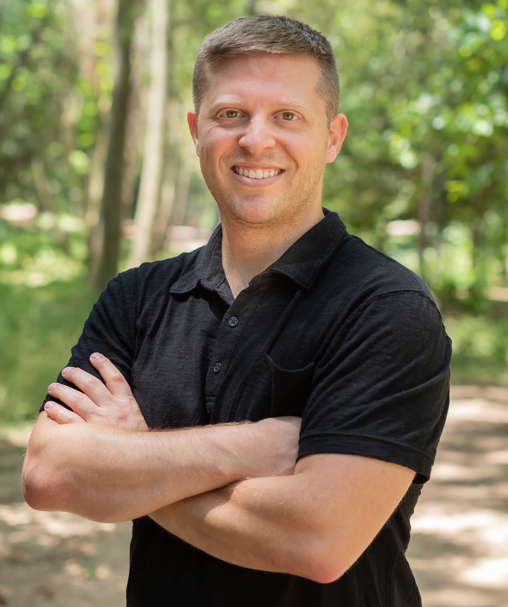
Brad Farris
Personal Growth Advisor, Anchor Advisors
Brad Farris is a Personal Growth Advisor at Anchor Advisors. He dismantles the "grind" mindset by asking: what if your "great" work ethic is secretly sabotaging your business? The toxic hustle culture sold by Silicon Valley is not just unhealthy, it is often unprofitable because grinding kills creativity and threatens your health.
Key Takeaways
- 1The toxic startup hustle culture comes from Silicon Valley's VC-driven mindset where investors need high rates of return, but this "grind all the time" approach isn't healthy and often isn't profitable for entrepreneurs who don't have outside funding pressures.
- 2Your brain can only really focus for two to three hours a day, and creative breakthroughs require your best thinking — you're more likely to be creative during regular work hours with breaks than during your 11th, 12th, and 13th work hour of the day.
- 3The biggest threat to your business is actually your own health, especially if you're bootstrapped — if you can't work, your business suffers, so working sustainably is actually making it more likely that your business will succeed long-term.
- 4Use the "who not how" principle when you lose key team members or face technical challenges — instead of spending hours learning complex systems like Google Tag Manager, find someone who can do it in 15 minutes while you focus on business development and higher-value activities.
- 5Hobbies like archery and golf aren't just recreation — they build mindfulness, resilience, and process-focused thinking that carries over into business success by teaching you to focus on consistent processes rather than being attached to specific outcomes.
Key Terms Defined
New to some of the jargon in this episode? Here are plain-English definitions for the terms that came up.
- Networking
- The deliberate practice of building professional relationships that can lead to business opportunities, referrals, partnerships, or mentorship. In startup and business contexts, it often involves attending events or joining communities to meet influential people.
Chapters
Full Transcript
Sean Weisbrot: What if working less could make your business grow more? Today I am joined by Brad Ferris, personal growth Advisor at Anchor Advisors to challenge the toxic startup hustle and explore how healthy, creative, and sustainable work are the keys to real success. We're talking sleep tech, mindfulness, and why doing more might be killing your momentum. If you're an entrepreneur chasing growth without trying to burn out, this episode will shift your mindset. I hated having a job and I was forced into becoming an entrepreneur and. I've tried over the last 12 years to not force myself to work incredible hours. And there was a point where I was a startup founder and I was, had been living in Asia all these years and I, I came to start un like understanding the way Western people do startups and everyone was saying, you've gotta grind every day, you've gotta hustle every day. You've gotta, you know, eat, sleep, and you know, breathe your company. And I was like, why?
Brad: Yeah, that's a good question. Yeah. Why, why do we have to do that? Well, so much of startup culture comes out of the Silicon Valley mindset, and if you've taken a bunch of investor money, there's a clock ticking. There's a certain amount of, you know, the longer it takes you to earn them a return, the lower their rate of return is, and that's what they're driven by. And so the venture capitalists instilled this idea of you have to work all the time because it's good for them because it increases their rate of return. But then the rest of the entrepreneurial culture somehow adopted that same mindset that we just have to grind all the time, and it feels super crazy to me. It's not healthy.
Sean Weisbrot: It almost most likely is not gonna make you wealthy. And I, that's why I love these interviews because I've, I've done so many of them. I've done hundreds of them, and I, I don't normally interview funded founders. I'm not against it, but my question to them is always, okay, sure, you raised 20 million, but what did you sacrifice to get that?
Brad: Yeah. The, the thing that that occurs to me when I'm thinking about this kind of. Grind and work all the time is that if the problem you're trying to solve requires creative breakthroughs, you're trying to do something that other people haven't done right? And so you need your best thinking and your best creativity. Are you likely to be your most creative in the 11th, 12th, and 13th work hour of your day or. Are you more creative when you're taking regular breaks and when you're getting away from work and when you're working a more sustainable schedule, and particularly if it's your own business and you don't have outside funding, the thing that is the biggest threat to your business is actually your own health. Like if you can't work, your business is gonna suffer. And so to work in a sustainable way is actually making it more likely that your business is gonna succeed in the.
Sean Weisbrot: What I like about being an entrepreneur is that I can work when I want to and I can not work when I don't want to.
Brad: Mm-hmm.
Sean Weisbrot: And what's funny is I have friends in Portugal who they're like, oh, you're so wealthy. You don't, you're not working right now. Like, we're, we're at work in this office and like you're just off going for a walk or getting a massage, like you're just doing whatever you want. And I'm like, yeah, but. When I'm not working, I'm not making money.
Brad: That's right.
Sean Weisbrot: And I'm not working because I need to stay focused and I can only focus if I'm not working all the time. A lot of people don't realize your brain is only really able to focus for two or three hours a day, and I still find myself some days working 12, 13, 14 hours and I try not to. But right now my fiance's not here and I have the time to get a bunch of stuff done. So I'm trying really hard because I know I'm going to Vietnam in a few months, and when I get there, it'll be a lot harder to do any of this stuff because most people I talk to are in the us. So I am grinding now for the next two months because I can, because I know once I get to Asia, I won't be able to work this hard, and so I'll have to be more focused.
Brad: I, I mean, even in that situation, I have a hard time focusing. The longer I work, the, the longer I work, the more I find myself wandering down through rabbit trails, and then the next day having to redo work that I thought I had gotten done the day before. And so while it feels productive to keep working and, and I'm, I'm someone who gets a lot of intrinsic pleasure out of work. And so getting things done feels good, but, but if I stand back and say, oh, but. Those last few emails that I wrote didn't really get the answer that I wanted them to get. And I'm having to redo stuff from the night before. Am I really making the progress that I think I'm making? Even in the situation that you're talking about, I think getting up and taking a walk every couple hours or, um, you know, just doing something that is pleasurable to you. This, this, that's rejuve rejuvenating is more likely to have increase your focus and creativity and allow you to make more progress.
Sean Weisbrot: Yeah. That's why I go to the gym every morning before.
Sean Weisbrot: Yeah, I start to work, although to be fair, I'll get up and do a little bit of work and then go to the gym and then go back to work. Just that I feel like I've kind of earned the gym in a way. It's like, okay, like I responded some emails, I did this. Okay, yeah, I can go to the gym now. Everything, everything else can wait.
Brad: But you're hitting on something that's really important there. The, the, the other thing that I feel like happens a lot with startup founders is that we kind of ignore our bodies. That we, we feel like we're, we're just all head. We're just here to get work done. And the truth is, our head is connected to the rest of our body. And if we're not getting good sleep, and for myself, what I've found is regular exercise is probably the thing that helps me have the most energy and focus through the day. And so getting good sleep. Getting to the gym. Those things maximally increase your, your productivity and your ability to solve problems during the day.
Sean Weisbrot: It's funny you mentioned sleep yesterday. Someone from the telecom company came and they broke the cable by accident when they were messing around. So I, I live in a building that's like six stories tall and so there's a box that's on that that manages several floors. And so there's several boxes in the building and the engineer broke our cable. At like five 30 in the afternoon. Perfect. And I would normally work until seven or eight or nine if I have to. 'cause like a lot of the people I talk to are in the US so my focus time is earlier in the day. And then my distracted kind of. Business development stuff is in the afternoon. And so the time at which I'm trying to develop my business, I can't because the cable broke. I called the the property manager and I said, Hey, someone came and broke this. Oh yeah. They said, there, there's a problem with the router. And I said, no, I. I'm technical enough that I know they broke the cable at the box.
Brad: Right.
Sean Weisbrot: And like, uh, and my, my roommate said that, you know, he was there and he saw the guy messing with the box. I go, I know it was the guy, because before he was there, there was no problem with the internet. He's like, okay, okay, okay. I go, I'm trying to do my work. I can't do my work. Like I'm losing my mind here.
Brad: Yes.
Sean Weisbrot: Be because my sim card data is about to run out for the month. And I didn't wanna buy another SIM card. It doesn't make, it just doesn't make sense. So I'm like, I can't use my data on my phone 'cause it's about to go bad and I have no wifi. I have no access to wifi anywhere except for here at the moment. Fix this now. He's like, okay, okay. I got the engineer to agree to come between nine and 11 tomorrow morning.
Brad: Yeah,
Sean Weisbrot: I went to sleep at like 10 because there was, I, I can't watch. Tv. Right. And I, I can't go on YouTube, I can't do anything. I just went to bed. Yeah. And it, it felt good to go to sleep at 10. I would like to go to sleep. Honestly, when, when I was married, previously I was living in Vietnam at the time. She would get home from work at like 8:00 PM 'cause she worked stupid hours. And we would be asleep at like nine 30. I was 33. She was like 24, 25. Best sleep of my life. Going to bed at like nine 30, waking up at 4 35.
Brad: One of my, uh, friends pointed out, and I've been thinking about this a lot lately, is that the last hour of the day. Is not usually particularly productive, whether it's business productive or just life productive, like the last hour of the day is generally just kind of a blah. The first hour of the day is usually the, for me, the most productive hour of my day. So if I just go to bed an hour earlier, I get rid of that blah hour and I gain a productive hour in the morning, like it's a win-win all the way around. I think it's very difficult for
Sean Weisbrot: people to actually do though, say more. I, I think Netflix and YouTube destroyed people's ability to sleep on top of texting. I think Twitter, uh, made people angry all the time. Yeah, sure. And sure, like I have, I have a friend who is aware that Twitter is negative for her health and yet can't stop. Doom. Scrolling through Twitter, looking at all the idiots and what they say. I was like, it's easy. I go, I deleted my Twitter because I was in Asia when, when Twitter and Facebook and LinkedIn and all these platforms were building, so I was never exposed to them until my mid thirties almost. So. I don't have any of those addictions that everyone else does for social media, so it's easier for me to go, yeah, I don't care. I never had TikTok, I never had Instagram, I never had, uh, Twitter. I, I installed TikTok in, I. Um, Instagram recently, only because the AI that takes the shorts out of my long form videos will post them to those places for free. Like it automatically schedules it. So like it's, it doesn't make sense to not do it. But I don't have the app on my phone. I just installed it and then I threw away the key, and so it just pushes. So I don't know what's, if something's happening in my profiles, I don't know, but I'm not looking.
Brad: The thing I always think this is. Curious when someone says, I can't stop, like it could be a legit addiction, where this is it, you know, your, your life has become unmanageable and you need some help in order to, to get away from it. On the other hand, you could just set an alarm on your phone that says, Hey, it's nine 30, go to bed. And train yourself not to disobey that alarm and learn what it feels like to actually go to bed at nine 30 instead of spending two more hours. Uh, doom scrolling. Now, I, I'm, I say that like it's easy and I know that it is not always that easy, but, but it's not really that hard either.
Sean Weisbrot: Yeah. I, I never use alarms for anything.
Brad: Hmm,
Sean Weisbrot: interesting. So when I wake up at four in the morning, it's because my body said, wake up. Even though I may have gone to sleep at like 10 30, so my body's not happy that I woke up at four, but that's the time my body woke me up. And so I just go, all right, fine, I'm up. So how, how can people or the people you work with, how, how, what do you do for them to help them structure themselves so that they're not working so hard and that they're sleeping better and they're
Brad: doing what they need to do? One of the first things we do is, is. We get on a Zoom and, and they're gonna open their calendar and we're gonna look together at their calendar because oftentimes they're working long hours because they're doing some things that aren't really that productive. And so looking at the calendar and taking some meetings off the calendar that don't belong there, um. Then helping to rearrange things. Um, oftentimes having theme days where I put my client meetings on Tuesdays and Wednesdays, you know, I'm meeting with my team on Mondays, Thursdays, and Fridays are my focus days where I'm thinking about new things or getting my own work done. And so starting to group those things together so we can have longer blocks of time when we're available to do our, our best creative thinking. So starting by looking at your calendar, getting rid of some of the things that are, that are. Busy work that you're not really engaged in, that are not the best use of your time. And then rearranging things so that you have longer stretches of time where you can get real work done. So by making better use of your daytime hours, then we can, we, we feel like, well, okay, now I've done enough. And, and that's another thing is to come up with what is enough? What is it that if I've done this, I've done enough work for today and I can go do something else.
Sean Weisbrot: So several points to that. The first one is, there is an AI that's supposed to connect to your calendar and go, yeah, that should be here. That should be here. That should be here. Um, I don't remember the name of it, but it was cool, but it's cool. The second thing is I keep a to-do list and my to-do list is based on urgency. So my trigger for I feel accomplished today is having done the most urgent things and every day is different.
Brad: How many things make it to that urgent list on an average day?
Sean Weisbrot: Every day is different. So for example, a few days ago, my editor was told that he had a really nasty infection and he needed surgery, emergency surgery. I was thinking, well, damn, that's, that's bad. I, I hope you're okay. But also, crap, I have to now edit two, three, maybe four episodes because he could be recovering for a few weeks. So I then had to push everything off and edit two episodes. And I, my shorts were clipped, but they weren't like edited. So like the tool I'm using, it automatically generates clips from your videos, but inevitably you have to edit every single one of them by getting rid of 20, 30, 40 seconds so that people will watch to the whole end. Because a lot of stuff is nonsense. So, and then you have to add music, you have to add captions. Of course these are one clicks, but you have to do it, then you have to export it, then you have to schedule it. So I had to do that 'cause I was out of content. Two days had gone by and I had no content. So when I finished that, those two things, then I had to do this and then like almost half the day was gone by. By the time I got everything done and all of the things that were urgent for me were now gonna happen at the end of my day rather than the beginning of my day, which is when I tried to do my focused work. Because he told me the day before the episode needed to go live. Mm-hmm. So I had no choice. And because I didn't wanna do one episode right there, and then another episode the day later or whatever, I just did 'em both at the same time so that I have one week's worth of content. 'cause I'm publishing two episodes a week. So I try really hard to stay focused on things now. Part of what I'm trying to do right now is I, I have a few services that I'm getting ready to launch. And I want to be able to run ads to them. So I went on chat to VT and I created like ad scripts and, and concepts, but I haven't been able to do anything with them because then I realized that while I have the Google Analytics code in my pages, I don't have the triggers and the events and the conversions and like I, I don't know anything about this stuff because I always had people to do it for me. And I'm like, well, before I can run ads. Before I can do anything else, I have to figure out how to set up Google Tag Manager and how to figure out go GA four and, and how to get the megapixel into Google and, and the LinkedIn pixel into this so that later on, so not, not only can I have these key events if someone wants to become a guest or if they wanna become a sponsor, or they wanna have me train them on this thing or that thing. I don't, I don't have a way to track any of these events. I don't know how to do any of it, so it doesn't make sense for me to figure out how to make an ad and publish that ad if I don't have a way to track any of this stuff. So today I've been spending my time figuring out how all of that stuff works, and I've watched a ton of content and I still have no idea how any of this stuff works. And so my day is being wasted trying to figure out how to do this because. Nobody can make sense for me of how do you do this the right way? Because I have multiple pages inside the website that have multiple different audiences. And so I'm like, do I do them in Google Tag Manager? Do I do them in GA four? Why are these things duplicated? But they're both Google products and they have a million different places you can click and none of it is organized correctly because Google doesn't know how to do UI UX management for sure.
Brad: So that's a classic. So there's two things there that that I want to talk about. One is a concept from Dan Sullivan, which is who not how. You lost a key employee there at least for a certain period of time, and now you're digging in deeply to all these technical details that is not necessarily the best use of your time. Is there another who that could do that for you? Instead of spending the time watching the videos, could you spend some time on Upwork and find yourself someone that could do that for you, who could get it done in 15 minutes instead of the couple of hours that you've already taken and gotten yourself more confused than you are clear. So that's one concept that, that I would work with clients on. The second is when our to-do list is what we use to determine whether we're done or not. Our to-do list doesn't know what else we have scheduled during the day, and so there might be five urgent items on my to-do list. If I have a day full of meetings, I'm not gonna get those five items off until sometime late in the evening. And so again, looking at is it reasonable for me to get those things done? And if not, if, if I can't move any of those things on my calendar, who could get them done so that they can get done without having to be me necessarily. And so the problem with the to-do list is it doesn't necessarily respect the capacity that we have to get things done.
Sean Weisbrot: So I have a running to-do list, so I'm constantly adding and taking things off, but I organize it by urgency. And in fact, I built a software to-do list software that sorts by urgency. I'm now trying to integrate Gmail and Google Calendar so that an AI can read the details of my emails and suggest tasks for me. And then it can analyze my calendar and push tasks, the, the most urgent tasks into my calendar. In between the other calls and things I'm doing, I'm trying to build this right now for myself. And I think a lot of people would probably wanna pay for it too.
Brad: So similarly, I love where you're going with this. Having a to-do list makes sense. And then for me, I just, on a daily basis, when I get into the office in the morning, I look at my calendar and I look at my to-do list, and I do what you're suggesting. I insert to-dos in between meetings. And then when I get to the point where that's all that fits. Then everything else gets pushed to the next day. And if I don't like where that's going, if there are things that I don't have time to do today but need to get done today, well then I have a priorities problem, right? It's not a time problem, it's a priorities problem. I have either oversubscribed myself, which is a, a saying no problem. I need to learn how to better say no so that I don't end up oversubscribed or I have things on my calendar that could move. So that I could get those things done. And so it's about managing my own priorities and getting good at, on a habitual basis, not taking on tasks that are not mine to do.
Sean Weisbrot: Sure. I mean, I would love to not do some of the things I'm doing, but I also, but I also. I love to learn, and so while I could probably hire someone on Upwork to do it, the learning process is more important for me because then I can do it every time I set up a new business or a new website, or I have a client that needs help. So if I pay someone to do it, I am also losing out on the opportunity to figure it out for myself. Yes. But that stuff, the Google stuff, that I don't have someone on my team that does it. It was just the editor that I was taking on his responsibility only to find out. I. That there was no need for surgery after all, because his, his infection was starting to heal. Good news, good news for both of you. It's, it's great. 'cause he lives in Pakistan and I was like, man, I, I don't know. I feel bad, like this looks really bad and I'm afraid he doesn't actually need surgery. Or if he has surgery that he's gonna lose his arm or something. I didn't want to tell him, but I'm like, uh, I, I'm, I feel scared for him. Mm-hmm. But I didn't want to tell him 'cause he is young, so I didn't wanna scare him. So I'm lucky. I'm, I'm happy that everything turned out. But yeah, I like the idea of having people to do things. I wanna learn how to set this stuff up, but I would like to have someone to run the campaigns for me. I don't wanna run the
Brad: campaigns, but even learning to set, set it up. I, I might challenge you that by the time that you have another campaign to set up. Those interfaces will have changed and someone who's doing it every day is always gonna do a better job, even if you do a great job learning. And so trading off the time that you're spending learning versus having an expert who could show you how to do it, but then also get it done for you, oftentimes that's a better trade off. Especially if what, what you're doing. You know, you're talked about business development at the end of the day. Like that is probably the thing that's gonna earn you the biggest short term return versus putting together this, you know, GA for tag manager nightmare.
Sean Weisbrot: That stuff, that stuff is the foundation for me being able to run ads. 'cause almost everyone now that I talk to is coming to me. They're being introduced by, uh, you know, PR firms and podcast booking. This is just for an example for the podcast itself, but I want to build a sponsorship pipeline. And there's people that are coming to me who want me to teach them how to launch a podcast, and I have a, a service to roast people's web apps and I'm launching my cost cutting service. So actually I can redo this flow for four or five different things very quickly. I. So if I can learn to do it right now, then I can set them all up in a few minutes and then I can get started on the ads and that's what's going to build up my pipeline faster than talking to podcast agents and PR firms and, and build me opportunities. I. So that when there's too many opportunities, I can then hire someone to get into the sales for me, or I can hire someone to manage the campaign. So that's what I'm thinking is this is something that's foundational that I, I want to know how to do. Because for years I was just like, ah, you know, marketing, I don't, I don't. But if AI enables me to build a bunch of tools, but then I don't have the knowledge to like scale the lead generation and and sales on them, then why am I building things? I'm just wasting my time. You know, the Sure. The name, the name of the company is we live to build, but obviously it's, we live to build and make money from what we've built, not we live to build and then not make any money. Yeah. But I, I did reach out to a few people that know how to do this stuff that are friends that are running their own businesses and they haven't responded. Because they're busy doing their own stuff.
Brad: You know that that particular task I know is complicated even for people who know what they're doing because as you said, there's these overlapping products and the UI is not great. Like it's not something for the faint of heart. The other reason that I see that people tend to work more than maybe they. Thought they were going to is that work is rewarding and they haven't taken the time necessarily to find other things outside of work that offer them that same level of reward. And so one of the things that I am suggesting to clients is also, even though that you're a really busy person who's running a, a, a growing business, you need to have some hobbies, some things that you're doing. That aren't for work and some communities where you're in, where people like you, whether your business is going well or not, because there are gonna be times when your business is not going well and having that community is gonna be really helpful for you. And having some things that you enjoy engaging in outside of work also help restore our energy and our ability to focus and our, our creativity. And so having those things oftentimes makes the business more sustainable in the long run.
Sean Weisbrot: I have a bunch of hobbies. I, I think some people might think I have too many hobbies. I love to. Go to the driving range. I have never been on a golf course, but I love going to the range. I do archery, I do bowling. I walk a lot. I play board games once or twice a week with, there's a huge community here. I used to do table tennis a lot. Um, unfortunately that's changed. Well, because there was a, a community that was being organized on the weekends and it was nearby, but then they decided to rent their own warehouse because the demand was so large. But they moved north of the airport and it's like $20 to get there By taxi. There's no public transportation. It's like $20 each way. I was like, why am I gonna pay nearly $50 to go there and pay a play for two hours and then come back? So it's, it's just not economically viable anymore to go also into paddle. And, you know, I go to comedy clubs sometimes go, go for live music. Sometimes there's so much to do here, um, in Lisbon. So.
Brad: So like the archery and the driving range, what does that do for you when, when you engage in those activities, what, what makes it worth it for you?
Sean Weisbrot: The sense that my aim and it is, I'm, I'm testing my aim. I'm testing my act. I guess I'm, I'm challenging myself to do something that's not easy and can I be consistent in doing
Brad: this thing? And what I like about those kind of tasks is that they're much simpler than the business task. And so whether it's archery or being in the driving range, if we're regular at it and if we're paying attention to it, we can have that sense of progress and agency and autonomy. In an area that then carries over that when we go back to work, we know we're, we're the kind of person who can get better at something if we focus on it. Right? And so it's, it's building a, a sense of resilience and mindfulness that then carries over into other areas of our lives.
Sean Weisbrot: Yeah. What I like about it is there is a set thing you have to do to prepare yourself to launch off the, the arrow or to swing the club, right. You have to do it enough times, often enough in in enough number of instances where you get comfortable with the process of winding up. Swinging or pulling the bow back or putting your hand, you know, putting the, you know, your hand under your chin and putting the string on your nose. There's a routine that you have to develop that if you do it correctly, your chance of success is high, and if you deviate from your chance of success goes much lower. And so these repeatable things become enjoyable because you're training yourself to get comfortable with the process. There's just something really like, comfortable about it, even though it's challenging because it's not easy to do. There's a lot of steps. You have to remember them all, and if you're off by a, a, a millimeter, your, your success goes away. It's, you're really like. Honing
Brad: these deep skills and, and I think the two that you picked are interesting because they are sort of process over results situations where even if you do it perfectly, you're not gonna hit the center of the target maybe every time. And so it also teaches us to deal with our emotional reaction, to our attachment, to the outcome where we're continuing to focus on the process and kind of letting go of some of those outcome measures and then seeing that improve. Over time. So it, it, it is building that mindfulness and resiliency that, that carries over into business success.
Sean Weisbrot: So I've been meditating every day for 20 years, and I was trained to allow my thoughts during meditation. The, the goal is to allow your thoughts to do what they do, which is to exist, but then allow them to exist in a way that it also doesn't make you feel anything. This isn't the way that, so I, I was taught transcendental meditation, which is the most well known in the us. But then I also met a guy who's Sikh the in Indian subculture, so the warrior class, and he taught me about the letting go part because the transcendental meditation says you have a mantra. And I'm gonna give you this mantra. This is the mantra you're gonna use the rest of your life and you're gonna repeat it. And if you, if you lose the mantra, then you go back and repeat it again. And I said, well, that's stupid. And then he taught me, you can keep your mantra, that's fine, but maybe you can use your mantra as like a trigger to start the, the meditation process and then let everything just exist as it is. And if you find yourself allowing these thoughts without fighting them, without trying to understand them, then you end up being able to step outside of yourself and observe these things without reacting to them. And inevitably, they will all fade away into nothingness, and you'll experience no thoughts, you'll feel nothing, and you'll be in total darkness and in peace with this nothingness. It's very, very hard for people to let go, but it's something that I learned a long time ago and has been a wonderful practice for me as a result. And I, I find myself every day being able to get there. So I meditate 40 minutes and I find that like the vast majority of that time just passes by and I'm just not even aware of time.
Brad: I have a spiritual practice that is somewhat similar, but the end of it is. That I'm, I'm releasing the need to change any person's situation feeling or myself.
Sean Weisbrot: Yeah, that one's, that's hard.
Brad: Yeah. It, it's very Buddhist. It's actually a Christian practice, but it, but coming to that place of acceptance of what is, because we live in this place, we, we live in the, what is not in the, what we wish were would be, or. Or you know what I imagine to be, but we live in the what is, and so the more that I am in the, what is the more I'm making choices and decisions based on reality, on what's actually going on.
Sean Weisbrot: I think Buddhism is a really good, it teaches this as well where it says, when you want, you suffer. So if you give up your desires and your needs and your wants, then you can free yourself from suffering, which is also very, very hard for people to do. But I think it's a strong correlation with meditation in that if you can give up those, those needs, then you'll be rewarded with the bliss of nothingness. I know this sounds awful. But it's extremely peaceful. My eyes are closed. I've got a face mask on I, not a face mask, an eye mask. I am wearing these headphones. Everything is off right? All of the lights are off, the blinds are drawn. It's just pure. No noise, no light, nothing. And when you get to that place where everything is just quiet, it's just such a beautiful experience. I think
Brad: the interesting thing to me about getting to that place of quiet is the way that that quiet then continues through the rest of the day. That when I can come to a place of quiet or of stillness or silence, then when I'm in a phone call with someone and things are starting to get, you know, tense, I don't have to get tense with them, but that I can stay, I can live from that place of quiet and have a different relationship to the things that are going on. And that's super helpful in terms of just navigating life, but also business relationships. I. So, what's the most important thing you think you've learned beyond that in life? The most important thing I've learned in life, uh, that I'm not very important. That I really enjoy spending time in nature because nature makes me feel small and whatever the problems are that I seem to be having, the rain keeps raining, the sun comes up, the sun goes down. These things are not that important in the grand scheme of life.


