
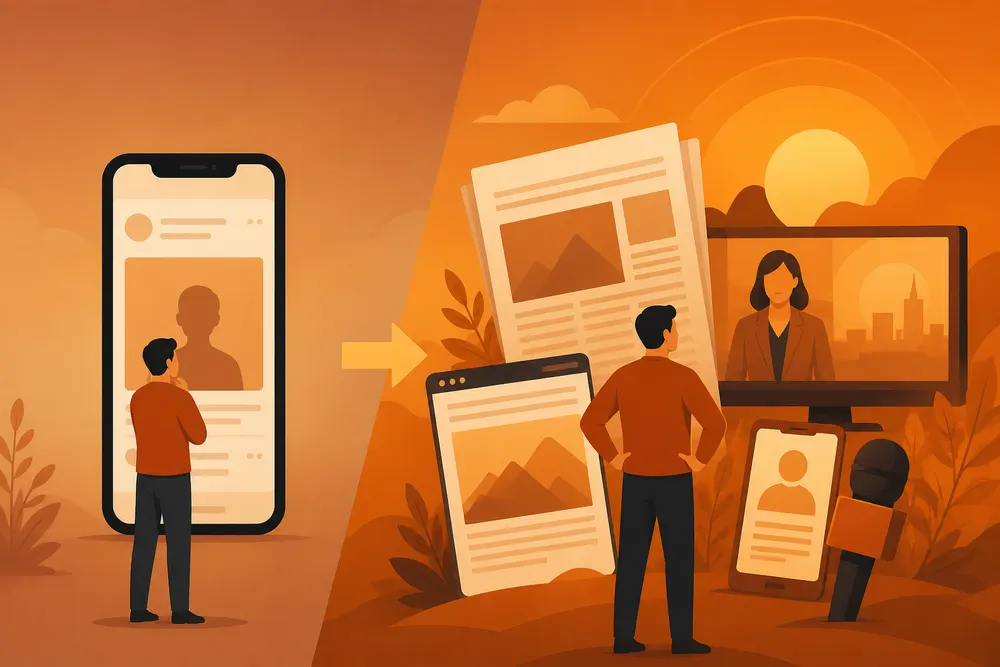
Why Doesn't Self-Published Content Build Credibility?
Every word on your LinkedIn profile is something you chose to say about yourself. That's valuable for staying visible to people who already follow you, but it carries zero third-party validation. A prospect evaluating whether to trust you can't distinguish a genuinely credible post from a well-written one.
Who Actually Sees Your LinkedIn Posts?
The algorithm mostly shows your posts to your existing network and people similar to them. It's excellent for deepening relationships with people who already know you and close to useless for reaching someone doing due diligence on you for the first time.
Where Does LinkedIn Fit in a Real Visibility Strategy?
LinkedIn content works best downstream of something with more authority behind it, a press placement, a notable interview, a piece of third-party coverage. Posting about a CNBC segment you were featured in does something a standalone post never can: it lets you talk about yourself while pointing at proof that isn't self-published.
The order matters. Build the third-party credibility first, then let your own channels amplify it, not the other way around.
What Does a Complete Strategy Actually Look Like?
A complete visibility strategy has three layers working together: third-party validation (press, a credible host, an established outlet), owned content that references and extends that validation (LinkedIn posts pulled from the same conversation), and distribution that puts both in front of people who don't already know you.
LinkedIn is one piece of the third layer, not a replacement for the first two. Treat it as the amplifier it's good at being, and the whole system works a lot better than LinkedIn ever could on its own.
Give your LinkedIn something real to point at
WLTB Executive Visibility Package
Press placements plus 5 LinkedIn posts written in your voice, built from the same interview, content with something behind it.